
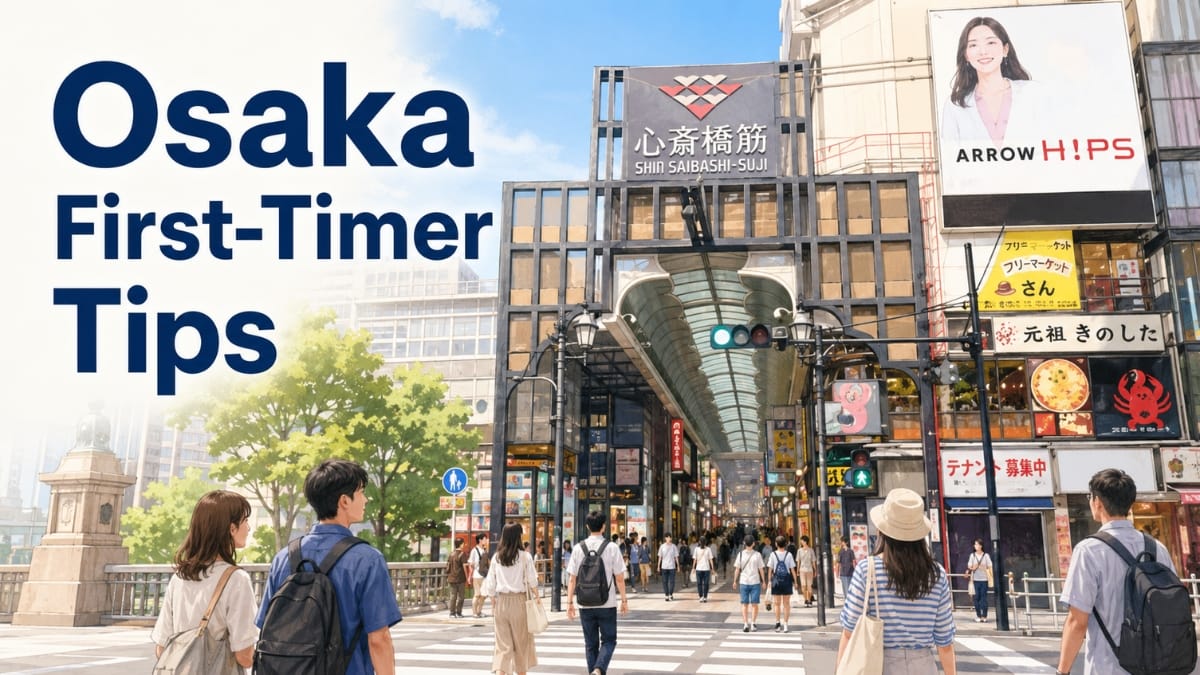
You can land in Osaka feeling completely prepared and still get thrown off within the first hour. The city is friendly, efficient, and much easier to enjoy than many first-time visitors expect, but it also moves fast in practical ways – station layouts, neighborhood personalities, and local dining rhythms can shape your trip more than any checklist of famous sights. If you are searching for things to know Osaka travelers actually need, start with the details that reduce friction on the ground.
Things to know Osaka visitors should learn first
Osaka is not a city you visit well by treating it as one big blur. It makes more sense when you think in areas. Umeda feels different from Namba, Shinsekai feels different from Tennoji, and quieter places like Sumiyoshi or Ishikiri show another side entirely. For first-timers, this matters because choosing where to stay, where to eat, and how to structure your day becomes much simpler once you stop thinking only in terms of attractions.
Another helpful reset is this: Osaka is highly approachable, but not always self-explanatory. Signs are often good, train systems are manageable, and people are used to visitors, yet there are still small moments where local patterns are not obvious. Knowing a few of them in advance can save time, money, and low-level stress.
Osaka is a city of neighborhoods, not just landmarks
Many travelers build an Osaka itinerary around Dotonbori, Osaka Castle, and Universal Studios Japan. That is understandable, but it can flatten the city. Osaka rewards people who move by district and mood rather than trying to collect only major sights.
Umeda is practical, polished, and useful if you want major rail access, department stores, and an easier base for day trips. Namba is more energetic and entertainment-focused, with quick access to Dotonbori, shopping streets, and late-night food. Tennoji mixes major transit convenience with larger parks, museums, and a slightly less frantic pace depending on where you stay.
Then there are areas many first-time visitors overlook. Sumiyoshi offers one of the city’s most memorable shrine settings and a calmer local rhythm. Ishikiri has a more neighborhood feel with a shopping street and shrine culture that feels far from the bright central core. If you only plan around the postcard spots, you miss why Osaka feels so livable.
Train convenience depends on station choice more than distance
One of the biggest things to know Osaka first-timers often miss is that being “close” on a map does not always mean easy. A hotel near a major station can save a surprising amount of energy, especially if you are arriving with luggage or making day trips to Kyoto, Nara, or Kobe.
Osaka Station and Umeda are especially useful, but they can also feel overwhelming because the complex is large. Namba is convenient too, though which line you need matters. Two hotels that both say they are in Namba can offer very different levels of convenience depending on whether you are using JR, private rail lines, or airport access routes.
This is where expectations help. A central location usually gives you speed and flexibility, but it may also mean more crowds and higher room rates. A slightly quieter district can be more restful, though you may spend more time transferring. There is no single best area – it depends on whether your priority is nightlife, shopping, shrine visits, family logistics, or easy train movement.
Osaka food culture is casual, fast, and deeply local
Visitors often arrive expecting Osaka food to mean only takoyaki and okonomiyaki. You should absolutely try both, but the city is broader than its most famous snacks. Kushikatsu, curry, neighborhood ramen shops, kissaten-style cafes, standing bars, market snacks, and department store food halls all deserve attention.
What surprises many travelers is the rhythm. Some excellent places are tiny. Some specialize in one thing and do it without explanation. Some lines move quickly, while others require patience. You may order from a vending machine, point at a menu, or find that a shop has only counter seating.
That casual feeling is part of Osaka’s appeal. It is not a city where every meal needs to be formal or planned far ahead. At the same time, popular restaurants can fill up quickly, especially in high-traffic areas. If a place looks small and busy, be ready to make a quick decision rather than lingering at the entrance.
Dotonbori is worth seeing, but it is not the whole city
Yes, you should go. It is loud, iconic, easy to reach, and memorable at night. But many first-time visitors make the mistake of returning there too often because it is familiar. After one or two walks through the area, your time may be better spent elsewhere.
The trade-off is simple. Dotonbori gives you energy and spectacle. It does not always give you the best version of Osaka food, the quietest atmosphere, or the most local feeling. Nearby side streets, older shopping arcades, shrine neighborhoods, and residential corners often provide a more relaxed experience.
If you like contrast, that is where Osaka becomes much more satisfying. Pair neon-heavy areas with slower ones. Spend a morning at a shrine or retro shopping street after a crowded night in Namba. The city works best in those shifts.
Cashless payment is common, but do not rely on it everywhere
Japan is more card-friendly than it used to be, and Osaka is generally easy for international travelers. Still, smaller shops, older restaurants, shrine-related purchases, and some local businesses may prefer cash. It is wise to carry some yen even if most of your trip is card-based.
This is less about fear and more about convenience. You do not need to carry large amounts, but having enough for a simple meal, train top-up, or small purchase makes the day smoother. Markets, local snack stalls, and low-key neighborhood spots are where this matters most.
Etiquette is easier than many travelers expect
A lot of first-time visitors worry about doing something wrong every few minutes. In Osaka, that anxiety is usually unnecessary. Basic courtesy covers most situations. Speak quietly on trains, line up where people are lining up, do not block narrow walkways, and avoid eating while actively walking through crowded areas.
In restaurants, the rules vary by place, but they are rarely hard to follow once you look around. Some shops expect quick turnover. Some have self-service water. Some ask you to order one item per person. If staff guide you, just follow their lead.
The broader point is reassuring: you do not need perfect cultural fluency to enjoy Osaka respectfully. You need attentiveness. People generally respond well to visitors who are considerate, patient, and willing to adapt.
Timing changes the experience more than you think
Osaka can feel completely different by hour, day, and season. Shopping streets that seem mellow in the morning become packed later. Famous food zones get harder to enjoy once peak dinner crowds arrive. Shrines and temple grounds often feel best early, when the atmosphere is quieter and temperatures are more comfortable.
This matters if you dislike crowds. Going early is one of the easiest ways to make central Osaka feel manageable. A neighborhood that seems chaotic at 7 p.m. may feel pleasant and navigable at 9 a.m.
Season also shapes your route. Summer can be humid and tiring, which makes station access, indoor breaks, and cafe stops more important. Rainy days shift the value of arcades, underground passages, and station-connected buildings. Cherry blossom season and fall foliage bring extra appeal to parks and shrine areas, but also more competition for space.
Day trips are easy, but they can crowd your Osaka time
Osaka is often used as a base for Kyoto, Nara, and Kobe, and for good reason. Rail connections are excellent. Still, many travelers under-plan Osaka itself because they treat it as a sleeping place between other cities.
That approach can leave you with a shallow impression. If your schedule is short, it may be better to do fewer day trips and give Osaka proper time. The city is not only convenient – it has enough depth to justify slower exploration, especially if you are interested in food, shopping streets, local shrines, retro neighborhoods, or simply seeing how different districts feel.
A practical rule helps here: if you have three nights or less, protect at least one substantial Osaka day. If you have longer, day trips become much easier to fit in without making the city feel rushed.
Walking is rewarding, but Osaka is bigger than it looks
On the map, some areas appear close enough to combine casually. In reality, heat, station transfers, shopping detours, and crowd flow can make those distances feel longer. Osaka is walkable in parts, but it is not always best explored by insisting on walking everywhere.
The smarter approach is mixed pacing. Walk deeply within a neighborhood, then use trains to reset between areas. That keeps the day interesting without draining your energy. It also leaves more room for the small discoveries people tend to remember – a covered shopping street, an old coffee shop, a local shrine tucked behind a main road.
If you want Osaka to feel less overwhelming, this is often the key. Do not try to conquer the city. Let each district reveal itself in pieces.
The most useful thing to remember is that Osaka does not demand perfection from first-time visitors. It rewards curiosity, a little structure, and enough flexibility to follow what feels good once you arrive. Learn the basics, stay near the kind of transit you will actually use, and give yourself permission to go beyond the obvious. That is usually where the city starts to feel personal.