
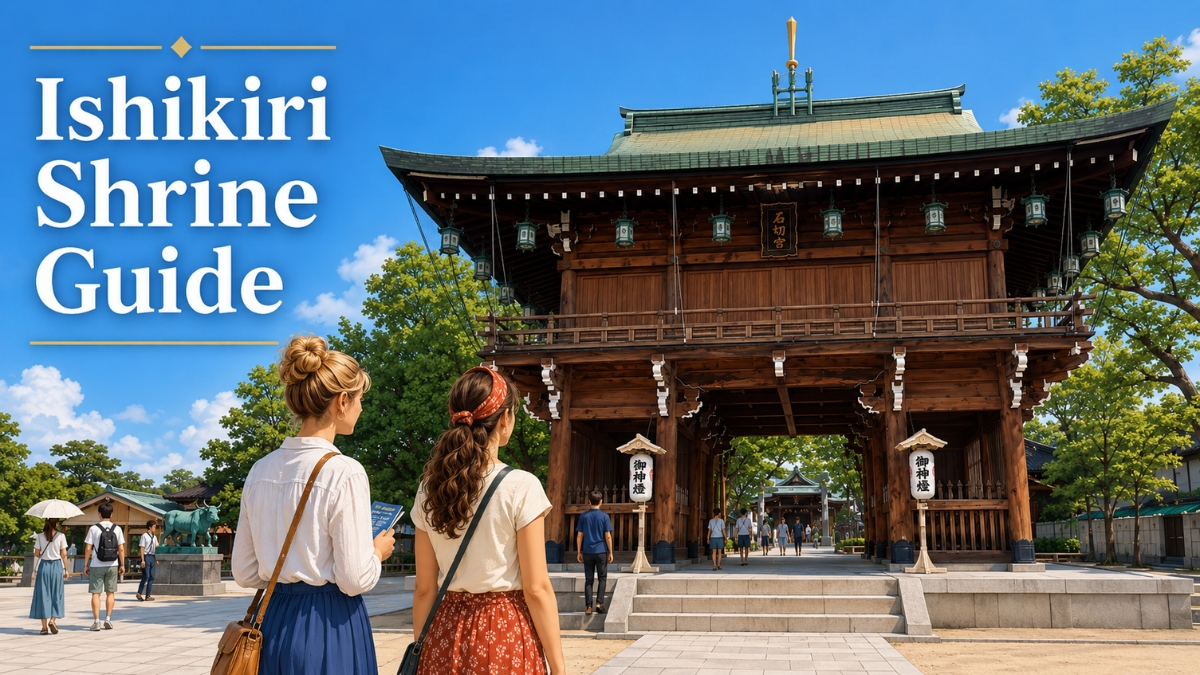
Ishikiri Tsurugiya Shrine, often called Ishikiri-san, is a well-known Shinto shrine in Higashiosaka, east of central Osaka. It is especially known for prayers related to healing, the ohyakudo-mairi ritual, and the old shopping street that leads toward the shrine.
For first-time visitors to Japan, this is not just a sightseeing spot. Many people come here with personal prayers for health, family, recovery, or emotional strength. The atmosphere is serious but welcoming. You may see people walking quietly between two stones in front of the main hall, repeating prayers one hundred times.
This guide explains what Ishikiri Tsurugiya Shrine is, how to visit, what “healing blessings” mean in Japanese culture, how to do ohyakudo-mairi respectfully, and how to avoid mistakes during your visit.
Before You Visit: What Kind of Place Is Ishikiri Tsurugiya Shrine?
Ishikiri Tsurugiya Shrine is in Higashiosaka City, at the foot of Mt. Ikoma. The address is 1-1-1 Higashi-Ishikiri-cho, Higashiosaka, Osaka. It is about a 7-minute walk from Shin-Ishikiri Station on the Kintetsu Keihanna Line, or about a 15-minute walk from Ishikiri Station on the Kintetsu Nara Line. From central Osaka, Shin-Ishikiri is usually the easier station for first-time visitors.
The shrine is known locally as “Ishikiri-san” and is associated with prayers for healing. The shrine name, Ishikiri Tsurugiya, refers to the power of a sword and arrow said to be strong enough to cut through and pierce rock. This image is important because many worshippers understand it as the power to cut away illness, hardship, or harmful conditions.
For non-Japanese visitors, it helps to understand that a Shinto shrine is not the same as a Buddhist temple. A shrine is a sacred place connected with kami, often translated as Shinto deities or divine presences. People visit shrines to pray, give thanks, ask for protection, or mark important life events. At Ishikiri Tsurugiya Shrine, many visitors come with serious health-related prayers, but shrine prayer should not be treated as a replacement for medical care.
Why People Visit Ishikiri Tsurugiya Shrine for Healing Prayers
The Meaning of “Denbo” and Healing Blessings
Ishikiri Tsurugiya Shrine has long been associated with denbo, a Kansai-region word often used for swellings, lumps, or boils. Today, many people visit to pray for recovery from illness or for the health of family members. This is a matter of religious belief and cultural tradition, not a medical guarantee.
In Japanese shrine culture, a blessing does not mean that a result is promised. It means that the visitor prays sincerely, receives spiritual support, and often feels calmer or more determined. For someone facing illness, surgery, or anxiety, that emotional support can be meaningful.
The most important point for travelers is this: visit with respect, but do not treat the shrine as a substitute for doctors, diagnosis, or treatment.
Nade-mamori: A Healing Amulet Used by Touching the Affected Area
One of the shrine’s distinctive amulets is called nade-mamori. According to the shrine’s own explanation, it is not simply worn like a normal charm. Worshippers take the amulet from the paper packet, say the name of Ishikiri Ōkami while rubbing the affected area, take one grain of rice from the packet with the first water they drink each morning, and return the amulet to the shrine after one week when convenient.
For visitors unfamiliar with Japanese customs, this may feel unusual. Think of it as a form of prayerful ritual and self-reflection. It gives a person a physical action to connect with a prayer.
Important: If you are buying this for yourself or a family member, ask the shrine office how to use it. Do not invent your own method, and do not stop medical treatment because of an amulet.
Why Visitors Return for Thanks
At Japanese shrines, it is common to return after a wish or prayer has been answered. This is called orei-mairi, or a thank-you visit.
At Ishikiri Tsurugiya Shrine, some people pray before surgery, during illness, or during a difficult family situation. Later, they may return to give thanks. This pattern helps explain why the shrine feels different from a simple tourist site. Many people are not there for photos; they are there with personal gratitude or deep concern.
A foreign visitor can still visit respectfully. The key is to observe quietly and not interrupt people who are praying.
The Meaning Behind the Name “Ishikiri Tsurugiya”
A Sword and Arrow Strong Enough to Cut Rock
The name Ishikiri Tsurugiya includes the image of a sword and arrow. The shrine explains that this expresses the great divine power of its enshrined kami, powerful enough to cut through and pierce even solid rock.
This symbolism matters because many visitors come to the shrine hoping to “cut away” something difficult: illness, anxiety, bad habits, harmful relationships, or a long period of hardship. The shrine is not only about healing the body. It is also a place where people try to reset their mind.
For overseas visitors, this is a helpful way to understand the shrine: it is a place of prayer for removing what harms youand finding strength to move forward.
The Enshrined Deities
The shrine is associated with Nigihayahi no Mikoto and Umashimade no Mikoto. These names may be unfamiliar to most visitors, but you do not need deep knowledge of Japanese mythology to visit respectfully.
What matters is that the shrine is an old sacred site with a strong connection to protection, healing prayers, and the power symbolized by the sword and arrow. The shrine’s official site states that people come from the Kansai region and across Japan for prayers, including gokaji, gokitō, and ohyakudo-mairi.
If you want to pray simply, you can say a quiet prayer in your own words. Shinto prayer does not require perfect Japanese.
Ohyakudo-mairi: The 100-Time Prayer Ritual
What Ohyakudo-mairi Means
Ohyakudo-mairi is a traditional practice where a person repeats a prayer route many times, often one hundred times. At Ishikiri Tsurugiya Shrine, visitors walk between two hyakudo-ishi, or hundred-time prayer stones, in front of the main worship area.
This is one of the shrine’s best-known customs. You may see people walking silently in a loop, holding strings or counting their rounds. Do not stand in their path.
The shrine’s FAQ says that worship at the shrine is possible 24 hours a day, and that ohyakudo strings are available during the day at the shrine office; at night, visitors can ask at the security office.
How to Do Ohyakudo-mairi Respectfully
There is no need to rush. The purpose is not speed. It is repeated prayer.
A simple way to understand the ritual:
- First, pray at the main shrine.
- Receive or prepare a way to count your rounds.
- Walk quietly between the two prayer stones.
- Keep your prayer in mind each time you walk.
- Do not block other worshippers.
- Finish with a final prayer of thanks.
You may not be able to complete all one hundred rounds. That is not a failure. If you are tired, unwell, or traveling with children, keep it short. A respectful visit matters more than forcing yourself.
Why the Ritual Can Feel Powerful
For visitors who do not come from a shrine culture, ohyakudo-mairi may look repetitive. But that repetition is the point.
Walking the same path again and again can calm the mind. It gives worry a rhythm. It turns a vague fear into a focused prayer. That is why some visitors describe feeling lighter afterward.
This should not be explained as magic. It is better understood as a combination of faith, movement, silence, and concentration.
How to Pray at Ishikiri Tsurugiya Shrine
Basic Shrine Etiquette for First-Time Visitors
At a Shinto shrine, you usually begin by passing through a torii gate. The center of the path is traditionally considered the route for the kami, so walk slightly to the side when possible.
At the purification basin, if available, you may rinse your hands. Then stand before the main hall.
A common shrine prayer method is:
- Bow lightly before approaching.
- Put a small coin into the offering box.
- Bow deeply twice.
- Clap twice.
- Pray quietly.
- Bow deeply once.
Some shrines have slightly different customs, but this general method is widely understood. If you are unsure, quietly observe local worshippers and follow in a respectful way.
What to Pray For
At Ishikiri Tsurugiya Shrine, many people pray for health, recovery, family safety, or protection from harmful situations. You can pray for yourself or for someone close to you.
Avoid treating the shrine like a wish machine. A more respectful mindset is:
“I will do what I can. Please give me strength, protection, and clarity.”
This fits Japanese shrine culture better than demanding a result.
The Approach to the Shrine: Ishikiri Sando Shopping Street
A Retro Shopping Street With Fortune-Telling Shops
One of the most memorable parts of visiting Ishikiri is the approach to the shrine. Ishikiri Sando Shopping Street runs between Ishikiri Station and the shrine area, with many small shops, food stalls, restaurants, traditional goods, and fortune-telling signs. The shopping street’s official site says more than one hundred shops line the approach from Kintetsu Nara Line Ishikiri Station toward Ishikiri Shrine.
The atmosphere is different from central Osaka. It feels older, slower, and more local. You may see old-style storefronts, medicine shops, fortune-telling rooms, snacks, and souvenirs.
This is not a polished shopping mall. That is part of its value.
Helpful links:
Official site: Ishikiri Sando Shopping Street
Instagram: Ishikiri Sando Shopping Street Instagram
X: Ishikiri Sando Shopping Street on X
Google Maps: Ishikiri Sando Shopping Street on Google Maps
Why Fortune-Telling Is Common Here
Many visitors come to Ishikiri with serious worries: health, family, work, relationships, or life decisions. Around the shrine approach, fortune-telling has become part of the local atmosphere.
For foreign visitors, fortune-telling here should be seen as part of local culture, not as something you must do. If you try it, check the price first, understand the language barrier, and do not make major life decisions based only on one reading.
A respectful way to enjoy the area is to walk slowly, look at the shop signs, try a local snack, and visit the shrine before or after exploring the street.
Kaminosha: The Upper Shrine
A Quieter Sacred Area
Ishikiri Tsurugiya Shrine also has an upper shrine area called Kaminosha. The official shrine page explains that the shrine’s origins are connected with the worship of Nigihayahi no Mikoto near Mt. Ikoma, and that the present Kaminosha was restored in 1972 after earlier historical changes.
Kaminosha is quieter than the main shrine. It is better for visitors who want a more peaceful atmosphere and do not mind walking uphill.
If you visit, go during daylight. The area is less crowded, and the roads and paths can be less familiar for first-time travelers.
Helpful links:
Official information: Ishikiri Tsurugiya Shrine Kaminosha
Google Maps: Ishikiri Tsurugiya Shrine Kaminosha on Google Maps
Access to Ishikiri Tsurugiya Shrine
From Central Osaka
The easiest access for many first-time visitors is via Shin-Ishikiri Station on the Kintetsu Keihanna Line. The shrine’s official access page says Shin-Ishikiri Station is about 20 minutes from Osaka Metro Hommachi Station, followed by a 7-minute walk to the shrine.
Another route is via Ishikiri Station on the Kintetsu Nara Line. From Tsuruhashi Station, the train ride to Ishikiri Station is about 20 minutes, followed by about a 15-minute walk to the shrine. This route is useful if you also want to enjoy Ishikiri Sando Shopping Street.
Location: Higashiosaka, eastern Osaka
Nearest stations: Shin-Ishikiri Station or Ishikiri Station
Best route for first-time visitors: Shin-Ishikiri Station, then walk about 7 minutes
Best route for the shopping street: Ishikiri Station, then walk downhill through the approach
IC card: Kintetsu trains generally accept major IC cards, but always check your route and balance before traveling
Travel time: Around 30–45 minutes from central Osaka, depending on your starting point
Hours, Prayer Reception, and Timing
The shrine grounds can be visited at any time, according to the shrine’s FAQ about ohyakudo-mairi. However, shrine offices, prayer reception, amulets, and special rituals have their own hours. The shrine’s official site also notes that prayer reception times may change depending on rituals and events, so check the latest notice before going for formal prayers.
The amulet office hours are 8:00–16:30 and prayer reception is 9:00–11:30 and 13:00–15:30, with some exceptions and possible changes due to shrine rituals. Use this only as a planning guide, and confirm with the shrine before a formal prayer visit.
Best time to visit: Morning or early afternoon
Avoid if possible: Very late evening, major festival crowds, or busy New Year periods
Reservation: Not needed for normal worship; check in advance for formal prayers
Fees: Normal worship does not require a ticket, but offerings, amulets, and formal prayers require separate fees or donations
Parking and Public Transport
The shrine’s official access page asks visitors to use public transport when possible because parking is limited. This matters during festivals, New Year visits, and busy ritual days.
For most overseas visitors, public transport is simpler. Driving in this area may involve narrow roads, limited parking, and local traffic.
Common Mistakes to Avoid
Mistake 1: Treating the Shrine as a Medical Solution
Ishikiri Tsurugiya Shrine is an important place for healing prayers, but it is not a hospital. Do not stop medical treatment, delay diagnosis, or ignore a doctor’s advice because of a shrine visit.
A better approach is to combine practical care with spiritual support.
Mistake 2: Standing in the Way of Ohyakudo-mairi
People doing ohyakudo-mairi are often deeply focused. Do not stand between the prayer stones, take close photos of people praying, or interrupt their route.
If you want to observe, stand to the side quietly.
Mistake 3: Photographing Too Freely
Shrines are sacred places. Photos of buildings and gates may be acceptable in many areas, but do not photograph people praying without permission. Avoid taking photos inside areas where photography is restricted.
When in doubt, do not take the photo.
Mistake 4: Confusing a Shrine With a Temple
Ishikiri Tsurugiya Shrine is a Shinto shrine, not a Buddhist temple. You will see torii gates, shrine halls, and Shinto worship customs.
Use “shrine” in English, not “temple.”
Mistake 5: Visiting Only for “Mystery” or “Power Spot” Content
The shrine is sometimes described as mysterious or powerful, but for many worshippers it is a serious place of prayer. Avoid treating people’s health concerns as entertainment.
Visit with quiet respect.
Local Tips for a Better Visit
Visit From Ishikiri Station if You Want the Full Local Atmosphere
If you have time and energy, start from Ishikiri Station and walk down the shopping street toward the shrine. This route gives you the older local atmosphere, food shops, fortune-telling signs, and everyday life around the shrine.
If you want the easiest route, use Shin-Ishikiri Station.
Allow Enough Time
For a simple shrine visit, allow about 45–60 minutes. If you want to walk the shopping street, do ohyakudo-mairi, visit Kaminosha, or stop for food, allow 2–3 hours.
Do not rush this area. The meaning of the visit comes from slowing down.
Bring Cash
Many shrines and small shopping-street stores still work best with cash. Bring coins for offerings and small bills for amulets, snacks, or fortune-telling.
Cards and IC payments may be accepted in some places, but do not rely on them everywhere.
Be Careful With Health Claims
If you write about your visit or explain it to someone else, avoid saying “this shrine cures illness.” A more accurate and respectful phrase is:
“This shrine is traditionally visited by people praying for recovery from illness.”
That wording respects the faith tradition without making a medical claim.
Helpful Links
Official site: Ishikiri Tsurugiya Shrine
Access: Ishikiri Tsurugiya Shrine Access
X: Ishikiri Tsurugiya Shrine on X
Instagram: Ishikiri Tsurugiya Shrine Instagram
Google Maps: Ishikiri Tsurugiya Shrine on Google Maps
Final Advice
Ishikiri Tsurugiya Shrine is one of Osaka’s most distinctive shrine visits. It is not only a place to see a building. It is a place where people pray, walk, reflect, and seek strength.
For foreign visitors, the most important things are simple: understand that this is a Shinto shrine, respect people who are praying, do not treat healing beliefs as guaranteed results, and check access before you go.
Visit quietly, walk the approach slowly, and take time to understand what people mean when they say Ishikiri-san feels powerful. The value of this shrine is not only in mystery. It is in the serious, human act of bringing a worry to a sacred place and leaving with a little more calm.