
You do not need to plan every hour to get Osaka right. For most first-time visitors, the real challenge with osaka first trip planning is not finding things to do – it is narrowing the city down into a shape that feels manageable, efficient, and still memorable.
Osaka rewards travelers who plan by area, not by a random list of attractions. If you build your days around the right neighborhoods, understand how transit works, and leave room for food and small discoveries, the city becomes much easier to enjoy.
Osaka first trip planning starts with the right base
Where you stay will affect almost everything else – how easy your arrival feels, how much energy you spend on trains, and whether late dinners or early starts feel simple or tiring.
For a first trip, Namba and Umeda are usually the safest choices. Namba works well if you want lively streets, easy access to Dotonbori, strong food options, and direct connections toward southern Osaka, Nara, and Kansai Airport. It feels active, convenient, and very Osaka.
Umeda is often better if you want a cleaner business-hub feel, easier intercity rail connections, and smoother access to Kyoto or Kobe. It can feel less atmospheric at night than Namba, but it is excellent for travelers who care more about convenience than neon.
If your trip is short, staying near Osaka Station or Namba Station reduces friction. That matters more than finding a slightly larger room farther out. Osaka is easy to move around, but after a long flight or a full day on foot, a simple route back to your hotel is worth a lot.
How many days do you really need?
Three full days in Osaka is a comfortable starting point for a first visit. That gives you enough time to see major districts, eat well, visit at least one shrine or historic site, and still keep your schedule flexible.
If Osaka is part of a wider Kansai trip, two full days can work, but only if you accept trade-offs. You will probably focus on central highlights like Namba, Dotonbori, Shinsaibashi, Osaka Castle area, Shinsekai, and one or two quieter local stops. That version of the city is still worthwhile, just more selective.
If you want Osaka to be your base for day trips to Kyoto, Nara, or Kobe, four to five nights is often the better shape. It gives you time to enjoy Osaka itself instead of treating it as a place you only sleep in.
Build your itinerary by neighborhood, not by checklist
This is the easiest way to reduce wasted time. Osaka looks compact on a map, but attractions spread across different train lines and station complexes can eat into your day if you keep zigzagging.
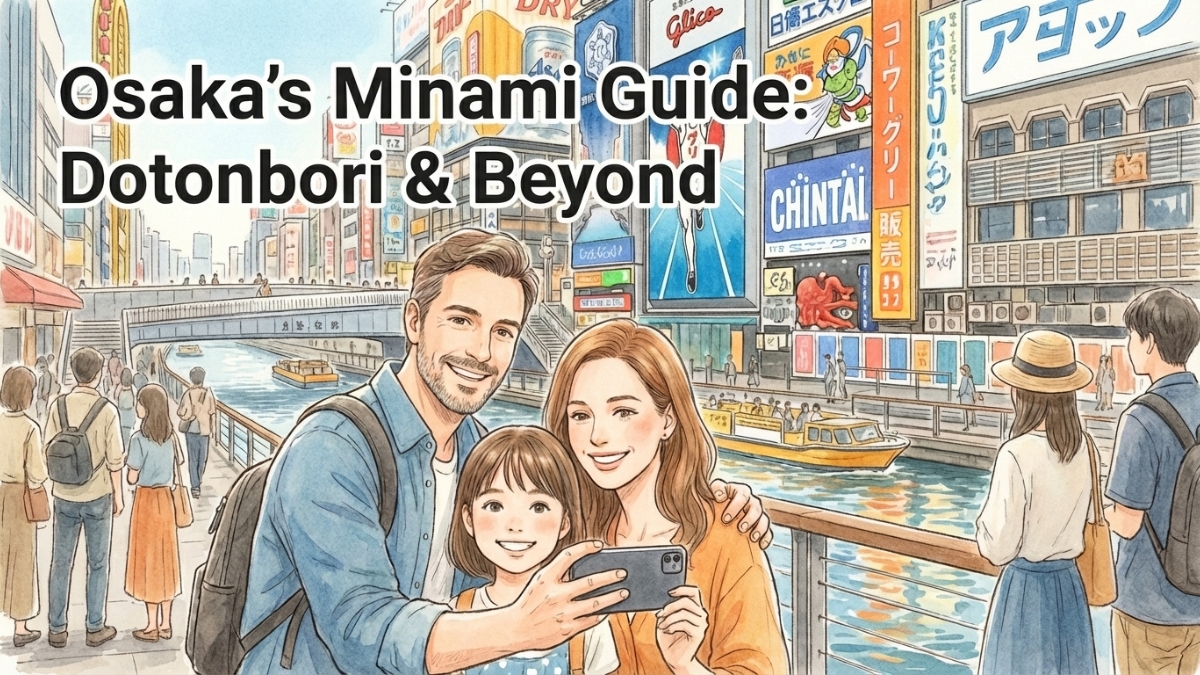
Namba, Dotonbori, Shinsaibashi, and Amerikamura fit naturally into one day or one long afternoon and evening. This is where many first-time visitors get their first strong impression of Osaka – canal views, dense signage, snack stops, shopping streets, and the city’s most recognizable energy.
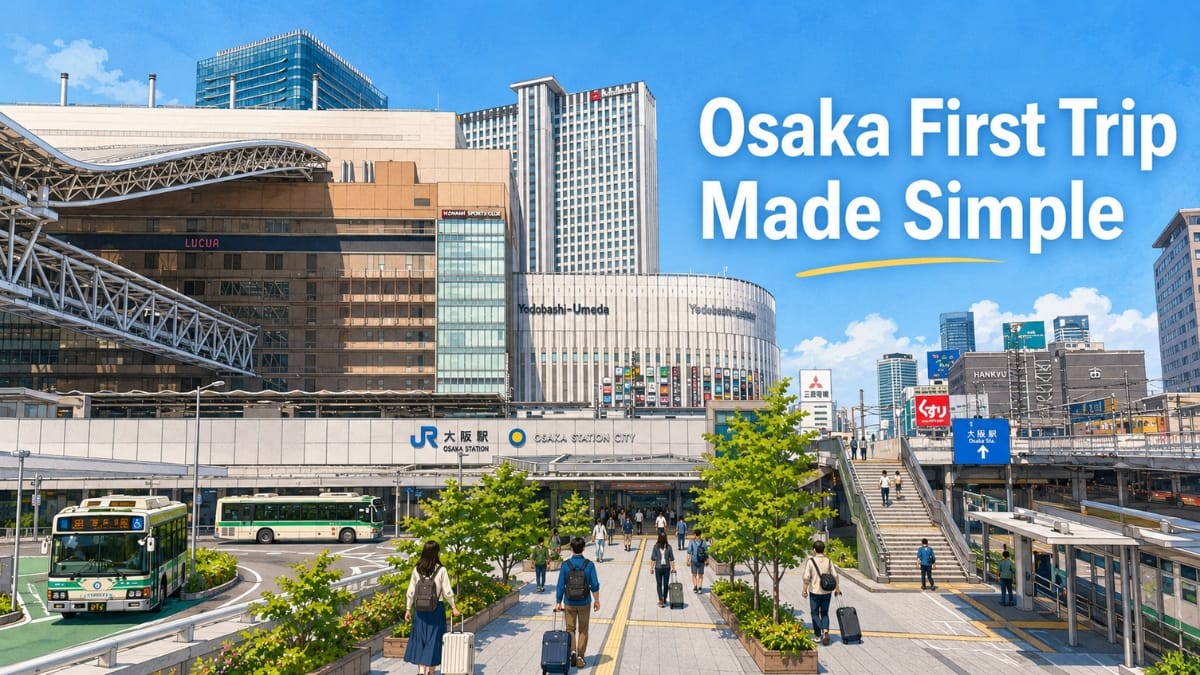
Umeda and Osaka Station City work well together for another block of time. You can pair big-city shopping, observation decks, department store food halls, and nearby cafes or rest stops. This area is especially useful on arrival day or departure day because of how connected it is.
Shinsekai and Tennoji make sense together if you want a more mixed day with retro atmosphere, casual food, local character, and larger park or museum options nearby. Osaka Castle area is often paired with a slower morning, especially if you want a landmark stop without packing too much around it.
Then there are places that give your trip more texture – Sumiyoshi Taisha, Ishikiri, Nakazakicho, or quieter neighborhood cafes and shopping streets. These are not always the headline stops, but they often become the places people remember most because they feel less staged.
Transit is easier than it first looks
A lot of first-time Japan anxiety centers on trains. In Osaka, the system can look intimidating before arrival, especially when you see different rail companies, station names, and exits. In practice, most visitors adjust quickly.
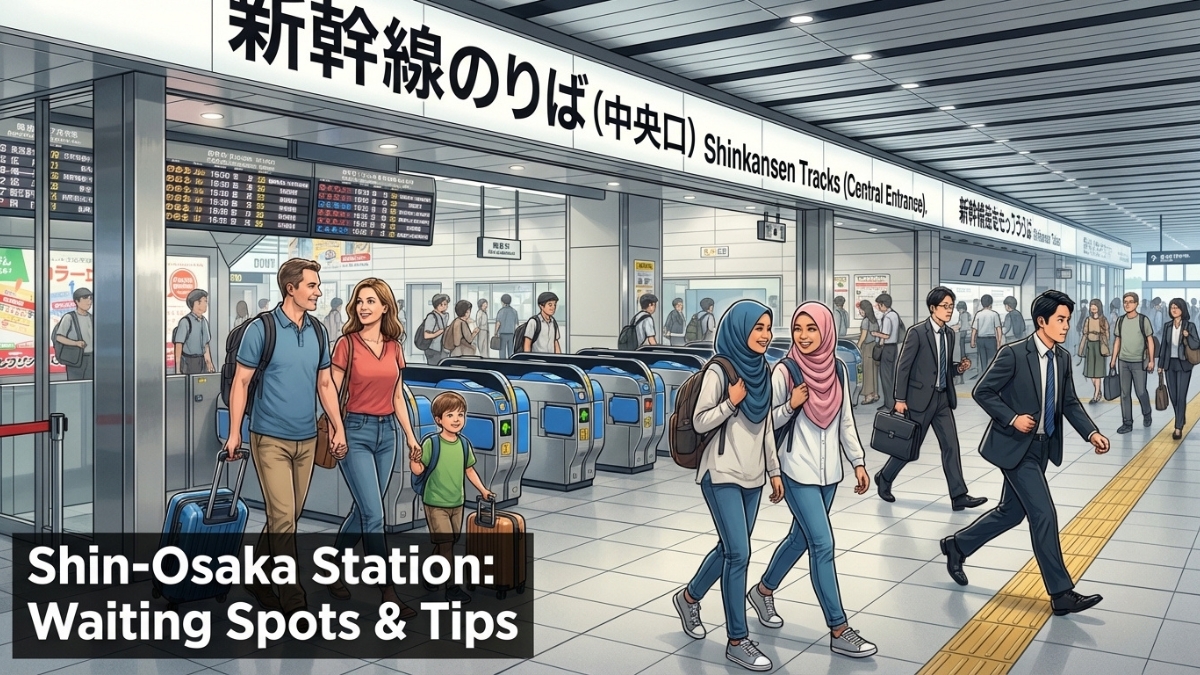
The main thing to know is that stations are destinations in themselves. Osaka Station, Umeda, Namba, and Tennoji are not quick in-and-out stops. They are large transport zones with multiple lines, signs, malls, underground passages, and many exits. Give yourself extra time there, especially on day one.
An IC card makes life much easier for osaka first trip planning because it removes the need to buy individual tickets for each ride. You tap in, tap out, and keep moving. For most first-time travelers, that is the simplest option.
It also helps to save station names in your phone exactly as you plan to use them. Not every attraction is best reached by the most famous nearby station, and in Osaka a 10-minute difference in walking route can matter. A slightly less obvious station can sometimes be the easier arrival point.
Food planning matters more than you think
You do not need a full restaurant itinerary, but you should have a food strategy. Osaka is one of Japan’s easiest cities for casual eating, yet first-time visitors often waste time standing in the wrong lines or defaulting to the most obvious places.
A better approach is to decide what kind of food moments you want. Maybe that means one lively okonomiyaki dinner, one takoyaki snack stop, one relaxed cafe break, one department store basement food hall visit, and one meal in a quieter neighborhood outside the main tourist core.
Dotonbori is fun, but it is not the only place to eat well. In fact, some travelers enjoy it more as a visual experience than a serious dining area. If you want atmosphere, go. If you want a calmer meal, step a few streets away or eat in another district entirely.
Timing matters too. Popular places can have long waits during peak dinner hours. A late lunch or early dinner often feels better than building your day around a line.
Decide early what kind of first trip you want
Not every first-time Osaka trip should look the same. Some travelers want major sights and nightlife. Others want shrines, neighborhoods, kissaten cafes, and a more local pace. Most people are happiest when they mix both.
If you try to do only famous spots, Osaka can feel crowded and performative. If you avoid all famous spots, you may leave feeling like you missed the city’s energy. A balanced first trip often works best – one anchor district with high activity, one cultural or historic stop, one neighborhood with local texture, and one block of unplanned wandering.
This is where a city-specific resource like Osaka Map can help. The more focused your planning becomes by district and traveler need, the less likely you are to waste half a day trying to connect places that do not naturally fit together.
Common mistakes in osaka first trip planning
The most common mistake is treating Osaka as a side trip instead of a real destination. People book too little time, overpack day trips, and end up seeing the city in fragments between train rides.
The second mistake is underestimating fatigue. Jet lag, station walking, stairs, heat, and crowds add up. A plan that looks efficient on paper can feel draining by mid-afternoon. It is smart to leave space for rest, especially if your trip includes summer travel.
Another frequent issue is choosing a hotel based only on price and not on station access. Saving money can make sense, but not if your return each night involves multiple transfers or a long walk with luggage.
And finally, many first-time visitors plan too many famous meals and not enough simple ones. Osaka is at its best when you allow room for the small finds – a neighborhood bakery, a coffee stop near a shrine, a quiet lunch counter inside a shopping street.
A simple framework for your first Osaka itinerary
If you are feeling stuck, keep your plan simple. Use arrival day to settle into your area and stay local. Use one full day for Minami, meaning Namba and its surrounding districts. Use another full day for Kita, meaning Umeda and the north side, or pair a major landmark with a quieter neighborhood. Then decide whether your remaining time goes to a day trip or a more local Osaka experience such as Sumiyoshi, Tennoji, or a specialty food and cafe day.
That structure works because it matches how the city is actually experienced. It gives you variety without forcing constant movement.
Osaka is easier to love when you stop trying to cover everything. Pick a good base, group places sensibly, keep your transit simple, and leave room for the side streets. That is usually where a first trip starts feeling less like logistics and more like Osaka.