

If your Osaka plan currently includes Dotonbori, Osaka Castle, and a quick stop in Shinsekai, you are not doing anything wrong. But the best hidden spots Osaka travelers remember most are usually the places that were not on the big checklist – the quiet shrine tucked behind a shopping street, the riverside walk that feels oddly spacious, the neighborhood arcade where locals still linger.
For a first trip, hidden does not need to mean remote or hard to reach. In Osaka, some of the most rewarding places sit just one or two train stops away from the busiest areas. The key is choosing spots that still feel approachable when you are dealing with jet lag, station signs, and a limited itinerary.
What makes the best hidden spots Osaka-worthy
A good hidden spot in Osaka should do at least one of three things. It should show you a side of the city that the major attractions miss, give you a calmer experience than the obvious tourist zones, or fit easily into a real travel day without turning into a complicated detour.
That last point matters. Some places are wonderful in theory but awkward in practice if you only have three or four days in the city. The best choices for first-timers are the ones that feel local without adding stress.
Hozenji Yokocho and Hozenji Temple
A few minutes from the neon chaos of Dotonbori, Hozenji Yokocho feels like Osaka suddenly lowered its volume. The stone-paved alley is short, atmospheric, and lined with traditional facades that feel older than the surrounding entertainment district. Just beside it, Hozenji Temple is known for its moss-covered Fudo Myoo statue, which visitors splash with water.
This is one of the easiest hidden spots to add to a Namba evening. Go too early and it can feel a little flat. Go after dusk and the contrast with nearby Dotonbori is much stronger. The trade-off is that it is no secret anymore, so do not expect solitude. Still, many first-time visitors walk surprisingly close to it and miss it entirely.
Nakanoshima Rose Garden and the river walks
Nakanoshima often gets overshadowed by flashier Osaka neighborhoods, but it is one of the city’s most pleasant quiet escapes. The rose garden is seasonal, of course, so timing affects the payoff. Even outside peak bloom, the river setting, broad walkways, and civic architecture make the area feel open and composed in a way Osaka does not always show at street level.
This is a strong choice if you want a break between sightseeing blocks in Umeda and central Osaka. It is also a good answer to a common first-timer problem: wanting somewhere scenic that does not require a half-day commitment. If the weather is poor, it loses some appeal, so this one depends more on conditions than the temple and market spots.
Sumiyoshi Taisha
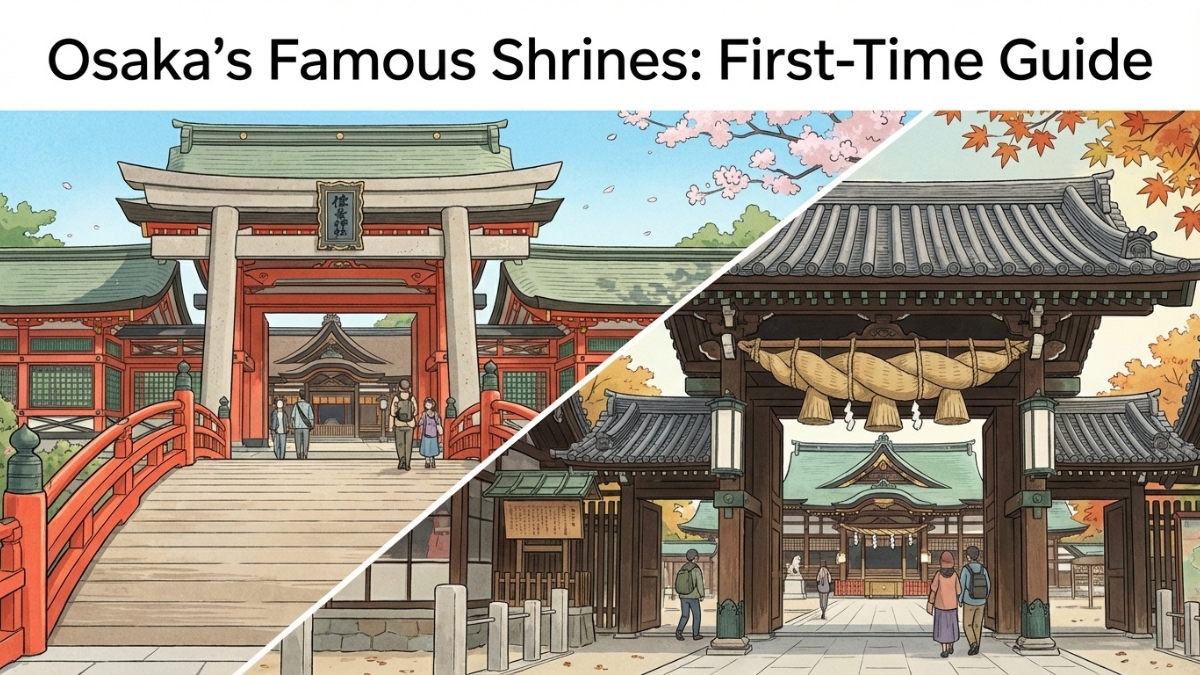
If you want a shrine visit that feels substantial without the heavy crowds of Kyoto’s biggest names, Sumiyoshi Taisha is one of the best hidden spots Osaka has for first-time visitors. It is not truly unknown, but it remains under-visited by international travelers compared with what it offers. The arched Sorihashi Bridge, spacious grounds, and distinctive shrine architecture give it a calm, ceremonial feel.
What makes it especially useful is that it still feels manageable. You do not need expert knowledge to appreciate it, and the route there is straightforward once you commit to going south of the city center. If your trip is short and packed, this may feel slightly out of the way. But if you want one shrine experience in Osaka that feels memorable rather than incidental, this is a smart pick.
Karahori Shopping Street
Karahori is the kind of neighborhood first-time visitors often say they wish they had found earlier. The area mixes old shopping arcades, narrow lanes, small cafes, and low-rise streets that escaped some of the redevelopment seen elsewhere in central Osaka. It feels lived-in rather than staged.
This is not a place for one headline attraction. It works better if you enjoy wandering, browsing, and noticing details. That makes it a great fit for independent travelers and a weaker fit for anyone who wants every stop to deliver a big visual payoff. Pair it with a flexible afternoon rather than trying to force it between timed reservations.
Shinsekai’s side streets beyond the main drag
Shinsekai itself is not hidden. The famous signs, kushikatsu shops, and nostalgic grit are already on many Osaka itineraries. But most visitors stay on the main streets near Tsutenkaku and leave quickly. If you step a little farther into the surrounding lanes during the day, the area becomes more interesting.
You will find retro storefronts, older local eateries, and a less polished side of Osaka that feels more real than the photo-heavy center. This is one of those places where timing matters a lot. Daytime is easier for casual exploration, while some side streets can feel less comfortable late at night, especially if you are unfamiliar with the area. Use common sense, keep your route simple, and it can be a rewarding detour.
Nakazakicho
Near Umeda, Nakazakicho offers a very different pace from the station district’s shopping complexes and office towers. The neighborhood is known for its narrow streets, older wooden buildings, independent cafes, and small creative shops. It is one of the easiest places to experience a softer, more intimate side of Osaka without leaving the central city.
The appeal here is less about major sightseeing and more about atmosphere. If you like finding a cafe, slowing down, and walking without a strict agenda, it works well. If you are traveling with someone who wants nonstop famous landmarks, they may find it underwhelming. That is the trade-off with many hidden neighborhoods – they reward curiosity more than checklist travel.
Osaka Tenmangu area and Tenjinbashisuji side lanes
Tenjinbashisuji Shopping Street gets attention as a famously long arcade, but the surrounding area is where things get more textured. Around Osaka Tenmangu Shrine and the nearby side lanes, you get a useful blend of everyday city life, local dining, and smaller-scale discovery that feels more grounded than the city’s most photogenic districts.
This is an easy place to spend a low-pressure morning or early evening. You can browse, snack, and stop by the shrine without needing a rigid plan. It is especially good for travelers who want local atmosphere without sacrificing convenience, since access is simple from major central areas.
Ishikiri approach streets
For travelers willing to go a little farther east, Ishikiri offers one of Osaka’s more distinctive hidden experiences. The shrine approach streets have an old-fashioned rhythm, with small shops, local food, and a strong neighborhood identity. It feels less like a tourist district and more like entering a community route with its own habits and history.
This area is not always the easiest fit for a short Osaka itinerary, which is why many visitors skip it. That said, if you have already covered the major sights or want a half-day that feels genuinely different, it stands out. It is a better choice for travelers who enjoy place-based exploration than for those chasing famous city icons.
Utsubo Park
When people look for green space in Osaka, Osaka Castle Park gets most of the attention. Utsubo Park is quieter, more local, and often easier to enjoy if you just want a pleasant reset. The long park layout, tree cover, and nearby cafes make it especially useful in the middle of a busy sightseeing day.
It is not dramatic. That is exactly why it works. For first-time visitors trying to avoid travel burnout, having one low-stimulation stop can improve the rest of the day more than another major attraction.
How to fit hidden spots into a first Osaka trip
The easiest mistake is treating hidden spots as a separate mission. They work better when attached to neighborhoods you are already visiting. Hozenji Yokocho fits naturally with Namba. Nakazakicho works well before or after Umeda. Nakanoshima can break up a city-center day. Sumiyoshi Taisha is a stronger dedicated outing, but still realistic within a half-day.
Try not to stack too many of these in one day. Hidden places are often enjoyable because they leave room for wandering, resting, and noticing what is around you. If you schedule them too tightly, they stop feeling hidden and start feeling like appointments.
A final tip: do not judge every place by whether it looks spectacular in photos. Some of the best hidden spots Osaka offers are valuable because they make the city easier to feel, not just easier to photograph. Leave room for one quiet neighborhood, one shrine, and one unplanned stop. That is usually where Osaka starts to feel personal.