
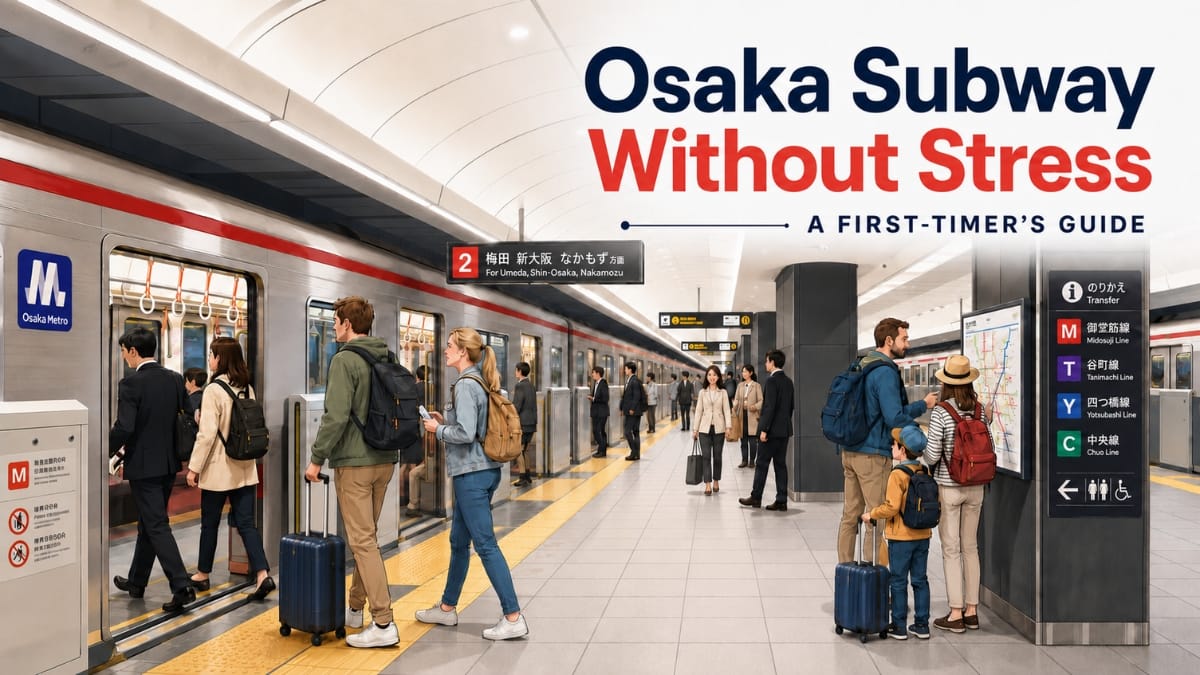
If your first Osaka subway ride starts in a busy station like Namba or Umeda, the hardest part is usually not the train itself. It is the station. There may be several rail companies, many exits, and long underground passages. Once you understand that, how to ride Osaka subway becomes much easier.
Osaka’s subway is one of the simplest ways to move between major areas such as Umeda, Namba, Shinsaibashi, Tennoji, and Osaka Castle. Trains are frequent, signs are usually clear, and most visitors can use it without speaking Japanese. The main challenge is knowing which line to take, which ticket to buy, and which exit gets you closest to your destination.
How to ride Osaka subway step by step
Start with your destination, not the nearest entrance. In Osaka, a station can be large enough that the wrong exit adds 10 to 20 minutes of walking. Check the station name in English, the line color, and the exit number before you go underground.
At the entrance, look for the Osaka Metro signs. Osaka has other train companies too, including JR and private railways, and they may be connected inside the same station area. If the sign says Osaka Metro, you are in the right system for the subway.
Next, buy a paper ticket or use an IC card. If you already have an IC card such as ICOCA, Suica, or Pasmo, this is the easiest option. Tap in at the gate, ride, then tap out at your destination. The correct fare is calculated automatically. For most first-time visitors, this is the least stressful choice.
If you do not have an IC card, use the ticket machine. Many machines have an English button. You need to know the fare to your destination before buying a single ticket. Fare maps are posted above the machines, but they can look crowded at first. Find your destination station name, check the fare, choose that amount on the screen, pay, and take the ticket.
Then go through the gate. Insert a paper ticket into the slot and collect it on the other side, because you will need it again when you leave. If you use an IC card, just tap and walk through.
On the platform, check three things before boarding: the line name, the direction, and the next stations. Direction matters more than platform number. For example, on the Midosuji Line, trains go northbound or southbound depending on where you need to go. If you board the wrong direction, it is easy to fix at the next stop, but it helps to check first.
The Osaka subway lines most travelers use
You do not need to memorize the whole network. Most visitors use a small number of lines repeatedly.
The Midosuji Line is the most useful for many trips. It connects Shin-Osaka, Umeda, Shinsaibashi, Namba, Tennoji, and other major areas. If you are staying near Umeda or Namba, this may become your default line.
The Chuo Line is helpful for Osaka Castle area and east-west movement across the city. The Tanimachi Line is useful for places such as Tennoji and some stops near historic areas. The Sennichimae and Sakaisuji lines are also common for local trips, depending on where your hotel is.
Station codes make things easier. You may see signs such as M20 or T23. The letter shows the line, and the number shows the station order. Even if you cannot read every sign quickly, these codes help confirm that you are in the right place.
Tickets, IC cards, and day passes
For most travelers, an IC card is the best choice. It works on Osaka Metro and many other train and bus systems in the Kansai region and beyond. You do not need to calculate fares each time, and transfers feel simpler.
Single tickets make sense if you only plan to ride once or twice. They are fine, but slower, especially during busy hours when people are lining up at machines.
Day passes can save money if you plan several subway rides in one day. They are most useful on days when you will move between multiple neighborhoods rather than spending hours in one area. The trade-off is simple: if your day is mostly walking around one district like Namba or Umeda, a pass may not be worth it.
Some visitors assume every rail trip in Osaka is covered by the same pass. That is not always true. JR lines, Hankyu, Hanshin, Keihan, Nankai, and Osaka Metro are different systems. Before buying a pass, check whether your planned route is mostly subway or includes other railways.
Transfers and station changes
Transfers inside Osaka Metro are usually straightforward, but walking time can be longer than expected. Large stations such as Umeda, Namba, and Hommachi may require several minutes underground between lines. If you are carrying luggage or traveling with children, give yourself extra time.
The biggest beginner mistake is assuming stations with similar area names are all the same station. In central Osaka, some JR and private railway stations connect to subway stations through long underground corridors, but they are still different systems. Osaka Station and Umeda Station are the classic example. They are connected and function as one major transport area for many travelers, but the station names and rail operators differ.
If a route app shows a transfer, read it carefully. Sometimes it is a simple same-system change. Other times it means a longer walk between different rail companies. That difference matters when you are tired or trying to catch a timed reservation.
What the station experience is actually like
Most stations have English signs, platform screens, and line colors that are easy to follow once you slow down. Announcements often include English too, especially on major lines. You do not need perfect confidence to use the subway well. You need to stop, read the signs, and avoid rushing because other people are moving fast.
Platforms can be crowded during commuting hours, especially on weekday mornings and early evenings. If you want an easier first ride, avoid the busiest times and start midday. You will have more space to read signs and board calmly.
On the train, keep bags close, speak quietly, and avoid blocking doors. Priority seating is marked. Eating is uncommon on subways, though carrying drinks is normal. If the train is full, move inward instead of stopping by the door.
Common mistakes first-time visitors make
The most common mistake is entering the station before confirming the exact exit needed. This matters near places like Dotonbori, Osaka Castle, and large shopping districts. The station may be correct, but the wrong exit can leave you farther away than expected.
Another common problem is mixing up Osaka Metro with JR. If your hotel is near a major station area, several systems may be available. One route may be faster, another may be simpler. The best choice depends on where you are going, how comfortable you are with transfers, and whether you already have a pass that covers a certain operator.
Visitors also sometimes panic when they miss a stop. Do not. Just get off at the next station, cross to the opposite platform if needed, and ride back. Osaka’s subway is frequent enough that this is usually a minor delay, not a ruined plan.
Best advice for families, seniors, and travelers with luggage
If you have strollers, mobility concerns, or large suitcases, look for elevator signs before following the shortest transfer route. The fastest path is not always the easiest one. Some exits have long stairs, and not every transfer feels convenient with luggage.
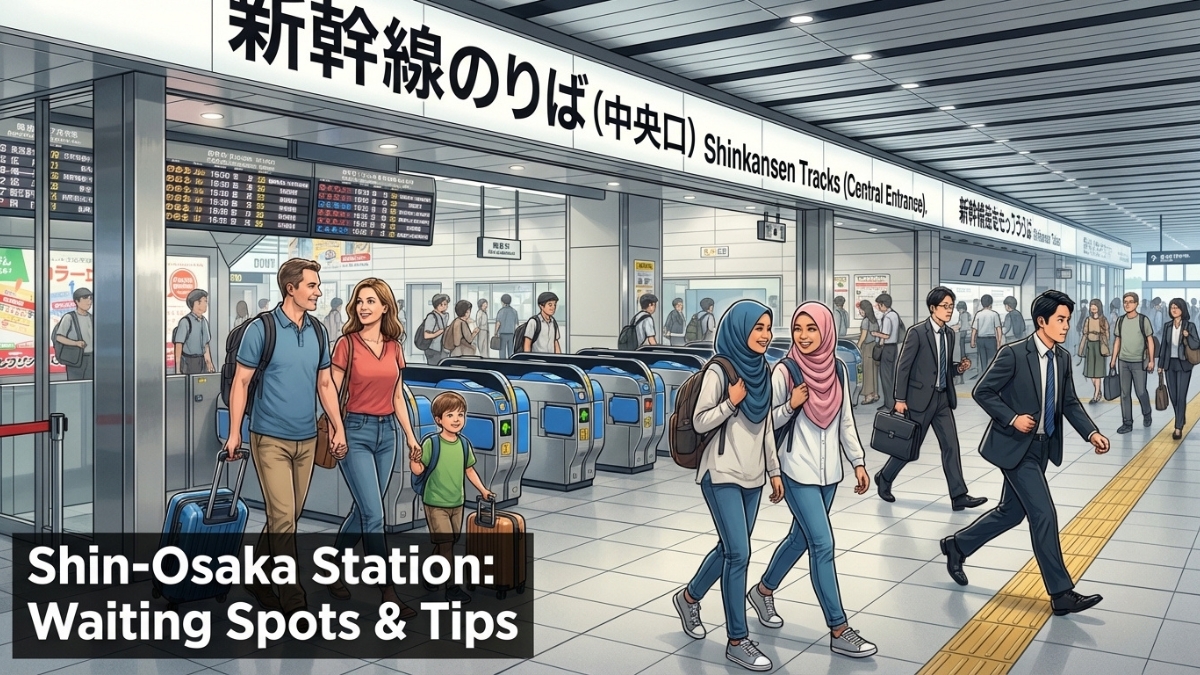
For airport days or Shinkansen days, the subway can still work well, but try to avoid peak commuter times. If you are going to Shin-Osaka with luggage, a direct route with fewer changes is usually better than a technically faster route with multiple transfers.
If you are traveling as a group, decide the exit and final stop before entering the gate. Underground stations are not the best place for long discussions when people are tired and phone signals may feel inconsistent.
How to ride Osaka subway with less stress
Use a route app, but do not follow it blindly. Check the operator name, line color, station code, and exit number. Those details matter more in Osaka than many first-time visitors expect.
If your trip is short, staying near a Midosuji Line station makes daily travel easier. It connects many places visitors already plan to visit, and it reduces the number of transfers needed. That one choice can make the whole city feel simpler.
The subway in Osaka is not hard because the trains are confusing. It feels hard because stations are layered, connected, and busy. Once you understand that pattern, the system starts to feel predictable. Give yourself a little extra time on the first day, trust the signs, and treat the correct exit as part of the route, not an afterthought.
A calm subway ride in Osaka usually starts before you reach the platform.