
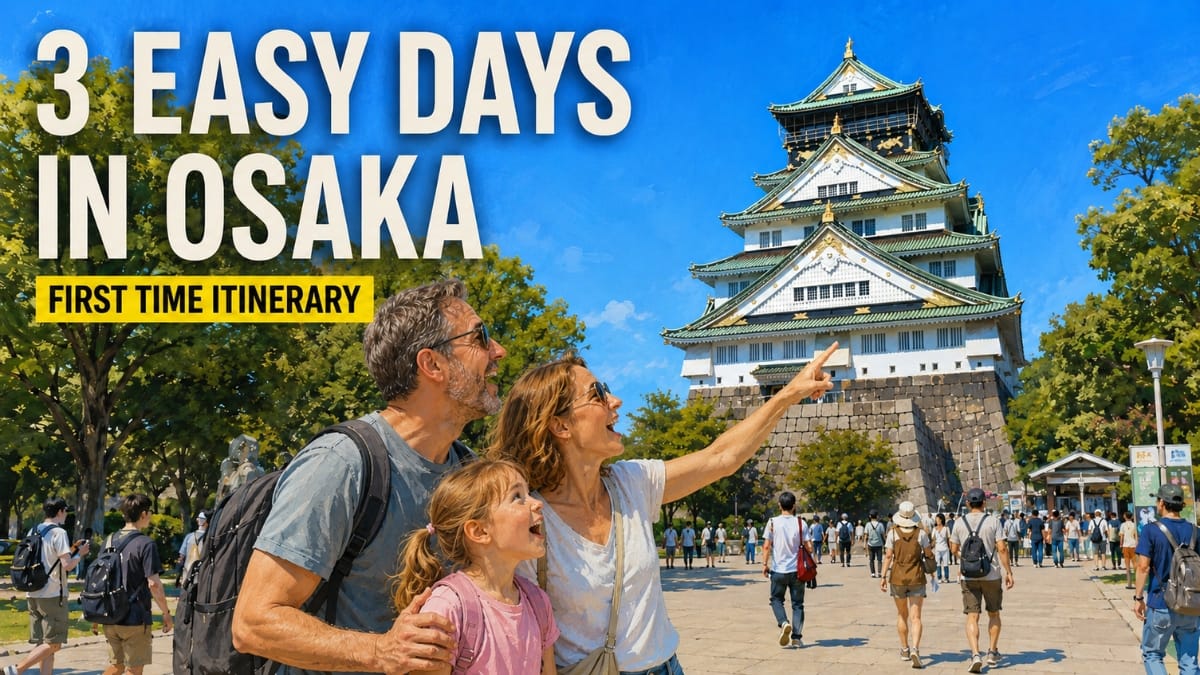
If you are building a first time Osaka itinerary, the main challenge is not finding things to do. It is choosing areas that fit together without wasting time in stations, long transfers, or overcrowded timing. Osaka is easier than Tokyo for most first-time visitors, but the city still works best when you plan by neighborhood, not by a random list of attractions.
This 3-day plan is designed for travelers staying in central Osaka, especially around Namba, Umeda, or Osaka Station. It keeps daily movement simple, mixes major sights with practical food stops, and avoids the common mistake of crossing the city too many times in one day.
How to use this first time Osaka itinerary
Before the daily plan, a few basics will save you stress. Osaka has multiple railway companies, and station names can be similar. If you are new to Japan, use an IC card for local trains and subways. It works on most city transport and removes the need to buy individual tickets each time.
Try to group your sightseeing by area. Namba, Dotonbori, and Shinsaibashi fit naturally together. Umeda and Osaka Station also pair well. Osaka Castle is easy to reach, but it does not sit next to the main nightlife districts, so treat it as its own half day rather than squeezing it between unrelated stops.
If you are arriving by Shinkansen, you will likely pass through Shin-Osaka Station. That station is useful for transfers, but most first-time visitors do not need to stay there unless they want quick long-distance rail access. For sightseeing, Namba and Umeda are usually more convenient.
Day 1: Namba, Dotonbori, and the Minami area
Start in Namba. This is one of the easiest places for a first visit because transport, food, shopping, and major city scenes are all close together. If you stay nearby, you can begin on foot. If not, arrive in the morning before the area gets too crowded.
Walk north through Shinsaibashi if you want covered shopping streets and a softer start to the day. Then move toward Dotonbori before lunch. In the late morning, it is busy but still manageable. By mid-afternoon and evening, the canal area can become slow to walk through, especially on weekends and holidays.
Dotonbori matters less as a sightseeing monument and more as a first introduction to Osaka street energy. Expect bright signs, photo spots, chain stores, snack stalls, and heavy foot traffic. It is useful for orientation, but it is not the best place to spend an entire day standing in food lines.
For lunch, this area gives you easy access to okonomiyaki, takoyaki, ramen, curry, and casual set meals. If a line looks too long, step one or two streets away from the canal. Food quality is often still good, and the wait may be much shorter.
In the afternoon, consider walking to Namba Yasaka Shrine if you want a short break from the commercial streets. It is known for its large lion-head stage and is easy to combine with the wider Namba area. Another option is Kuromon Market, but expectations matter here. It is convenient and central, but prices at some stalls can feel high compared with ordinary local shopping streets. It works better as a short browse than a major destination.
Stay in Minami into the evening if you want Osaka at its liveliest. This is the best night for Dotonbori photos, casual bar streets, and late meals. If crowds make you tired, head back early and save your energy for the next day. First-time visitors often try to do too much on night one.
Day 2: Osaka Castle and Umeda
Begin the second day at Osaka Castle. Go in the morning. The grounds are easier to enjoy before the midday crowds and summer heat. The castle area is large, so wear shoes you can walk in comfortably.
The nearest station depends on which side you enter from, and that can affect how much walking you do. This is one place where checking your station exit before arrival helps. Inside the castle museum, expect stairs, exhibits, and views from the top rather than empty historic rooms. Some travelers love it for the overview and city view. Others prefer the exterior, moat, and park more than the interior museum. It depends on your interest level and your tolerance for crowds.
Give this area around two to three hours if you want the tower, the grounds, and a relaxed pace. During cherry blossom season, the park becomes especially busy. In midsummer, the heat can turn a pleasant walk into a tiring one, so carry water and avoid the hottest part of the afternoon.
After Osaka Castle, move to Umeda. This shift works well because Umeda is one of Osaka’s main transport and commercial centers, with department stores, underground malls, and city views. It feels more businesslike and modern than Namba.
Umeda Station and Osaka Station form a large, sometimes confusing complex. For first-time visitors, this is one of the few parts of Osaka that can feel overwhelming. Signs are good, but the station area is big. If you are meeting someone or aiming for a specific building, know the exact name before you go.
Spend the afternoon indoors if the weather is bad or if you want a break from shrine and castle sightseeing. This is a practical time for shopping, a cafe stop, or an early dinner. If you want a skyline view, Umeda is a good evening area for that. Compared with Dotonbori, it feels less chaotic and more structured.
Day 3: Choose your Osaka based on your travel style
The best first time Osaka itinerary should leave room for one flexible day. By day three, most travelers know whether they want food, history, family attractions, slower neighborhoods, or a simple half-day before moving on.
Option 1: Shinsekai and Tennoji for classic city contrast
If you want to see another side of Osaka, combine Shinsekai with the wider Tennoji area. Shinsekai has a retro look, casual eateries, and a more old-school streetscape than Umeda or Shinsaibashi. It is easy to visit, but it is better treated as a short visit than a full-day plan unless you are adding nearby attractions.
Tennoji gives you department stores, transit access, and larger attractions within reach. This combination works well for travelers who want variety without long transit times.
Option 2: Sumiyoshi Taisha for a calmer morning
If central Osaka has started to feel crowded, head to Sumiyoshi Taisha. It is one of the city’s most important shrines and offers a very different pace from Dotonbori. The grounds are easier to enjoy in the morning, and the visit can feel more spacious and calm.
This option fits travelers who want a cultural stop that does not require a full day. It also works well for couples, older travelers, and anyone who wants a quieter final day.
Option 3: Family-friendly time at the bay area
For families or travelers who prefer major attractions, the bay area may fit better. This depends on your priorities. If you are visiting a large attraction, expect a more structured day with timed entry, queues, and less neighborhood wandering. That is not a problem if this is what your group wants, but it changes the rhythm of the trip.
Option 4: Keep it simple and revisit your favorite area
Many first-time visitors over-plan day three. A better choice is often to return to the area you liked most, eat one more good meal, shop, and leave time for packing or the train to your next city. Osaka is enjoyable when you are not rushing.
Common mistakes to avoid
The biggest mistake is treating Osaka as a checklist city. It works better as a set of districts with different moods. Trying to do Osaka Castle, Dotonbori, Umeda, Shinsekai, and a far-out day trip all in one day will leave you tired and confused.
Another common problem is underestimating station size. Namba and Umeda each have multiple lines, exits, and connected buildings. A transfer that looks simple on a map can still take time on foot.
Food timing also matters. Popular places may have long waits at lunch and dinner peaks. If you eat a little earlier or later, the day becomes much easier. Cashless payment is common in Osaka, but not universal, especially in smaller eateries or older shops, so keep a small amount of cash.
Finally, do not judge travel time only by train minutes. Add time for finding the platform, walking through the station, and choosing the right exit. That is often where first-time visitors lose time.
Is 3 days enough for a first visit?
Yes, for most travelers, 3 days is enough for a strong first visit to Osaka itself. You can see the major city areas, eat well, and still have time to move at a comfortable pace. If you want museums, theme parks, day trips, or slower neighborhood exploration, add extra time.
A good first visit does not need to cover every famous spot. It should help you understand how Osaka feels, how its main districts connect, and which parts of the city suit you best. That makes the rest of your trip easier, whether you are continuing to Kyoto, Nara, Kobe, or staying longer in Osaka.
Leave some open space in your schedule. In Osaka, that usually leads to a better meal, a less stressful transfer, and a more enjoyable day.