
If you are planning to visit Namba Yasaka Shrine in Osaka, it helps to know one important thing before you go: this is not only a photo spot. It is an active Shinto shrine, known for its giant lion-head stage, its prayers for protection and good fortune, and its short walk from Namba Station. It is about a 6-minute walk from Namba Station, with gates generally open 6:00 a.m. to 5:00 p.m. and shrine office hours of 9:00 a.m. to 4:50 p.m.
For many first-time visitors, the most confusing part is not the walk. It is the meaning of the place. Words like “deity,” “blessing,” or “enshrined” can sound abstract if you are not familiar with Japanese religion. At a Shinto shrine, people come to pray, show respect, and ask for protection, success, health, or good fortune. Namba Yasaka Shrine is especially known for prayers related to warding off evil, relief from bad luck, protection from disease, and success in important moments.
What it is
Namba Yasaka Shrine is a Shinto shrine in Motomachi, Naniwa Ward, Osaka. Shinto is Japan’s traditional belief system, and shrines are places where people pay respect to kami. In English, kami is often translated as “gods” or “deities,” but that can be misleading. In Japanese culture, kami can refer to divine beings connected to nature, protection, local communities, or stories passed down over generations. A shrine is not exactly the same as a church or temple. It is a place for prayer, ritual, and respect within the Shinto tradition.
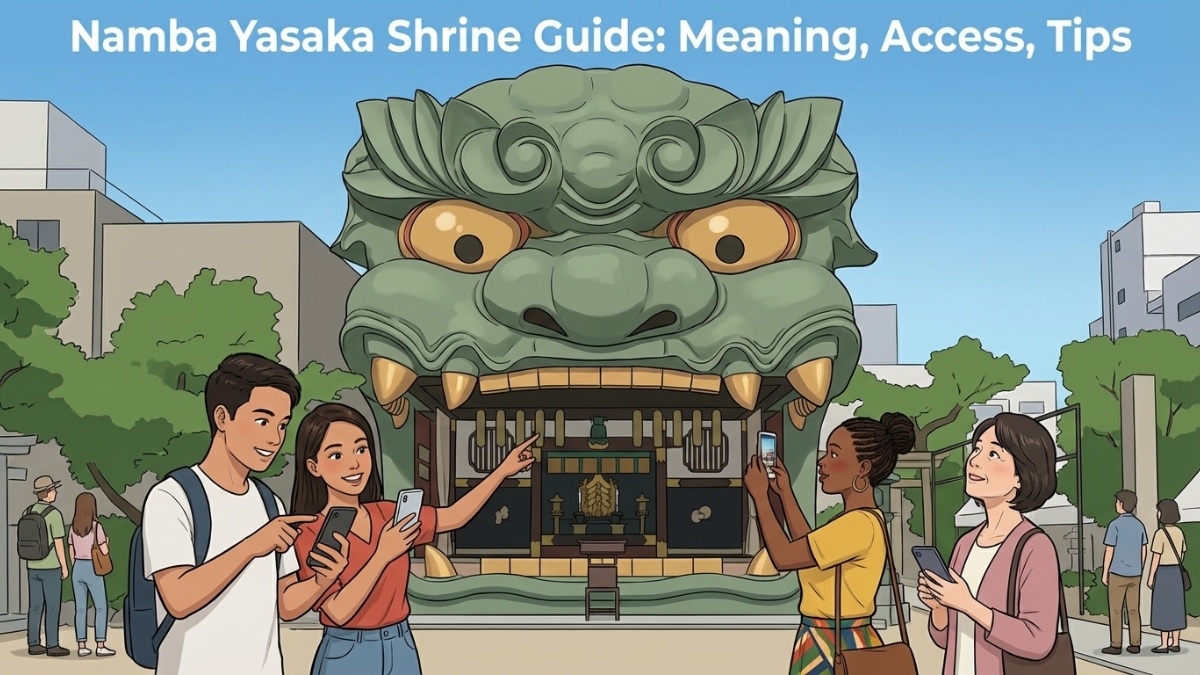
This shrine is best known for its giant lion-head stage. It is about 12 meters high, 11 meters wide, and 10 meters deep. The current shrine buildings are postwar reconstructions, and the lion-head stage was completed in 1974.
The shrine’s official website says the exact founding date is unknown. It was long known as Naniwa Shita-no-Miya and served as a local guardian shrine for the Namba area.
The setting is part of the appeal. You leave the crowded streets of Namba, walk into a quieter local area, and then the lion face suddenly appears above the grounds. That contrast makes the shrine memorable even before you start learning its religious meaning.
Which deity is worshipped here
The main deity of Namba Yasaka Shrine is Susanoo-no-Mikoto. Osaka’s official tourism materials and shrine-related explanations connect the shrine’s major ritual traditions to the story of Susanoo defeating Yamata-no-Orochi, a legendary eight-headed serpent.
For first-time international visitors, the simplest way to understand Susanoo is this: he is a powerful figure in Japanese mythology associated with strength, protection, and overcoming danger. That is why this shrine is often connected with prayers for victory, protection, and pushing away misfortune. You do not need deep knowledge of Japanese mythology to visit respectfully. It is enough to understand that this shrine is dedicated to a deity associated with defeating threats and protecting people.
Why it matters
Namba Yasaka Shrine matters to travelers for two main reasons.
First, it is easy to visit. Because it is so close to Namba Station, it works well as a short cultural stop between shopping, food, and other Namba sights.
Second, it offers more than a dramatic photo. The lion-head stage is not just decoration. Osaka tourism sources explain that the lion is associated with driving away evil and bringing good fortune. Osaka Metro’s tourism page describes the shrine as a place said to bring forth victory, swallow up evil, and invite good fortune.
That makes the shrine especially meaningful for visitors who are interested in good luck, exams, interviews, work, business, or major life decisions. Even if you are not religious, understanding that people come here to pray for protection and success will help you understand why the atmosphere feels different from a normal sightseeing spot.
How to do it
Location
Address: 2-9-19 Motomachi, Naniwa-ku, Osaka 556-0016.
Official website: Namba Yasaka Shrine
Google Maps: Namba Yasaka Shrine
How to get there
The easiest route for most visitors is from Namba Station. The shrine is about a 6-minute walk from Namba Station on all lines.
Nearest station
- Namba Station on multiple rail and subway lines; about 6 minutes on foot.
Transfer difficulty
- Low to moderate. Namba Station is large, so finding the right exit can take a little time, but the walk itself is short once you are above ground.
IC cards
- Standard Osaka transport access to Namba works with major IC cards such as ICOCA and Suica on Osaka rail and subway systems. This is general Osaka transport practice and applies to your journey to Namba rather than the shrine itself.
If you are using a map app, use it for the last part of the walk. The shrine is close, but it sits slightly away from the busiest main roads, so first-time visitors sometimes pass the turn. That is normal.
Hours and fees
- Gates open: 6:00 a.m. to 5:00 p.m.
- Shrine office hours: 9:00 a.m. to 4:50 p.m.
- Open year-round
Admission is generally treated as free.
If you want a goshuin or shrine items such as charms, do not rely only on gate hours. Go during shrine office hours. It is 9:00 a.m. to 5:00 p.m. for goshuin reception, which broadly matches the official office window.
What to do when you arrive
For first-time visitors, the simplest approach is:
- Enter quietly and treat the site as a place of worship, not only a photo location.
- Walk to the main shrine building and offer a short prayer if you wish.
- Visit the lion-head stage and take photos respectfully.
- Go to the shrine office during open hours if you want goshuin or charms.
If you are unfamiliar with shrine visits, do not worry. You are not expected to know every detail. Basic respect matters more than perfect ritual knowledge.
What blessings people seek here
Namba Yasaka Shrine is widely associated with:
- warding off evil
- relief from bad luck
- protection from disease
- good fortune
- success in competition or important moments
The strongest image behind these blessings is the giant lion head. Local explanations often say the open mouth “swallows” bad luck. The shrine is associated with pushing away evil and inviting good fortune.
That is why visitors often come before:
- exams
- job interviews
- sports events
- business decisions
- personal turning points
The giant lion-head stage
The lion-head stage is the shrine’s symbol. Its dimensions are 12 meters high, 11 meters wide, and 10 meters deep, and explains that it is a votive stage, not just a sculpture.
This matters because some travelers assume it is only a decorative object for photos. In reality, it is connected to shrine performances and events. That is one reason respectful behavior around it is important.
Charms, ema, omikuji, and goshuin
The shrine is known for lion-themed items in visitor guides and travel writing, especially victory-related charms, lion-themed ema, and lion omikuji. You can visit the shrine office for goshuin and shrine items, and lion-themed items are commonly associated with the shrine, but exact designs and availability may vary by day or season.
Goshuin timing
- A shrine-related Osaka goshuin guide lists 9:00 a.m. to 5:00 p.m..
Where to go
- The shrine’s worship guide says applications for prayers are handled at the shrine office on the west side of the main hall.
For first-time visitors, one useful cultural point is this: a goshuin is not just a souvenir stamp. It is connected to shrine worship and is best received after you have visited the shrine respectfully.
Seasonal events and history
If your trip matches the calendar, two traditional events are especially important.
Tug-of-War Ritual
The shrine’s official site says the Tug-of-War Ritual is held every year on the third Sunday of January. It is connected to the Susanoo and Yamata-no-Orochi story and includes prayers for protection from disease and disaster, household safety, prosperity, and good harvests. It is also listed as an Osaka City designated intangible folk cultural property.
Summer Festival and Boat Procession
The shrine has a summer festival tradition that includes a boat procession, and visitors should confirm exact dates on official sources closer to travel.
Common mistakes
The most common mistake is thinking Namba Yasaka Shrine is only a social media spot. It is a real shrine, so basic Shinto etiquette still applies. Bow lightly at the torii, avoid blocking the center of the path if others are worshipping, and keep your voice low near the main hall.
Another common mistake is arriving too late for goshuin or shrine office services. The grounds open earlier than the office. If you want stamps, charms, or prayer-related services, go during office hours, not just before the gates close.
A third mistake is visiting only at peak photo time. Because the shrine is small and popular, the lion-head area can get crowded around the middle of the day. Earlier morning is usually calmer. This crowd advice is a practical inference based on popularity and opening hours, not an official rule.
A fourth mistake is assuming every shrine item is always available. Seasonal or limited designs can change, so stay flexible.
Local tips
For first-time visitors, the easiest plan is to visit in the morning, then continue to nearby Namba attractions.
Nearby stop: Namba Parks
Namba Parks is a useful next stop if you want shopping, restaurants, and a quieter garden-like space in the same district.
Google Maps: Namba Parks
Nearby stop: Sennichimae Doguyasuji Shopping Street
This is a good stop if you want to see Osaka’s food culture through kitchen tools, restaurant supplies, and food-sample shops.
Google Maps: Sennichimae Doguyasuji Shopping Street
Photography tip
Take your photos of the lion-head stage, but also spend a few minutes at the main shrine building. Many visitors focus only on the lion and miss the religious side of the site.
Practical tip
Wear comfortable shoes. The walk is short, but many travelers combine the shrine with a longer day in Namba, Dotonbori, or nearby shopping areas.
Official links
Official website: Namba Yasaka Shrine
Google Maps: Namba Yasaka Shrine
Final takeaway
Namba Yasaka Shrine is one of the easiest shrines to visit in central Osaka, but it is also one of the most distinctive. It is known for its giant lion-head stage, its connection to Susanoo, and prayers related to protection, success, and good fortune. With its short walk from Namba Station, free entry, it is a straightforward stop even for first-time visitors to Japan.