
If you are searching for the best all-you-can-eat restaurants in Osaka, the key word to know is tabehodai. In Osaka, tabehodai can mean a hotel buffet, all-you-can-eat yakiniku, shabu-shabu, sweets. For first-time visitors, the main challenge is not finding options. It is choosing the right type, booking at the right time, and understanding time limits before you go.
What it is
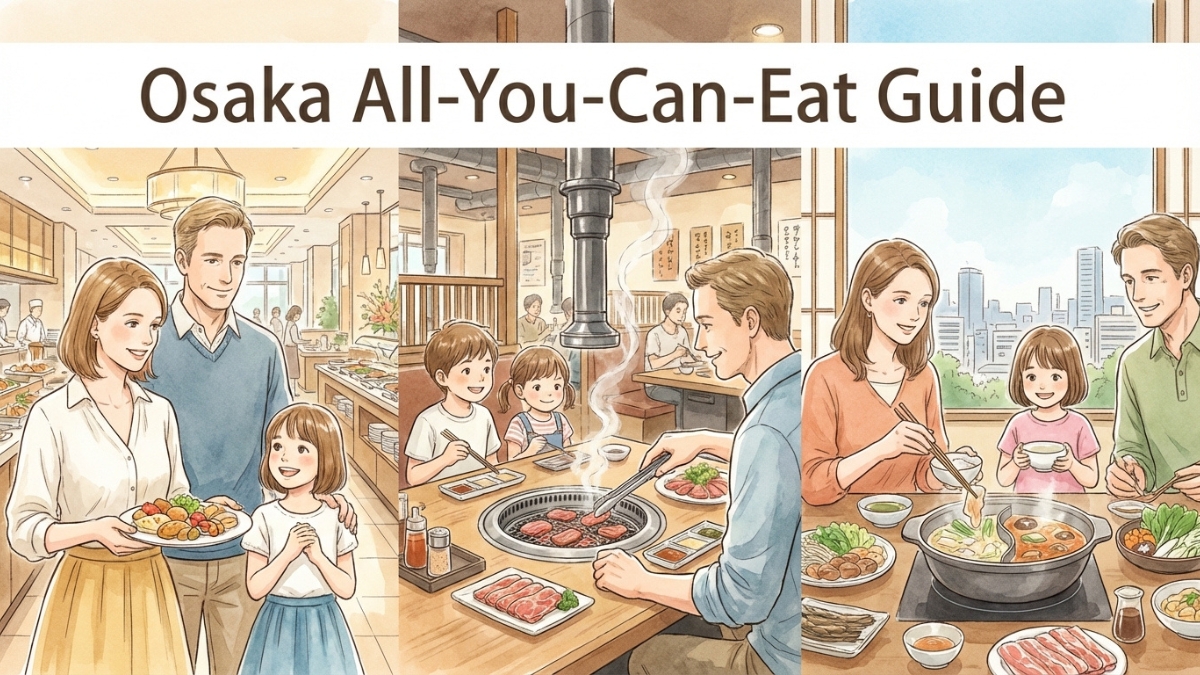
In Osaka, all-you-can-eat restaurants usually fall into three groups.
The first is the hotel buffet. These are the easiest choice if your group wants variety. They usually combine international dishes, desserts, and live cooking in one place. Good examples include The Park at Imperial Hotel Osaka, NOKA Roast & Grill at InterContinental Osaka, Folk Kitchen at Hilton Osaka, Table36 at Swissotel Nankai Osaka, and Atmos Dining at Conrad Osaka.
The second is yakiniku tabehodai. This is a practical choice if your priority is meat. Well-known options include Aburiya, Yakiniku Rikimaru, and Yakiniku King. Aburiya lists multiple all-you-can-eat courses, while Yakiniku King clearly separates course options on its official site.
The third is shabu-shabu or sukiyaki tabehodai. This works well if you want both meat and vegetables, or if your group prefers a slower meal. Popular chains include On-Yasai and Shabu-Yo. Both brands also provide multilingual or English-friendly information online, which helps first-time visitors.
Why it matters
Osaka is strongly associated with casual dining and big food culture, so all-you-can-eat restaurants fit the city well. For travelers, they are also practical. A buffet works well when a group wants different kinds of food. Yakiniku is useful when you want a filling dinner. Shabu-shabu is easier when you want a better balance of meat and vegetables.
This matters even more for first-time visitors because Osaka dining often runs on fixed time slots. Popular restaurants can require reservations, and hotel restaurants may have separate lunch, dinner, and sweets buffet schedules. If you check the format first, the meal becomes much easier to plan.
How to do it
Choose the right format first
If your group wants variety and easier service, start with a hotel buffet.
The Park at Imperial Hotel Osaka is a classic hotel choice. The official site presents it as a buffet and lounge for breakfast, lunch, tea time, and dinner. The hotel also provides official access guidance showing a free shuttle bus from Osaka Station and walkable access from Sakuranomiya Station. Google Maps: Imperial Hotel Osaka.
NOKA Roast & Grill at InterContinental Osaka is one of the easiest upscale options in Umeda. The hotel’s access page says it is about a 5-minute walk from JR Osaka Station, and the booking page lists separate breakfast, lunch buffet, dinner buffet, and sweets buffet hours. Google Maps: NOKA Roast & Grill.
Folk Kitchen at Hilton Osaka is another practical Umeda option. Hilton’s official pages describe it as an all-day buffet restaurant, and the booking page shows fixed lunch sessions for seasonal buffet plans. Google Maps: Hilton Osaka.
If you want a view with your buffet, Table36 at Swissotel Nankai Osaka is a strong choice. The official site describes it as the hotel’s top-floor signature restaurant with Osaka skyline views, weekday lunch buffet service, and weekend brunch plus sweets buffet offerings. Google Maps: Swissotel Nankai Osaka.
If you want a modern high-floor hotel setting, Atmos Dining at Conrad Osaka offers breakfast, lunch, dinner, and a sweets buffet on Fridays and weekends. Google Maps: Conrad Osaka.
If your group mainly wants meat, choose yakiniku.
Aburiya is one of the best-known all-you-can-eat yakiniku brands in Kansai. Its official site lists several all-you-can-eat courses, including domestic beef options, and shows Osaka branches such as Umeda and Dotonbori. Google Maps example: Aburiya Dotonbori Midosuji.
Yakiniku Rikimaru is another Osaka favorite, especially in the Namba and Shinsaibashi side of the city. The brand’s English page gives branch details, including hours and address information for some Osaka locations. Google Maps example: Yakiniku Rikimaru Nankai-namba.
Yakiniku King is the easiest family-style chain choice. Its official site lays out its course structure clearly, and individual store pages show hours, payment methods, and accepted credit cards, barcode payments, and transit IC cards. Google Maps example: Yakiniku King Osaka Miyakojima-dori.
If you want hot pot with vegetables, choose shabu-shabu.
On-Yasai focuses on shabu-shabu with selected meats, domestic vegetables, and different broth options. Its multilingual page is useful for travelers, and its multilingual menu also explains important house rules, such as ordering the same all-you-can-eat course for the group and possible charges for excessive leftovers. Instagram: On-Yasai Official. Google Maps example: On-Yasai Shinsaibashi.
Shabu-Yo is one of the most beginner-friendly choices because the brand provides both an English site and an English guide explaining how the meal works. It is especially useful if you are not used to Japanese hot pot. Google Maps example: Shabu-Yo Shinsaibashi.
Check the area before you book
For first-time visitors, location matters almost as much as the menu.
If you are staying around Umeda / Osaka Station, the easiest hotel buffet choices are NOKA Roast & Grill and Folk Kitchen. NOKA is especially simple because the official access page states it is a short walk from JR Osaka Station.
If you are staying around Namba, Table36 is convenient because Swissotel Nankai Osaka is in the Namba area, and many yakiniku and shabu-shabu chains also have branches nearby.
Check hours, reservations, and meal type
This is one of the most important steps.
Some restaurants run different formats by time of day. NOKA has separate breakfast, lunch buffet, dinner buffet, and sweets buffet hours. Conrad’s Atmos Dining has a separate sweets buffet schedule. Table36 also separates weekday lunch buffet and weekend brunch plus sweets service.
Hotel buffets and popular yakiniku restaurants are usually safer with a reservation, especially on weekends. Imperial Hotel Osaka, Hilton Osaka, and InterContinental Osaka all direct diners toward official reservation or menu pages, and popular stores can fill up in advance.
Check time limits and last order
In Osaka, all-you-can-eat usually does not mean unlimited time. Many restaurants use fixed 70-, 90-, or 120-minute systems depending on the branch and time slot. On-Yasai’s multilingual menu and some Shabu-Yo branch guidance also make clear that rules such as group course selection and buffet time limits matter.
That means you should pace your meal. Start with the dishes you care about most. Do not save everything for the final 20 minutes.
Check payment before you go
Payment methods vary by branch. For example, a Yakiniku King Osaka store page lists major cards, barcode payments, and transit IC cards. If payment flexibility matters to you, checking the exact store page before leaving your hotel is the safest approach.
Common mistakes
The most common mistake is choosing the wrong type of tabehodai.
Do not choose a hotel buffet if your group mainly wants grilled meat. Do not choose yakiniku if your group wants a slower, vegetable-heavy meal. These formats are very different, even though they all count as all-you-can-eat.
Another common mistake is ignoring the reservation calendar. Hotel buffets and popular yakiniku restaurants can fill quickly on weekends and holidays. Official booking pages are the safest place to check first.
A third mistake is not checking the branch. Osaka has many chain locations, and branch hours, access, and payment methods can differ.
A fourth mistake is misunderstanding all-you-can-drink. In Japan, this is usually listed separately as nomihodai. It is not always included in the meal price. Aburiya, for example, lists separate all-you-can-eat and drink-inclusive options.
A final mistake is wasting food. On-Yasai’s multilingual menu explicitly notes that customers who leave too much food may be charged extra.
Local tips
Learn these two words before you go: tabehodai means all-you-can-eat, and nomihodai means all-you-can-drink. These words appear often on Japanese menus and reservation pages.
If this is your first Osaka trip, the easiest low-stress choices are:
- a hotel buffet in Umeda if you want comfort and variety
- Shabu-Yo or On-Yasai if you want a simple hot pot meal
- Aburiya if your priority is a better-quality all-you-can-eat yakiniku experience
If you want the easiest planning flow, decide in this order: area first, meal type second, reservation third.
In practical terms:
- staying near Osaka Station / Umeda: book a hotel buffet
- staying near Namba / Shinsaibashi: book yakiniku or shabu-shabu nearby
- visiting USJ: eat at Universal Citywalk Osaka or nearby after the park
Final takeaway
Osaka has excellent all-you-can-eat options, but they are not all the same. For first-time visitors, the best choice depends on what you want most: variety, meat, hot pot, dessert, or a local hands-on meal.
If you want the safest beginner option, start with a hotel buffet. If you want better value for a filling dinner, choose yakiniku or shabu-shabu. The important part is to check the official branch page, confirm the time limit, and book ahead when needed. Once you do that, Osaka all-you-can-eat dining becomes much easier to enjoy.