
The best authentic Osaka experiences usually do not begin with a landmark. They begin with a street that feels lived-in, a lunch counter with no hard sell, or a shrine visit that takes ten quiet minutes between train rides. For first-time visitors, that is often the difference between seeing Osaka and actually feeling how the city works.
Osaka is friendly, energetic, and much less formal than many travelers expect. But “authentic” can be misunderstood. It does not always mean remote, hidden, or difficult to reach. In Osaka, some of the most real moments happen in places that are easy to access if you know what kind of experience you are looking for.
What authentic Osaka experiences really mean
In practical terms, authenticity in Osaka is less about chasing secrets and more about paying attention to context. A busy shopping street can still feel local if people are there for daily errands rather than curated nostalgia. A shrine can feel meaningful even if it is well known, as long as you visit at a time when worship and neighborhood life are still visible.
That matters because first-time travelers often lose time trying to avoid anything popular. Osaka does have famous areas worth seeing, but the richer approach is to balance them with places where local routines are still the main event. You do not need a perfect hidden gem. You need a few neighborhoods and habits that let the city open up naturally.
Start with neighborhoods, not attractions
If you want authentic Osaka experiences, choose areas with a clear local rhythm and spend enough time there to notice it. Osaka makes more sense by neighborhood than by checklist.
Sumiyoshi for a slower, older feel
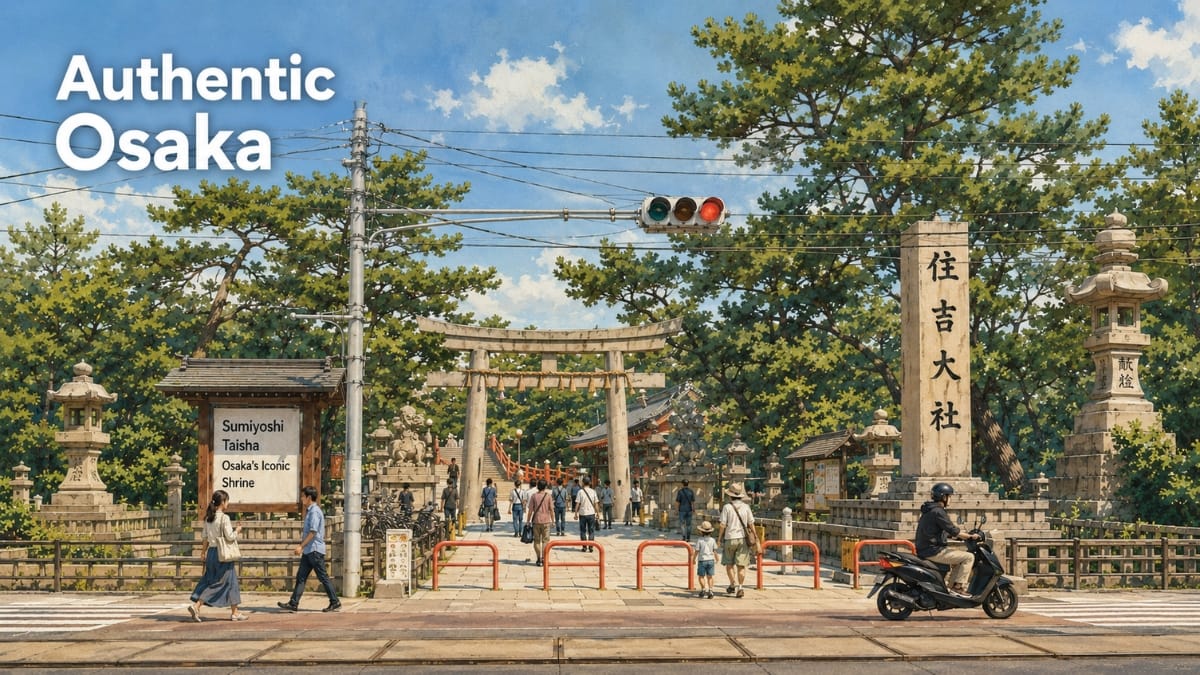
Sumiyoshi is one of the easiest places to understand this shift. Around Sumiyoshi Taisha, the mood is calmer and more grounded than in the entertainment districts. The shrine itself is important, but the area around it also matters – local shops, quieter streets, and the sense that people are there for ordinary reasons, not only sightseeing.
This is a good stop for travelers who want cultural depth without needing a half-day excursion. Go in the morning if possible. The atmosphere is gentler, and the experience feels less performative.
Shinsekai for Osaka’s rough edges and nostalgia
Shinsekai is often described as retro, but that can make it sound tidier than it is. Part of its character comes from a mix of old signage, casual eateries, and a slightly worn-in energy that still feels distinctively Osaka. It is lively and photogenic, but it is not polished.
That trade-off is exactly why some travelers love it and others do not. If you want a clean, refined version of local culture, this may not be your favorite area. If you want somewhere with personality and a strong sense of place, it earns a visit.
Nakazakicho for small-scale creative Osaka
Near Umeda, Nakazakicho offers a different kind of authenticity. This is not old Osaka preserved in a museum-like way. It is a neighborhood where older buildings now hold small cafes, boutique shops, and independent businesses. It feels personal rather than grand.
For many first-time visitors, this works well because it is accessible and low stress. You can pair it with a busier area and reset there for an hour or two without feeling like you are following a tourist script.
Eat where the routine feels local
Food is central to Osaka, but not every famous meal leads to a meaningful experience. Some of the best meals for first-time visitors are not the most talked-about ones. They are the ones where the setting, pace, and customer mix feel everyday.
Counters, lunch sets, and neighborhood specialties
A small counter restaurant can tell you more about Osaka than a themed dining experience ever will. Look for places with simple menus, lunch specials, or a steady flow of local customers. You may not understand every item immediately, but that is part of the value. The meal reflects how people actually eat in that area.
This is especially true for casual staples like udon, curry, grilled fish set meals, and neighborhood okonomiyaki. Takoyaki matters too, but many travelers over-focus on it because it is easy to recognize. Osaka’s food culture is broader than one snack.
Markets are useful, but timing changes the experience
Markets can be excellent for first-time visitors, but they vary a lot. Some are best for atmosphere and grazing, while others feel more local earlier in the day when people are shopping with purpose. If you arrive only at peak afternoon hours, you may get more crowd energy than local rhythm.
This does not mean you should avoid them. It means expectations matter. A market can still be worth visiting for food and texture, but it may not feel especially intimate if you go at the busiest time.
Shrines and temples work best when you slow down
Many travelers want at least one spiritual or historical stop that feels grounded rather than rushed. Osaka can absolutely offer that, but timing and behavior shape the experience.
Go earlier and observe before photographing
Early visits usually feel more genuine. You are more likely to notice people praying, caretakers maintaining the grounds, and the natural pace of the site. Later in the day, especially in popular places, the balance can shift toward sightseeing.
Take a minute before reaching for your phone. Read the space first. Notice the entrance, purification area, and how others move through it. Even a short visit becomes more meaningful when you understand you are entering an active place, not just a visual attraction.
Smaller sites can be easier for first-time visitors
Major religious sites are important, but smaller neighborhood shrines often feel more approachable. They ask less of your schedule and can fit naturally into a walking route. For first-time visitors who are still adjusting to train systems and pacing, this can be a better way to experience Osaka without overload.
Let transit hubs lead to real moments
Osaka Station, Namba, and Tennoji can feel purely functional at first. Many travelers rush through them. But these areas are useful not only for transport – they are also where you can observe daily urban life at full speed.
Department store food floors, station-adjacent cafes, and side streets just outside major exits often offer more authentic Osaka experiences than travelers expect. Not because they are hidden, but because they are woven into how residents move through the city.
This is where practicality helps. If you are already changing trains or looking for a rest stop, choose somewhere that serves office workers, students, or shoppers rather than a place designed mainly around travel demand. The experience will usually feel more grounded, and it saves time.
How to avoid the fake version of authenticity
The biggest mistake is trying too hard. Once a traveler starts chasing only “secret” places, decision fatigue sets in fast. Osaka is large enough that over-planning can make the city feel harder than it is.
A better approach is to build one day around contrast. Pair a famous district with a quieter neighborhood. Have one iconic food item, then one ordinary local meal. Visit one major attraction, then spend an hour in a place with no clear agenda. That mix usually creates a more honest trip than stacking only must-see spots or only obscure ones.
It also helps to accept that authentic does not always mean comfortable in the same way. Some places will be noisier, older, more crowded, or less intuitive for English speakers. That is part of the texture. Still, there is a difference between healthy friction and unnecessary stress. If a place feels logistically exhausting, it may not be the right fit for your trip, even if it looks appealing online.
A simple way to plan authentic Osaka experiences
Keep your planning anchored to how you actually travel. If you like slow mornings, choose shrine areas, older shopping streets, or residential cafes earlier in the day. If you enjoy nightlife and energy, save districts like Namba or Shinsekai for evening but give yourself permission to wander one or two side streets instead of only staying on the main drag.
If you only have a short stay, do not try to prove you saw the “real” Osaka in every hour. The city rewards repeat attention, not speed. Even one well-chosen neighborhood can give you a stronger memory than six rushed stops.
That is often the most useful mindset for first-timers. Authenticity in Osaka is rarely a prize you find at the end of a hunt. It shows up when you leave a little room for ordinary places to matter.