
If your first Osaka meal happens under a train line, beside a griddle, or in a tiny shop with six counter seats, you are probably doing it right. For many first-time visitors, searching for local Osaka food examples is really a way of asking a bigger question: what should I eat here that actually feels specific to Osaka, not just popular in Japan overall?
That distinction matters. Osaka has a strong food identity, but not every dish sold in the city started here, and not every famous spot is the best choice for a first meal. The easiest way to approach it is to look for dishes that locals strongly associate with Osaka’s street culture, merchant history, and casual, flavor-first dining style. Some are famous. Some are quieter. All of them give you a more grounded entry point into the city.
Local Osaka food examples that actually feel local
The most recognizable place to start is takoyaki. These round batter balls filled with octopus are sold all over Japan now, but Osaka is where many travelers first connect them with everyday street eating. Good takoyaki in Osaka is usually softer inside than visitors expect, almost molten in the center, with a light crispness outside. If you bite too fast, you will burn your mouth. Everyone does it once.
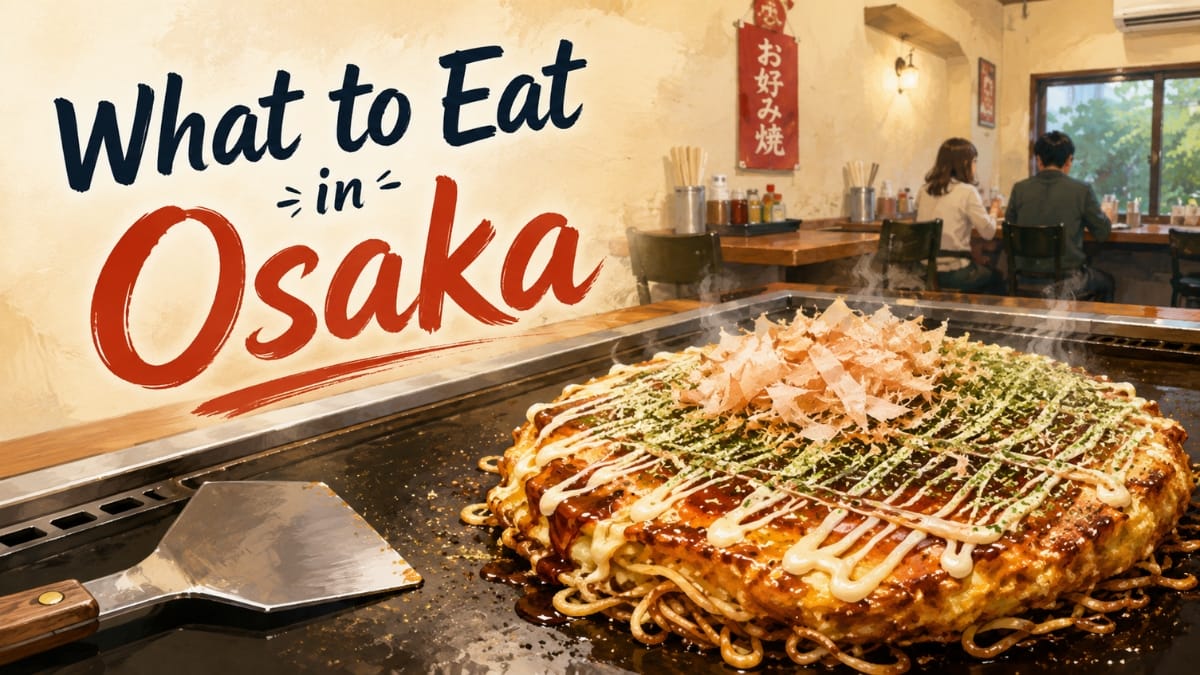
Okonomiyaki is another core Osaka dish, but it helps to know what style you are ordering. Osaka-style okonomiyaki mixes cabbage, batter, and fillings together before cooking, creating a savory pancake that is hearty but still soft. This is different from Hiroshima-style okonomiyaki, which is layered. In Osaka, the classic version often includes pork belly, but seafood, mochi, cheese, and mixed combinations are common. It is filling enough to be a full meal, especially if you add yakisoba.
Kushikatsu belongs in any serious list of local Osaka food examples, especially if you plan to spend time around Shinsekai. These are skewered and deep-fried items that can range from meat and shrimp to pumpkin, lotus root, asparagus, and quail egg. The experience is part of the appeal – quick, casual, and often best in places that feel a little loud and lived-in. The famous rule about not double-dipping into the communal sauce still matters in traditional shops, though some places now use individual portions.
Then there is negiyaki, which many first-time visitors overlook. It is related to okonomiyaki, but green onion is the main feature rather than cabbage. The result is lighter, sharper, and often a bit less heavy than standard okonomiyaki. If you want something local but do not want a very dense meal, negiyaki is a smart choice.
Osaka comfort foods beyond the obvious
A lot of travelers arrive expecting only street food, then realize Osaka also does comfort food extremely well. Kitsune udon is a good example. The dish is simple – udon noodles in broth topped with sweet seasoned fried tofu – but it has deep ties to the Kansai region, including Osaka. The broth is usually lighter in color than what some visitors may know from Tokyo-style noodle soups, but that does not mean lighter in flavor. It is clean, savory, and very easy to come back to after a long day.
Doteyaki is another dish worth knowing, especially if you enjoy richer flavors. This is beef tendon slowly simmered in miso, mirin, and sugar until tender. It often appears in izakayas and old-school drinking neighborhoods rather than in mainstream sightseeing guides. For some travelers, doteyaki becomes the dish that makes Osaka feel most distinct – sweet, salty, deeply savory, and more rooted in everyday local drinking culture than polished tourist menus.
Nikusuimon also deserves a mention, even though it is less famous internationally. This is a soup with beef and onion, and while simple on paper, it reflects Osaka’s straightforward, satisfying food culture. It is not always easy to find compared with takoyaki or okonomiyaki, so it works better as a bonus dish than a must-plan first stop. Still, if you see it at a traditional restaurant, it is one of the more interesting local choices.
What to eat in Osaka by neighborhood
Where you eat changes the feel of the dish. Dotonbori is the obvious area for first-timers, and that is fine. It is busy, theatrical, and full of classic Osaka foods. Takoyaki here is easy to find, and trying it in this part of the city gives you the full sensory version of Osaka – neon, crowds, steam, signs, and noise. The trade-off is that some shops are built for volume, not necessarily for the best balance of texture and flavor.
If you want kushikatsu, Shinsekai makes more sense than Dotonbori. The neighborhood still carries a retro, slightly rough-around-the-edges atmosphere that fits the food. It feels less polished and more tied to the kind of casual Osaka dining many visitors hope to find.
For okonomiyaki and negiyaki, you have more flexibility. Namba, Umeda, and residential areas outside the main tourist core all have strong options. In fact, some of the best versions are in ordinary shopping streets or near stations where locals stop for dinner rather than where visitors line up for photos. If you are staying near Osaka Station or Umeda, you do not need to cross the city just to find a worthwhile meal.
Kitsune udon is the easiest to fit into a travel day because noodle shops are spread widely across the city. It works well for lunch between neighborhoods, especially when you want something fast but still regionally meaningful. This is one of those dishes that helps lower decision stress because it is dependable, approachable, and not too heavy.
How to choose the right local dish for your first trip
If you only have one or two meals to dedicate specifically to Osaka specialties, choose based on how you like to travel. Takoyaki is ideal if you want an iconic snack and a quick food stop while exploring. Okonomiyaki is better if you want to sit down, slow down, and make the meal itself part of the evening.
Kushikatsu is best when you want atmosphere as much as food. The setting often matters almost as much as the skewers. Kitsune udon is the easiest option for travelers who feel overwhelmed by choice or need a quiet reset between busier sightseeing blocks.
There is also the question of how adventurous you want to be. None of these dishes are especially difficult for most visitors, but texture matters. Takoyaki can be quite creamy inside. Doteyaki involves beef tendon, which some people love and others do not. Negiyaki is easier for travelers who prefer familiar savory flavors with a local twist.
This is where first-time visitors sometimes overplan. You do not need to build a perfect Osaka food checklist. You need a few reliable dishes that anchor your trip in the city itself. One street snack, one griddle-based meal, and one comforting local staple is usually enough to make Osaka feel distinct on the plate.
A few local Osaka food examples travelers often miss
Butaman, or steamed pork buns, are strongly associated with Osaka thanks to popular local chains and everyday grab-and-go eating culture. They are not always framed as a sightseeing food, which is exactly why they can be a good addition. They are convenient, inexpensive, and easy to fit into a station-area snack break.
Horumonyaki is another one to consider if you enjoy grilled offal and richer flavors. Osaka has long had a strong working-class food culture, and dishes that make full use of ingredients are part of that story. This is not the safest recommendation for every first-time visitor, but for confident eaters, it can feel more revealing than a second round of takoyaki.
Even oshizushi, pressed sushi, has a place in an Osaka-focused food conversation. Sushi in general is not unique to Osaka, but this style has deeper Kansai roots and offers a different perspective from the standard nigiri many travelers expect. It may not be the first dish to prioritize, though it is a smart choice if you want something regional without repeating the usual list.
The best approach is not to chase every famous item. It is to notice which foods seem woven into the neighborhoods you are already visiting. A good Osaka meal often feels informal, efficient, and full of character rather than ceremonious.
If you keep your expectations simple and your appetite flexible, Osaka will do the rest. Start with the dish that fits your day, not the one with the biggest sign outside, and the city usually rewards you for it.