
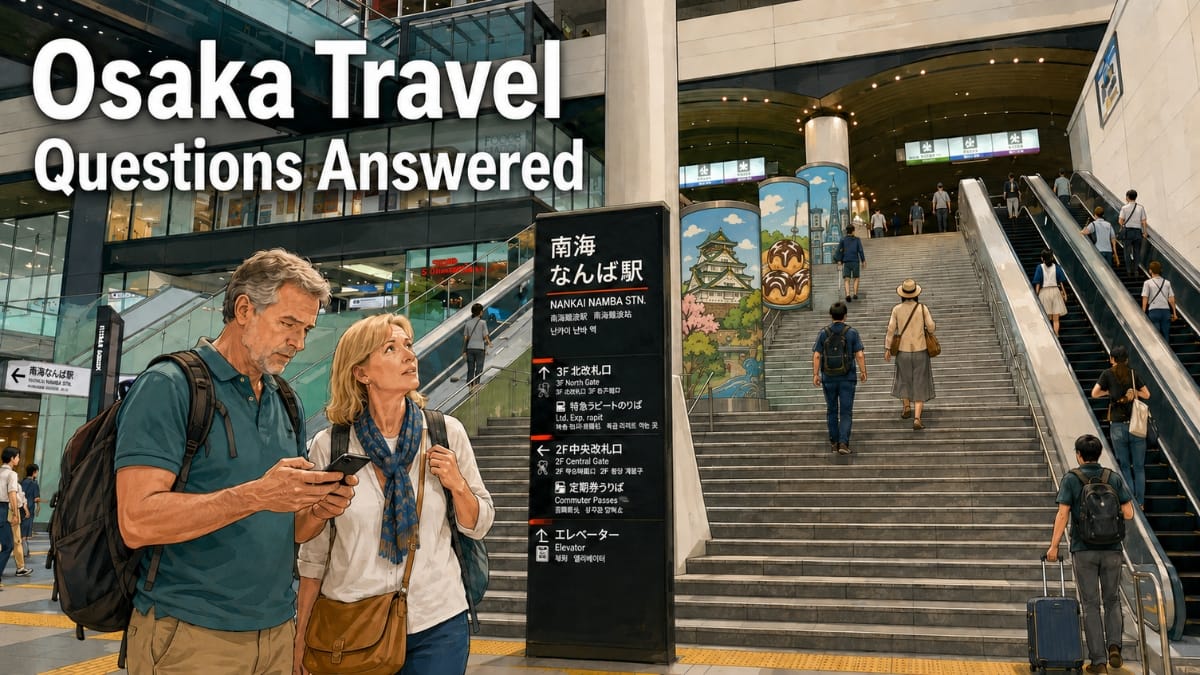
A trip to Osaka often becomes easier the moment you stop treating the city as one place. Umeda, Namba, Shin-Osaka, Osaka Castle, and the bay area all serve different purposes. These Osaka travel questions answered in one place will help you choose the right base, use trains with less stress, and avoid losing valuable sightseeing time.
Osaka Travel Questions Answered: Where Should You Stay?
For a first visit, stay near a station that matches how you plan to use the city. Osaka is large, but its rail network makes most major areas accessible. The trade-off is that a hotel near one major station may still require a transfer for another part of the city.
Umeda and Osaka Station suit travelers who want convenient access to Kyoto, Kobe, Nara, and other parts of Japan. This area has department stores, restaurants, underground walkways, and several rail companies in one very large station district. It is efficient, but the station can feel confusing on your first day. Choose it if day trips are a priority and you do not mind a busier, more businesslike setting.
Namba is a practical choice if you want to spend evenings around Dotonbori, Shinsaibashi, Amerikamura, and Kuromon Market. It has direct rail access to Kansai Airport on the Nankai Railway and is easy for dining after sightseeing. The central streets can be noisy, especially on weekends, so look for a hotel a few blocks from Dotonbori rather than directly beside it.
Shin-Osaka is useful if you are arriving or leaving by Shinkansen and only have a short stay. It is not the most interesting neighborhood for evening walks, but it reduces the effort of handling luggage before an early train. For a longer Osaka visit, Umeda or Namba usually feels more convenient.
How Many Days Do You Need in Osaka?
Two full days give most first-time visitors enough time for the main city areas without rushing. One day can work if Osaka is part of a wider Kansai itinerary, but you will need to choose between north Osaka, south Osaka, Osaka Castle, the bay area, and slower neighborhood stops.
A sensible two-day plan might pair Osaka Castle and Umeda on one day, then Namba, Dotonbori, Shinsaibashi, and a food-focused evening on the next. Add a third day if you want Universal Studios Japan, the Osaka Aquarium Kaiyukan, a family-friendly schedule, or quieter areas such as Sumiyoshi and Ishikiri.
Do not plan every hour. Osaka rewards short breaks, especially in summer, when heat and humidity can make a tightly packed walking plan uncomfortable. Build in time to sit down for lunch, find the right station exit, and adjust when a restaurant has a line.
Is Osaka Easy to Get Around Without Speaking Japanese?
Yes, with preparation. Major stations have English signs, train announcements commonly include English, and mapping apps are useful for routes and platform information. The main difficulty is not language. It is understanding that Osaka has several rail operators, large stations with multiple entrances, and lines that may use similar station names.
An IC card is the simplest way to pay for most local train and subway rides. Tap in at the gate, tap out at your destination, and keep enough balance on the card. It can also be used at many convenience stores, vending machines, lockers, and some restaurants. Carry a small amount of cash as well, since not every smaller shop accepts cards or contactless payment.
When using a route app, check three things before you leave: the departure station, the rail company or line, and the correct exit at your destination. Osaka Station and Umeda Station are connected but served by different railways. The same is true around Namba, where several stations sit within walking distance of one another. A route may be correct but still leave you with a longer underground walk than expected.
Should You Use Taxis in Osaka?
Taxis are helpful for short trips with luggage, late-night travel after trains stop, or journeys that would require several transfers. They are not the best value for routine sightseeing across the city. Traffic can be slow around Dotonbori and central Namba, particularly on weekend evenings.
If you take a taxi, show the driver the destination in Japanese if possible, or use the map screen on your phone. Do not force the doors open or closed. The driver controls them.
What Is the Best Way to Arrive From Kansai Airport?
Your hotel location should decide this. Travelers staying around Namba often find the Nankai Railway the most direct option. Travelers staying around Umeda may prefer the airport bus or a rail route that connects more easily to Osaka Station. Shin-Osaka can be convenient through rail connections or the airport bus, depending on your hotel.
The cheapest route is not always the easiest after a long flight. Consider luggage, hotel check-in time, and how confident you feel with transfers. An airport bus can be a calmer choice when it stops close to your hotel, even if a train is slightly faster on paper.
Avoid assuming every airport train goes to the same part of Osaka. Check the final destination before boarding, particularly if you have booked accommodation near Osaka Station rather than Namba.
Do You Need Reservations for Osaka Restaurants?
It depends on the restaurant and the time. Casual ramen shops, conveyor-belt sushi restaurants, cafes, and neighborhood diners often accept walk-ins. Popular yakiniku, sushi counters, kaiseki restaurants, themed cafes, and restaurants with limited seating may require reservations, especially on Friday and Saturday nights.
For a flexible evening in Namba or Umeda, arrive early, around 5:00 or 5:30 p.m., rather than waiting until the busiest dinner period. If you have a specific restaurant in mind, check its reservation policy before your trip. Some places use online booking systems, while others take reservations by phone only.
Lines are common in popular food areas. A long line does not always mean a restaurant is the best choice for your trip. If you are hungry, tired, or traveling with children, walk one or two streets away. Osaka has plenty of good options outside the most photographed blocks.
What Should You Know About Food Etiquette?
You do not need to know every rule to eat well in Osaka. Start with simple habits: wait to be seated, do not walk while eating in crowded areas, and use the small towel for your hands rather than your face. At counter restaurants, follow the ordering method shown at the entrance or on the machine.
Tipping is not expected. The displayed price may include tax, but check the menu because some restaurants show prices before tax. A small seating charge or appetizer charge can appear at izakaya-style restaurants. It is normal, but it can surprise visitors who expect only to pay for what they order.
Osaka is strongly associated with casual street food, but Dotonbori is often too crowded to enjoy slowly at peak times. Go earlier in the day or choose a side street. For families and travelers with dietary needs, department store food floors and larger stations can be easier because they offer more choice, seating nearby, and clearer displays.
When Is Osaka Most Crowded?
Crowds increase during cherry blossom season, Golden Week, summer school vacations, autumn foliage season, and the year-end holiday period. Universal Studios Japan, Dotonbori, Osaka Castle Park, and the aquarium can be busy even outside these periods.
The time of day matters as much as the season. Dotonbori is quieter in the morning, Osaka Castle Park is more comfortable soon after opening, and Umeda becomes busiest during the weekday commute and after-work dinner hours. If you want photographs with less foot traffic, start early rather than trying to find an empty moment in the afternoon.
Summer requires special planning. Carry water, use indoor stops such as department stores or museums, and avoid treating a long outdoor walk as a minor detail. Winter is easier for walking but can feel cold near the waterfront and on open station platforms.
What Common Mistakes Should First-Time Visitors Avoid?
The most common mistake is underestimating walking inside stations. A transfer marked as a few minutes may involve escalators, corridors, crowds, and finding the right exit. Leave extra time when you have tickets, luggage, or a timed reservation.
Another mistake is planning Osaka only around Dotonbori. It is worth seeing, particularly at night, but it is not the whole city. Umeda offers a different urban experience, Osaka Castle provides open space and history, and areas such as Sumiyoshi show a quieter side of Osaka. Choose places based on your interests rather than trying to collect every famous name.
Finally, do not expect shops, cafes, and attractions to follow one universal schedule. Opening days, last entry times, and reservation rules can change. Confirm details close to your visit, especially for seasonal events and popular attractions.
Osaka works best when you give each day one main area, one clear transport plan, and room for a meal or stop you did not schedule. That approach leaves you more confident when the city gets busy and more able to enjoy what is right in front of you.