
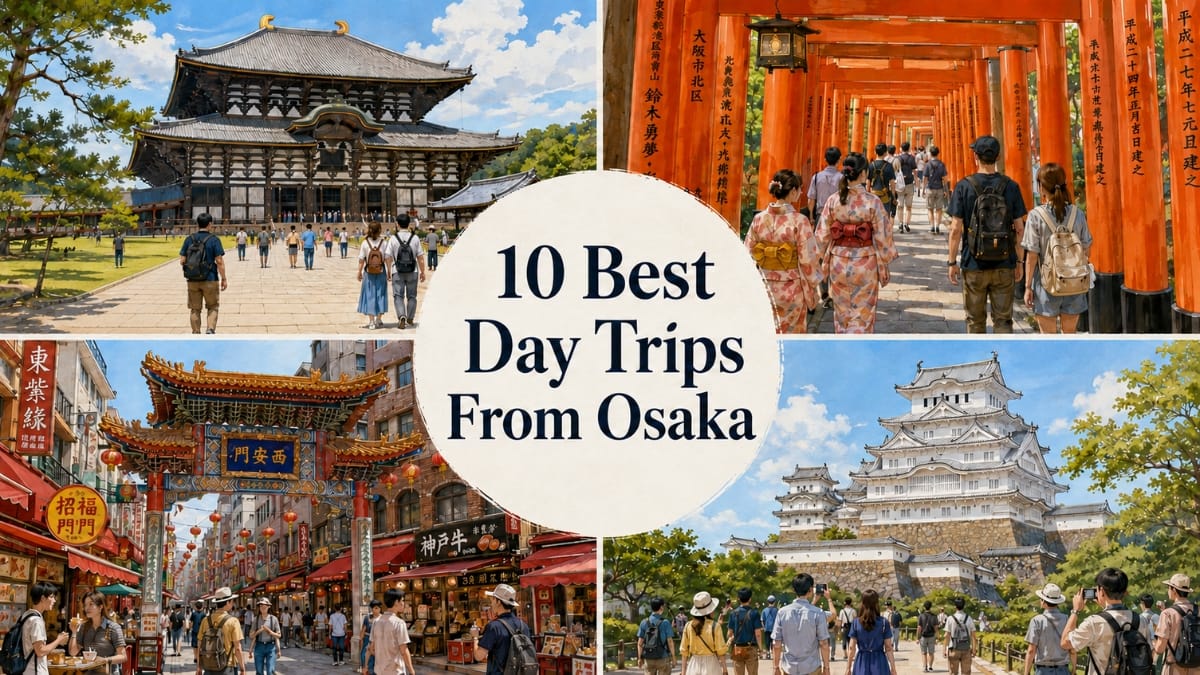
A day trip can be the easiest way to add temples, mountain scenery, or a different food city to an Osaka stay without changing hotels. The best day trips from Osaka are close enough to be practical, but the right choice depends on where you are staying, how early you can leave, and whether you prefer sightseeing or a slower day.
For most first-time visitors, choose one destination and give it proper time. Trying to combine Kyoto, Nara, and Kobe in one day usually means spending more time in stations than enjoying any of them. Osaka’s rail network makes nearby cities accessible, but different train companies serve different parts of each destination.
How to choose a day trip from Osaka
Start with your departure point. Namba is best for Nara, Koyasan, and much of Kobe. Umeda and Osaka Station are convenient for Kyoto, Kobe, Himeji, and Minoh. Shin-Osaka is useful if you are taking the Shinkansen to Himeji, but it is not the most convenient starting point for every trip.
An IC card such as ICOCA is useful for regular local and private railway trains. Tap in and out at the gates, then check whether your route needs a separate limited express or Shinkansen ticket. Google Maps is useful for live platform and transfer information, but allow extra time in Osaka Station and Namba Station. Both are large and can feel confusing on a first visit.
Best day trips from Osaka for first-time visitors
Nara: deer, parks, and major temples
Nara is the simplest cultural day trip from Osaka. It suits travelers who want a walkable day with a large temple, shrine paths, gardens, and open parkland rather than a tightly packed city schedule.
From Osaka-Namba, take the Kintetsu Nara Line to Kintetsu-Nara Station. The trip takes about 40 minutes, and the station is around a 10-minute walk from Nara Park. This is usually more convenient than the JR station because it is closer to the main sights. From Osaka Station, JR trains to Nara take roughly 45 to 60 minutes depending on the service.
Plan five to seven hours. Start at Kofuku-ji or Nara Park, then walk toward Todai-ji and its Great Buddha Hall. Kasuga Taisha is farther into the forest and works well if you have energy for more walking. Wear comfortable shoes, especially after rain, when park paths can be muddy.
Deer are free to approach and may nudge visitors who are holding deer crackers. Keep food other than approved crackers in your bag, do not tease them, and watch young children closely. Nara is busiest in late morning through early afternoon, so an early arrival makes the park calmer.
Kyoto: choose one area, not the whole city
Kyoto is close to Osaka, but it is not a quick, easy day unless you plan narrowly. The city’s sights are spread out, buses can be crowded, and the most popular areas are busy throughout the year. It works best when you choose one district or one clear theme.
For Gion, Yasaka Shrine, and the Higashiyama area, the Keihan Line from Yodoyabashi to Gion-Shijo is often practical. For Arashiyama, use the Hankyu Line from Osaka-Umeda toward Katsura and transfer for Arashiyama. JR trains from Osaka Station to Kyoto Station are fast, generally around 30 minutes on a Special Rapid service, but Kyoto Station is not close to every sightseeing area.
A first-time visitor should choose either eastern Kyoto, Arashiyama, or central Kyoto. Eastern Kyoto can include Kiyomizu-dera, preserved streets, Yasaka Shrine, and Gion. Arashiyama can include the bamboo grove, Tenryu-ji, riverside walks, and nearby temples. Do not try to do both areas in one short winter day.
Leave Osaka early, ideally before 8:00 a.m. For popular temple areas, arriving before tour buses and large crowds changes the experience. Carry cash as well as a card, since smaller shops and temple admission counters may not accept every foreign card. Keep your voice low on narrow residential streets, and do not block entrances while taking photos.
Kobe: a low-stress city day with good food
Kobe is the most flexible choice when you want a change of scenery without committing to a long train ride. Sannomiya, Kobe’s main central area, is about 30 to 40 minutes from Umeda or Namba depending on the railway line and service.
From Osaka-Umeda, Hankyu or Hanshin trains reach Kobe-Sannomiya directly. From Osaka Station, JR trains go to Sannomiya. The stations are close together but have different names and entrances, so check the final station name before boarding.
Give Kobe four to six hours, or longer if you are planning lunch. Walk from Sannomiya to Kitano, where former foreign residences sit on hillside streets, then continue to the waterfront around Meriken Park and Harborland. The ropeway area and Nunobiki Herb Gardens can add views, but this makes the day more weather-dependent.
Kobe beef is available in many forms and at many price levels. A famous teppanyaki restaurant may require a reservation and can be expensive. For a more casual meal, look for beef bowls, croquettes, hamburg steaks, or set lunches. Avoid assuming every restaurant serving beef is serving the same grade or style of Kobe beef.
Himeji: Japan’s best castle day trip
Himeji is the best choice for travelers who want one major landmark and do not mind a longer rail journey. Himeji Castle is visible from the station area, and the direct approach makes the day easier to navigate than Kyoto.
From Osaka Station, a JR Special Rapid train takes around one hour to Himeji. From Shin-Osaka, the Shinkansen can reduce the ride to roughly 30 minutes, but it costs more and may not be worthwhile if you are traveling on a budget. The castle is about a 20-minute walk from Himeji Station, or a short bus or taxi ride.
Allow at least five hours for Himeji Castle and Koko-en Garden next door. The castle interior involves steep stairs, low beams, and removing shoes in some areas. It is not ideal for visitors with limited mobility, and large bags can be inconvenient. Go early because entry lines and the narrow staircases slow down later in the day.
If you only have time for one castle during a Kansai trip, Himeji is usually a stronger choice than adding another busy Osaka attraction. It is also a practical day for families with older children who can manage the stairs.
Koyasan: temple town and mountain atmosphere
Koyasan feels farther from Osaka than the map suggests, but it is possible as a long day trip. Go if you want a quieter, more spiritual setting and are comfortable with several transport stages. It is less suitable for a rushed itinerary or travelers who dislike mountain roads.
Start from Namba on the Nankai Railway toward Gokurakubashi, usually changing at Hashimoto. From Gokurakubashi, take the cable car up the mountain, then use the local bus around Koyasan. The full trip commonly takes about two hours each way, and some services are less frequent than urban Osaka trains.
Plan an early departure and check the return schedule before you begin sightseeing. Okunoin is the main reason many visitors come, with a long approach through a cemetery and forest. Kongobu-ji and Danjo Garan are also central stops. Dress for cooler weather than Osaka, particularly outside summer, and bring water because walking and bus waits add up.
An overnight temple stay is often the better experience, but a day trip is still worthwhile if your Osaka schedule is limited. Do not leave your descent until the final possible connection. Missing a mountain service creates a much bigger problem than missing a subway in central Osaka.
Minoh: an easy nature break near Umeda
Minoh is a useful choice when you want trees and a waterfall but do not want to spend a full day on trains. From Osaka-Umeda, take the Hankyu Takarazuka Line to Ishibashi-handai-mae and change for Minoh. The journey is usually around 30 minutes, followed by an easy walking route from Minoh Station.
The walk to Minoh Falls takes about 40 to 50 minutes one way at a relaxed pace. It follows a paved valley route with shops and occasional places to stop. Give the trip three to five hours, including the train journey and time at the falls.
Autumn is the most crowded period, and weekends can be busy. The path is generally straightforward, but surfaces can be slippery after rain. This is a better choice for a lighter day than for serious hiking. If you have a dinner reservation back in Osaka, Minoh leaves enough time to return, rest, and change.
A few mistakes to avoid on Osaka day trips
Do not buy a rail pass for one day trip without comparing the normal fare first. Many nearby destinations are inexpensive on regular trains, while passes only make sense when they match several journeys on the same network.
Do not rely on the last train as your plan. Take a screenshot of your return route, especially for Koyasan, rural temple areas, or seasonal evening events. If you are traveling with luggage after checking out of an Osaka hotel, use station lockers or luggage storage rather than carrying large suitcases through temple steps and crowded platforms.
Finally, leave room for Osaka itself. A day trip should add something your Osaka itinerary does not already offer, whether that is Nara’s parkland, Himeji’s castle, Kobe’s waterfront, or Minoh’s forest path. Pick the destination that fits your energy level, leave early, and let the return trip be part of a calm day rather than a race back to the city.