
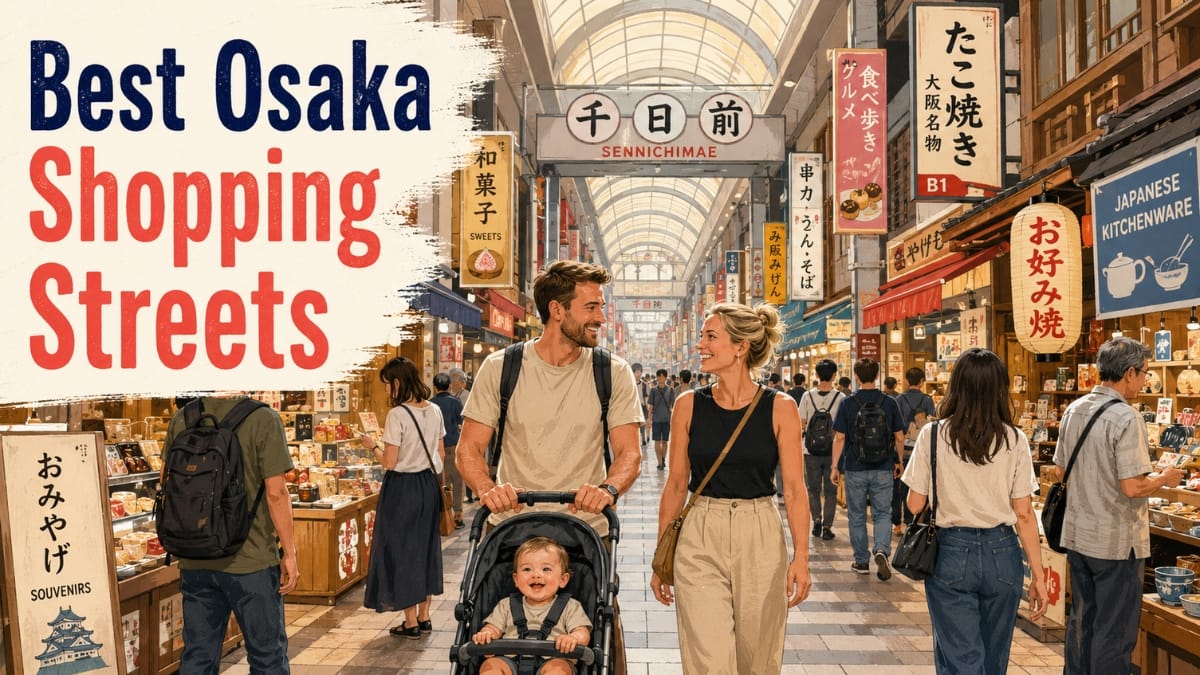
A shopping street in Osaka is rarely just a row of stores. It may be a covered arcade with fruit stands, pharmacies, and small restaurants, or a busy district where vintage clothing, anime goods, and street food sit side by side. The best shopping streets in Osaka depend on what you want to buy, how much time you have, and how comfortable you are with crowds.
For first-time visitors, the easiest choice is usually an area near Namba or Shinsaibashi. These are simple to reach, have more English signage, and fit naturally into a day of sightseeing. Longer local arcades can be more relaxing, but they need more travel time and a little more patience.
1. Shinsaibashi-suji Shopping Street
Shinsaibashi-suji is Osaka’s most convenient all-purpose shopping arcade. It runs north from the Dotonbori area toward Shinsaibashi Station and is covered, so it is useful in rain or strong summer sun. You will find major Japanese and international fashion brands, cosmetics, shoes, drugstores, souvenir shops, and casual food stops.
Use Shinsaibashi Station on the Midosuji Line or Yotsubashi Line. From Dotonbori’s Glico sign area, the southern entrance is only a few minutes on foot. Plan 60 to 90 minutes if you are browsing, longer if you are shopping seriously.
This is one of the busiest places in Osaka, especially from late afternoon through evening and on weekends. Visit before 11 a.m. for clearer walking space. Do not expect every shop to open early, however. Many stores open around late morning.
2. Ebisubashi-suji Shopping Street
Ebisubashi-suji connects the Dotonbori canal area with Namba. It is shorter than Shinsaibashi-suji but often feels even busier because it leads directly to Ebisubashi Bridge and the famous Dotonbori signs. It is a practical street for affordable clothing, cosmetics, snacks, and quick souvenir shopping.
The nearest stations are Namba Station and Nippombashi Station, depending on which end you enter. Allow 30 to 45 minutes for the street itself. It works best as part of a Namba, Dotonbori, and Hozenji Yokocho walk rather than as a separate destination.
Avoid stopping in the middle of the arcade to take photos or check your phone. The pedestrian flow is constant, and people carrying shopping bags need room to pass. If you want Dotonbori photos, cross the bridge first, then step to the side.
3. Tenjinbashisuji Shopping Street
Tenjinbashisuji is the place to see a more everyday side of Osaka shopping. It is often described as Japan’s longest shopping street, stretching through several neighborhoods north of central Osaka. The arcade includes inexpensive clothes, kitchen items, tea shops, bakeries, restaurants, old-fashioned snack stores, and services used by local residents.
For the southern end, use Osakatemmangu Station on the JR Tozai Line or Minami-morimachi Station on the Tanimachi and Sakaisuji Lines. The northern end is near Tenjinbashisuji Rokuchome Station. You do not need to walk the full length. A good first visit is to start near Osakatemmangu and browse north for one to two hours.
This street is less polished than Shinsaibashi, which is part of its value. English support is more limited, and some small shops are cash-oriented. Bring some yen and use a translation app for questions about sizes, ingredients, or returns.
Pair it with Osaka Tenmangu
The southern section is close to Osaka Tenmangu Shrine. Visiting the shrine before lunch, then walking the arcade north, makes an easy half-day plan. Weekday mornings are calmer than weekends, although individual stores may close on different days.
4. Kuromon Ichiba Market
Kuromon Ichiba is a covered market rather than a conventional fashion street, but it is one of the most useful places in Osaka for food-focused shopping. Stalls sell seafood, fruit, meat, knives, Japanese sweets, tea, seasonings, and ready-to-eat snacks. It is near Nippombashi Station and within walking distance of Namba.
Allow about an hour if you want a few snacks and a look around. Visit in the morning or around lunchtime, when more food vendors are operating. Late afternoon can be less useful because some stalls begin closing before the market feels finished.
Prices can be higher than at a neighborhood supermarket, particularly for grilled seafood and premium fruit. Think of Kuromon as a place to sample a few items and enjoy the market atmosphere, not necessarily the cheapest place to buy every meal. Check prices before ordering, and confirm whether a stall accepts cards, IC cards, or cash.
5. Sennichimae Doguyasuji
Sennichimae Doguyasuji is Osaka’s kitchenware street, a short covered arcade near Namba. It is especially worthwhile for travelers who enjoy cooking or want practical gifts that are lighter than they look. Shops sell Japanese knives, chopsticks, bowls, tea tools, restaurant-style tableware, plastic food samples, aprons, and baking supplies.
It is a short walk from Namba Station and Nippombashi Station. Plan 30 to 60 minutes. The street is compact, so it is easy to combine with Kuromon Market or a meal in the Sennichimae area.
If you buy a knife, ask about packing and airline luggage rules. Knives must go in checked baggage, not carry-on luggage. For ceramics, check whether the store offers protective wrapping. A beautiful bowl is not a good souvenir if it cracks before you reach the airport.
6. Den Den Town in Nipponbashi
Den Den Town is Osaka’s main electronics, anime, manga, gaming, model, and hobby-shopping district. The core area lies along Sakaisuji south of Nippombashi Station. It is a better choice than Shinsaibashi if your shopping list includes retro games, character goods, figures, electronics parts, or Japanese pop culture items.
Nippombashi Station is the easiest access point, and the walk from Namba is also manageable. Give yourself at least 90 minutes because stores can be spread across several blocks and multiple floors.
Do not assume electronics are suitable for use abroad. Voltage, plugs, language settings, warranties, and region locks can vary. Ask before buying, particularly for appliances and older game hardware. Used-item stores may have clear condition labels, but staff may not always be able to explain every detail in English.
7. Amerikamura and Orange Street
Amerikamura, usually called Amemura, is a youth-fashion area west of Shinsaibashi-suji. It is known for streetwear, vintage clothing, sneakers, records, accessories, and small independent shops. Nearby Orange Street has a more design-focused feel, with furniture, lifestyle stores, and fashion boutiques.
Use Yotsubashi Station, Shinsaibashi Station, or Namba Station. This is not a single covered arcade, so it is best explored slowly on foot. Allow one to two hours, particularly if you like vintage stores where stock changes often.
The area is more useful for browsing than for buying standard souvenirs. Store hours vary, and some smaller shops open later than department stores. Go in the afternoon, not first thing in the morning. Prices for vintage items can range from inexpensive to surprisingly high, so check condition and sizing carefully.
8. Tsuruhashi Shopping Streets and Korea Town
Tsuruhashi is a busy shopping and food area east of central Osaka, centered on Tsuruhashi Station. The station-side arcades are packed with Korean groceries, grilled-food restaurants, kimchi shops, clothing, cosmetics, and small market stalls. A longer walk leads toward Osaka Korea Town, where you will find more Korean food, beauty products, and trend-driven shops.
Tsuruhashi Station is served by JR, Kintetsu, and the Sennichimae subway line, making it easier to reach than it first appears. The arcades near the station are convenient, but Korea Town is farther away on foot, roughly 15 to 20 minutes depending on where you start.
This area is excellent for food shopping, but the narrow lanes can feel crowded and smoky near barbecue restaurants. Wear clothes that you do not mind carrying food smells after lunch. If you are traveling with a stroller or large luggage, stay near the main streets rather than forcing your way through the tightest market passages.
How to Plan an Osaka Shopping Day
Choose one main area rather than trying to cover every street in one day. Shinsaibashi, Ebisubashi, Doguyasuji, Kuromon, and Den Den Town can fit into a full Namba-based day because they are close together. Tenjinbashisuji works better as its own half-day, while Tsuruhashi is a good choice when food shopping is the priority.
Most larger stores accept credit cards and contactless payment, but small market vendors and older local shops may prefer cash. An IC card is useful for trains and many convenience stores, but do not assume it works everywhere. Keep some yen available, especially for snacks and small purchases.
Tax-free shopping may be available at qualifying stores for eligible short-term visitors, but rules, minimum purchase amounts, and procedures can change. Bring your passport if you expect to use it, and ask at the store before paying. Do not open tax-free consumable goods in Japan if the purchase conditions say they must remain sealed.
Osaka’s shopping streets reward a slower plan. Leave room for one unplanned stop, whether that is a kitchen store in Namba, a bakery in Tenma, or a market snack in Tsuruhashi. That small amount of flexibility often makes the day easier and more enjoyable than rushing between districts.