
Landing in Osaka with only three days can make the city feel bigger than it is. The easiest fix is to stop thinking in terms of a huge checklist and start thinking in connected areas. This osaka itinerary for 3 days is built that way – by neighborhood, train logic, and energy level – so you spend less time zigzagging and more time actually enjoying the city.
This plan is designed for first-time visitors who want a strong mix of classic Osaka, everyday street atmosphere, good food, and a few quieter cultural stops. It assumes you are staying somewhere convenient like Namba, Umeda, or near Osaka Station, but it still works from most central bases.
How to use this Osaka itinerary for 3 days
The main trade-off on a short trip is depth versus coverage. You can try to fit in Osaka Castle, Universal Studios Japan, every famous food street, and half a dozen neighborhoods, but that usually turns into a train-heavy blur. A better three-day plan gives each day a clear shape.
This itinerary does that by dividing the city into three experiences. Day 1 is central Osaka and its famous food-and-neon core. Day 2 shifts toward history, local streets, and a more grounded neighborhood feel. Day 3 gives you flexibility – either a polished urban day with shopping and views, or a slower final day built around shrines and old tram-access areas.
If you arrive tired, swap Day 1 and Day 2. If you love nightlife, keep Day 1 as written because it ends where Osaka feels most alive after dark.
Day 1: Namba, Dotonbori, and the Minami side of Osaka
Start in Namba. For many first-time visitors, this is the Osaka they imagined before arriving – canal signs, dense shopping arcades, snack stalls, fast-moving crowds, and an energy that picks up as the day goes on. Morning is the best time to ease in because the area is still busy without being overwhelming.
Begin with a walk through Shinsaibashi-suji if shopping interests you at all. Even if you are not planning to buy much, it helps you get your bearings and understand how the Namba-Shinsaibashi area fits together. Nearby side streets in Amerikamura feel younger and less polished, with vintage shops, coffee stops, and a more casual pace.
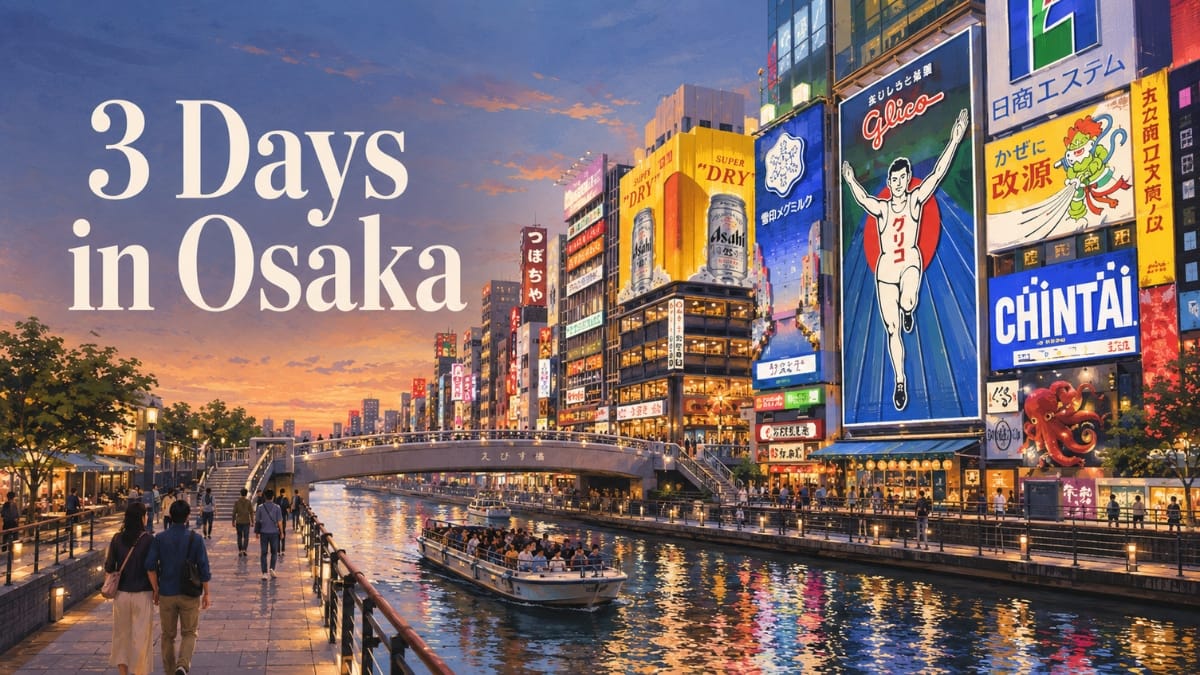
By late morning, head toward Dotonbori, but do not treat it like a quick photo stop. It is better experienced by drifting slowly through the surrounding lanes, looking at menus, peeking into covered alleys, and noticing how the atmosphere changes block by block. The Glico sign is iconic, yes, but the area works best when you let the smaller details matter too.
Lunch is the right moment to try classic Osaka comfort food. Okonomiyaki and takoyaki are the obvious choices, and for a first trip, obvious is fine. If lines look long at the most famous places, do not assume the next shop is worse. In Osaka, neighborhood competition keeps standards high.
In the afternoon, walk south toward Kuromon Market if food browsing sounds fun. It can feel touristy, and that is the honest trade-off, but it is still useful for casual sampling and getting a quick sense of local ingredients. If markets are not your thing, skip it and spend more time around Hozenji Yokocho instead. That small stone-paved lane, with its temple atmosphere tucked behind the noise, gives you a different side of central Osaka within minutes.
As evening arrives, return to Dotonbori and the surrounding Namba streets. This is when the area earns its reputation. Neon reflections on the canal, packed restaurants, and the hum of conversation make it worth seeing twice in one day. If you still have energy, wander farther into Namba’s backstreets rather than heading straight back to your hotel. Some of the most memorable moments in Osaka come from a side street ramen shop or a tiny dessert stop you did not plan.
Day 2: Osaka Castle, Tenmangu area, and local street life
Day 2 shifts the mood. After the intensity of Minami, give yourself a morning that starts with space. Osaka Castle is a natural anchor for that. Go early, not because the castle grounds are hidden, but because they feel much calmer before tour groups build up.
The castle itself matters less than many first-time travelers expect. The grounds, moats, and broad views are often the real highlight. If you enjoy history museums, go inside. If not, it is completely reasonable to focus on the park and move on without feeling like you missed the heart of Osaka.
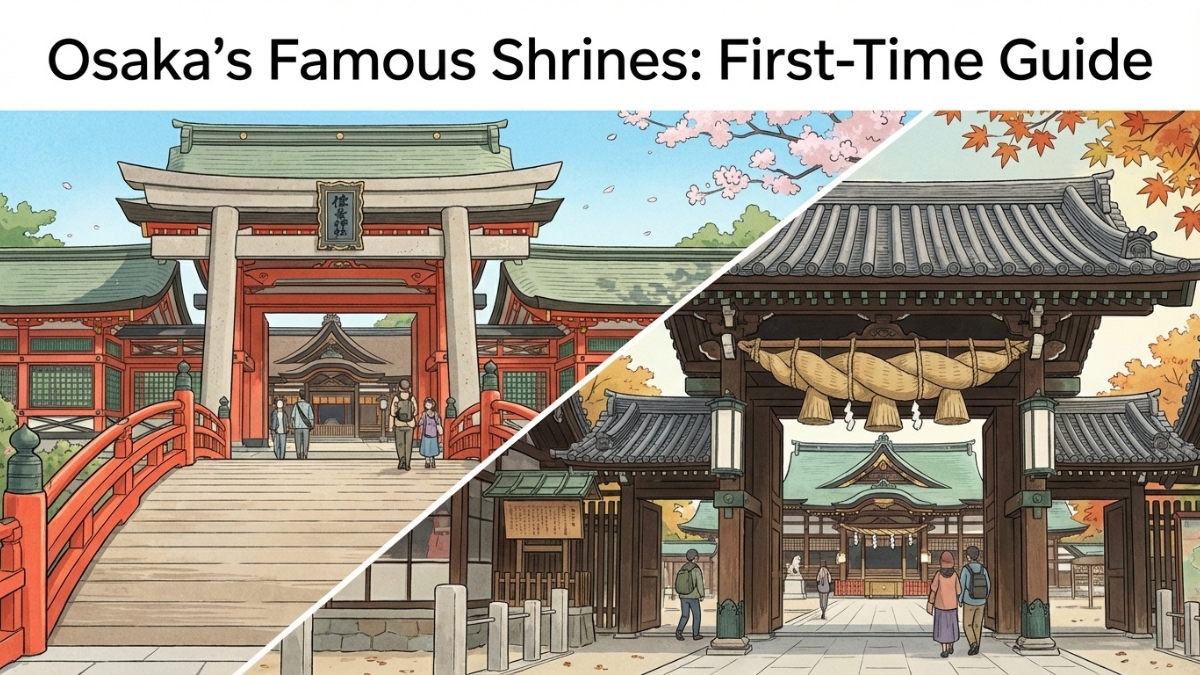
From there, make your way toward the Osaka Tenmangu and Tenjinbashisuji area. This part of the day is where the itinerary becomes more distinctly Osaka and less generic sightseeing. Osaka Tenmangu offers a quieter shrine stop with real local presence, especially if you want a cultural site that feels active without being overwhelming.
Then spend time on Tenjinbashisuji Shopping Street, often described as Japan’s longest shopping street. What makes it useful for visitors is not just its length. It gives you a practical, walkable look at ordinary city life – casual eateries, local shops, daily errands, and a less stage-managed version of urban Japan than the big entertainment districts.
This is an excellent place for lunch. You can keep it simple with udon, curry, a teishoku set, or coffee and a light meal if you need a slower break. If Day 1 was heavy on snacks, Day 2 is a good day for a more settled sit-down lunch.
In the afternoon, you have options depending on your pace. If you still want more city texture, continue exploring the area around Nakazakicho. Its narrower lanes, small cafes, and independent shops make a good contrast to the larger commercial zones. If you are fading, return to your hotel for a reset before dinner. Three-day trips improve when you protect your evenings instead of pushing through exhaustion.
For dinner, Umeda works well, especially if you want convenience and plenty of choice. It is more polished and vertically organized than Namba, with department stores, station-linked buildings, and restaurant floors that make last-minute decisions easy. The area can feel less atmospheric at street level, but it is efficient, and sometimes efficient is exactly what you need on the second night.
Day 3: Choose your final Osaka day based on your travel style
A good osaka itinerary for 3 days should leave room for preference. Not every first-time visitor wants the same ending. Some want skyline views and major shopping. Others want a shrine, an older neighborhood feel, and a quieter final impression of the city.
Option A: Umeda, Osaka Station area, and city views
If this is your first Japan trip and you want a smooth final day, spend it around Umeda and Osaka Station. This area is ideal for practical travelers because it combines transit convenience, shopping, cafes, and indoor comfort. If the weather is poor, this option becomes even stronger.
Start with a relaxed breakfast or coffee near the station area, then explore the major commercial buildings at your own pace. You do not need a strict shopping agenda. Even browsing Japanese stationery, food halls, cosmetics, or home goods can be interesting if you have not spent much time in a large Japanese department store before.
By midday, add a viewpoint. A city observation deck helps tie Osaka together visually after two days on the ground. You start recognizing where you’ve been and how the city’s districts connect. It is also a good moment to slow down rather than squeeze in one more rushed attraction.
In the afternoon, keep things flexible. This is the right time for souvenir shopping, a longer cafe break, or a final meal you specifically wanted to try. If you are leaving Osaka the next morning, finishing in Umeda can be especially easy if your onward route uses Osaka Station or nearby transit lines.
Option B: Sumiyoshi Taisha and a quieter local finish
If you would rather end with something more rooted and less commercial, head to Sumiyoshi Taisha. It is one of Osaka’s most important shrines and offers a noticeably different atmosphere from the city’s entertainment districts. The approach, bridges, and slower rhythm make it a strong final-day choice if you want space to breathe.
This option works well for travelers who have already had enough shopping and want one last experience that feels distinctly local. Getting there is simple enough from central Osaka, and the trip itself helps you see another layer of the city beyond the better-known center.
After visiting the shrine, keep the day intentionally light. You might stop for lunch in the surrounding area, ride back toward central Osaka at an easy pace, and leave room for one final neighborhood revisit – often Namba for food or Umeda for practical last-minute errands. That combination of calm morning and flexible afternoon tends to feel better than trying to force a major attraction into your last few hours.
A few pacing tips that matter more than people expect
Osaka is easy to move around, but stations can be larger and more tiring than they look on a map. Build in transfer time, especially around Namba, Umeda, and Osaka Station. What looks like a short hop can take longer once you include finding exits, crossing big concourses, and reorienting yourself above ground.
Food planning also matters. In Osaka, it is tempting to graze all day, but that can backfire if every famous stop becomes a line. Aim for one or two food priorities per day, then stay flexible for the rest. You will usually eat better that way.
Finally, do not judge your trip by attraction count. A successful three-day Osaka stay often looks modest on paper: one castle area, one shrine, two major neighborhoods, a shopping street, a few memorable meals. In practice, that is enough to feel the city’s character without spending the entire visit in transit or queue lines.
If you leave Osaka already knowing which neighborhood you would stay in next time, which food you are craving again, and which street you wish you had one more hour to wander, you planned it well.