
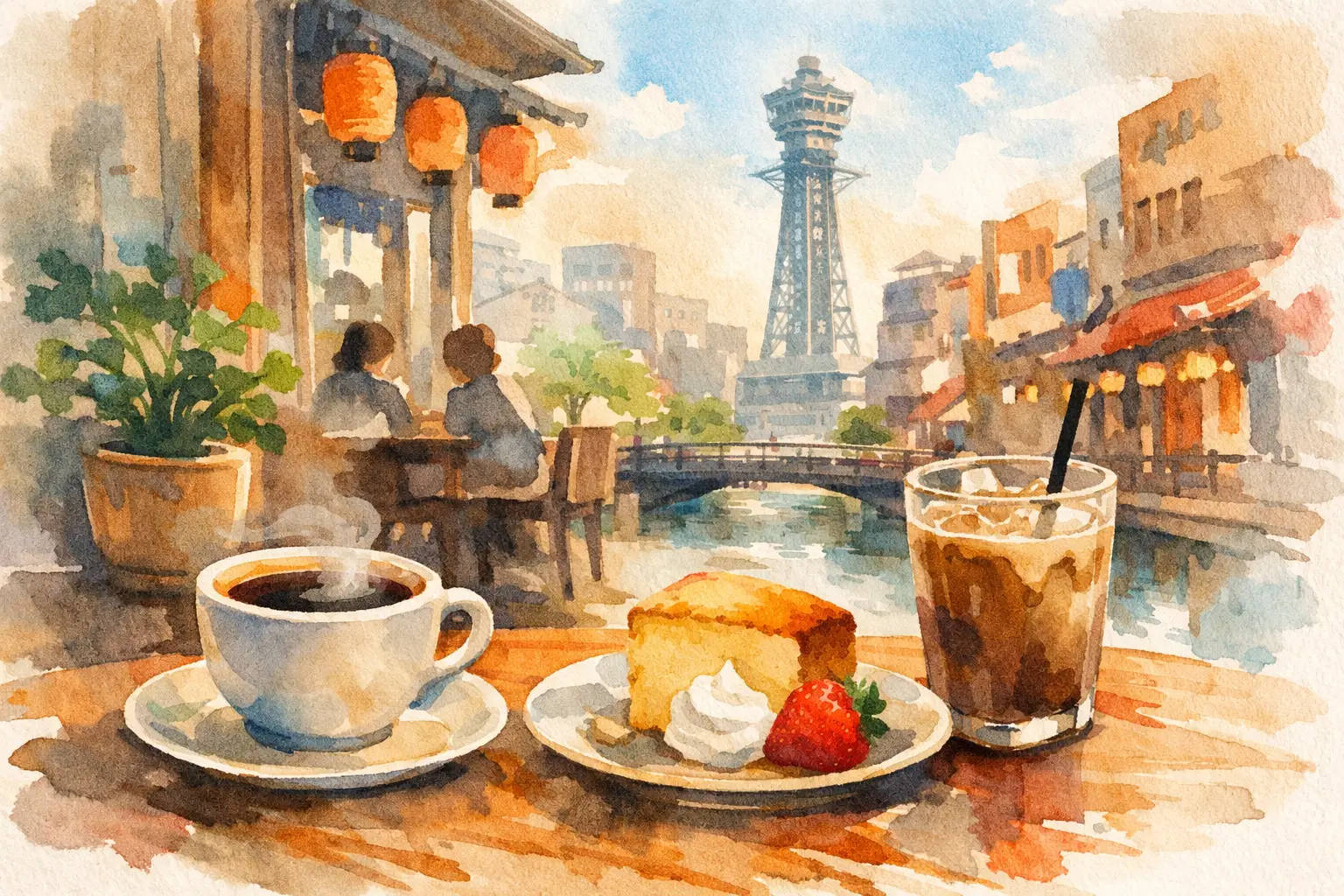
A good cafe stop can solve a difficult part of an Osaka sightseeing day. You may need a seat before navigating Osaka Station, an air-conditioned break after Dotonbori, or a quiet place to check train directions. This Osaka cafe guide helps you choose an area that fits your route, rather than sending you across the city for one drink.
Osaka has large chain coffee shops, small independent roasters, retro kissaten coffeehouses, hotel lounges, bakery cafes, and dessert-focused stores. The best choice depends on your location, time, group size, and how long you need to sit. A cafe near your next station is often more useful than a highly photographed place several train stops away.
How to use this Osaka cafe guide
For a short break, stay close to the major stations and shopping areas. Umeda, Namba, and Tennoji have the widest choice and are easiest when rain, heat, luggage, or a tight schedule is a concern. Expect more crowds, more chains, and sometimes a time limit at busy stores.
For a slower cafe visit, look at neighborhoods with smaller streets, especially Nakazakicho and parts of Horie. These areas are better for travelers who have time to browse and do not mind walking between stations. Seating can be limited, menus may be smaller, and some independent cafes keep shorter hours or close on irregular days.
Before setting out, check the cafe’s current opening hours and whether it is open on the day you plan to visit. In Osaka, small businesses may close for a weekly day off, change hours for private events, or stop taking orders before the listed closing time. This matters most if you are traveling early in the morning or after dinner.
Choose a cafe area by your itinerary
Umeda and Osaka Station: best for convenience
Umeda is the practical choice before or after a train journey. Osaka Station and the connected underground shopping areas hold many cafes, including options inside department stores, office buildings, hotels, and station-adjacent complexes. You can usually find breakfast, pastries, coffee, tea, and a quick lunch without going outside.
The trade-off is that Umeda can be confusing. Osaka Station is linked to several railway lines, underground passages, and neighboring stations with different names. If you have selected a cafe inside a large complex, allow extra time to find the correct floor or exit. Use the building name and floor, not only the cafe name, when checking directions.
Morning is usually calmer than the lunchtime period, while late afternoon can become busy with shoppers and commuters. If you need a reliable seat for 30 to 60 minutes, arrive before noon when possible. Many cafes accept cards and major mobile payments, but carrying some cash is still sensible for smaller stores.
Namba and Shinsaibashi: best between sightseeing stops
Namba is useful when your day includes Dotonbori, Kuromon Market, Shinsaibashi-suji, Amerikamura, or an evening in the Minami area. The neighborhood has every type of cafe, from fast counter service to dessert shops where visitors stay longer.
For a quieter break, move one or two blocks away from the canal and the main shopping arcades. The streets directly around Dotonbori are convenient but often crowded, especially from late morning through the evening. A cafe near Namba Station can also be a good meeting point before splitting up for shopping or returning to a hotel.
Do not assume every cafe near a major attraction has space for a group. Four people may need to wait longer than one or two, and strollers or large shopping bags can be difficult in narrow stores. If your group needs a guaranteed table, choose a larger venue or make a reservation when the cafe offers one.
Nakazakicho: best for small independent cafes
Nakazakicho is north of Umeda and known for older low-rise streets, small shops, and independent cafes. It suits travelers who want a less commercial setting without leaving central Osaka. From Umeda, it is reachable on foot, though the walk is easier if you are comfortable using maps and navigating side streets.
This is not the best area for a rushed coffee before a train. It is better for a flexible afternoon, particularly if you enjoy browsing small stores between stops. Some cafes may have only a few tables, limited English menus, or rules about photography and laptop use.
A useful approach is to arrive with two or three options in mind, rather than treating one particular cafe as essential. If a store is full, closed, or has a line, you can continue walking without losing much time. This makes the area more enjoyable and prevents a small change of plan from affecting your day.
Horie and Kitahorie: best for design-focused stops
West of Shinsaibashi, Horie and Kitahorie offer cafes mixed with fashion, interior design, and lifestyle stores. The streets feel less concentrated than central Namba, and the area works well if you are walking from Amerikamura toward the Orange Street area.
Cafes here often appeal to travelers looking for specialty coffee, baked goods, or a carefully designed interior. However, style does not always mean a long, relaxed visit. Some compact cafes have limited seating and are intended for a quick drink. Check whether there are tables before ordering if sitting down is your priority.
The closest stations depend on where you are in the neighborhood, but Yotsubashi, Shinsaibashi, and Nishiohashi are commonly useful. Osaka’s subway signs are clear once you are inside the station, but exits can be far apart. Choose the exit nearest your next destination instead of simply following the shortest rail route.
Osaka Castle area: best for a planned daytime break
The Osaka Castle area is large, and cafe choices inside the park are more limited than in Umeda or Namba. If you want a proper coffee stop, plan it around the park’s edges or nearby business districts rather than assuming you will find many options beside each sightseeing point.
This is especially relevant in summer, when walking around the castle grounds can be tiring, and during cherry blossom season, when food and drink locations may be busier than usual. Bring water for the park itself. Then use a cafe before entering, after leaving, or near the station you are using for your next stop.
Osakajokoen Station, Morinomiya Station, and Tanimachi 4-chome Station serve different sides of the grounds. Pick your cafe based on the exit route you actually plan to take. A cafe that looks close on a map may be across a moat, road, or large section of park.
What to expect inside an Osaka cafe
In Japan, cafes vary widely in service style. At some, you order and pay at the counter, receive a number, and collect your drink when called. At others, staff seat you first and bring a bill to the table. Watch what nearby customers do if the process is unclear, or simply ask, “Order here?” Staff are used to simple questions from visitors.
A kissaten is a traditional-style coffeehouse, often quieter and more old-fashioned than a modern coffee chain. It can be a good choice for coffee, toast, sandwiches, or a set breakfast. Some allow smoking or have a separate smoking section, so check before staying if this affects your comfort.
Independent cafes may ask each guest to order one item. This is normal, particularly in very small spaces. It is also common to avoid occupying a table for a long time after finishing, especially when people are waiting. You do not need to rush through your drink, but a cafe is not always a coworking space.
English menus are common in tourist-heavy areas and larger chains, but not guaranteed in neighborhood cafes. Photos, display cases, and translation tools are usually enough for basic ordering. If you have an allergy or strict dietary requirement, communicate it clearly and do not assume a menu item can be changed. Vegan, gluten-free, and allergy-aware choices exist, but they are not standard everywhere.
Timing, reservations, and payment
Most cafes are easiest to use in the mid-morning or mid-afternoon, outside the main lunch rush. Weekend lines are common at popular dessert and specialty coffee shops. If waiting is not part of your plan, choose a nearby alternative quickly rather than standing in line when you have timed tickets, dinner reservations, or a train to catch.
Reservations are uncommon for ordinary coffee stops, but some afternoon tea services, themed cafes, and limited-seat dessert shops require advance booking or use timed entry. Check this before building the visit into a fixed itinerary. A reservation system may be in Japanese, so allow time to understand the rules and cancellation policy.
Cards are widely accepted in major districts, but smaller cafes may prefer cash or have a minimum card payment. An IC card can be useful for trains and convenience stores, but do not assume it will work at every cafe. Keep enough yen for a drink and a small snack, particularly outside the central shopping areas.
Common cafe mistakes to avoid
The most common mistake is choosing a cafe by popularity alone. A place may be excellent for photographs but inconvenient if it is far from your route, has no seating, or has a long line. For first-time visitors, location and timing usually matter more.
Also avoid relying on a cafe for an all-day rest stop without checking the rules. Some places limit seating during busy periods, prohibit laptops, or have a one-drink-per-person policy. If you need to work, make calls, charge devices, or keep luggage beside you, a larger chain or hotel lounge is generally the lower-stress choice.
Finally, do not leave trash from convenience store food on a cafe table or bring in outside drinks unless the cafe clearly allows it. Order from the store, keep your voice low in compact spaces, and return trays or dishes as instructed.
A cafe break works best when it supports the rest of your day. Choose one near the station, attraction, or neighborhood you already plan to use, and Osaka will feel much easier to move through at your own pace.