
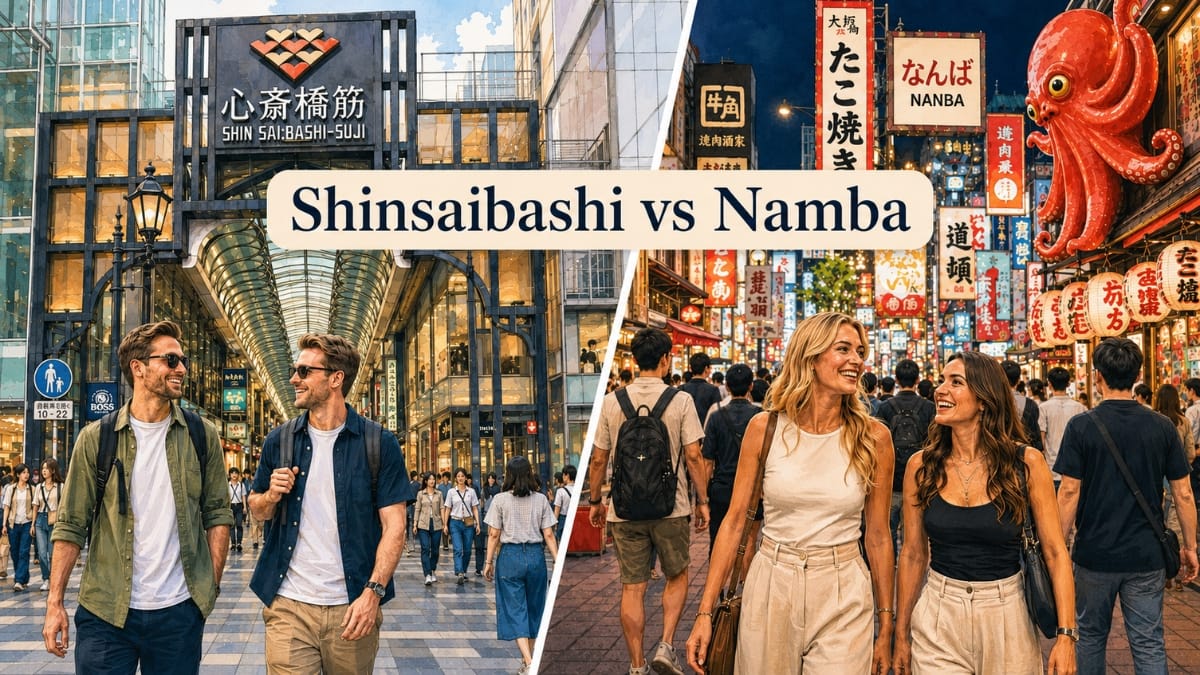
Shinsaibashi vs Namba area is not a choice between two distant parts of Osaka. They sit next to each other in the city’s main southern entertainment district, and you can walk between their central streets in about 10 to 20 minutes. The real question is what you want outside your hotel door: more polished shopping and easier subway access, or a busier nightlife center with stronger connections to Kansai Airport and Nara.
For many first-time visitors, either area works well. Choosing carefully can still make your trip quieter, simpler, and better suited to your schedule.
Where Shinsaibashi and Namba actually begin
Shinsaibashi is generally the area north of Dotonbori, centered on Shinsaibashi Station and the long Shinsaibashi-suji shopping arcade. It includes upscale department stores, international brands, side streets with cafes, and the youthful Amerikamura district to the west.
Namba is broader and less tidy as a map label. Most travelers mean the area around Dotonbori, the Glico sign, Hozenji Yokocho, Nankai Namba Station, and the large streets south of the canal. It is Osaka’s most concentrated zone for restaurants, late-night activity, arcades, souvenir shops, and major transport links.
Dotonbori sits between the two in practical travel terms. A hotel described as being in “Namba” may be closer to Shinsaibashi Station than Nankai Namba Station. Always check the property’s walking time to the specific station you expect to use, not just the neighborhood name.
Shinsaibashi vs Namba area: the quick choice
Choose Shinsaibashi if shopping, cafes, and a slightly more orderly hotel base matter most. It is especially convenient for travelers using the Osaka Metro Midosuji Line, which runs directly through Umeda, Shin-Osaka, Shinsaibashi, and Namba.
Choose Namba if you want to be closest to Dotonbori’s dining streets, plan late evenings, or need the easiest rail connection to Kansai International Airport and Nara. Nankai Namba Station is useful for the airport, while Osaka-Namba Station is useful for Kintetsu and Hanshin trains, including services toward Nara.
If the hotel price is similar, couples and first-time visitors who prefer a calmer night often do better a few blocks north of Dotonbori in Shinsaibashi. Travelers arriving from the airport with large luggage, or those planning several evening food outings, may find Namba more convenient.
Hotels: quieter in Shinsaibashi, livelier in Namba
Shinsaibashi has a wide mix of business hotels, mid-range international-style hotels, and higher-end properties. Streets immediately around the shopping arcade can still be busy, but the atmosphere usually becomes calmer as you move north or east from the canal. A hotel near Nagahoribashi or Yotsubashi can offer a useful compromise: walkable to the main sights without being directly above the crowds.
Namba hotels can be very convenient, but location matters more here. Rooms close to Dotonbori, Ebisu-bashi Bridge, or the main restaurant streets may come with street noise, delivery traffic, and people outside late at night. This is not necessarily a problem if you want to be in the center of activity. It can be tiring for light sleepers, families with young children, or travelers waking early for day trips.
For a quieter Namba stay, look south or east of the busiest Dotonbori blocks, or near Nippombashi. Read recent guest comments for noise rather than relying only on a map. In this part of Osaka, a hotel can be one small street away from a lively bar area.
Do not assume that a hotel labeled “Namba” is beside Nankai Namba Station. Some are closer to Osaka Metro Namba, Osaka-Namba, or JR Namba, which are separate parts of the same broad district.
Transportation and station access
Shinsaibashi Station is simple by central Osaka standards. It is served by the Midosuji Line and the Nagahori Tsurumi-ryokuchi Line. The Midosuji Line is particularly helpful for first-time visitors because it reaches Shin-Osaka, Umeda, Honmachi, Shinsaibashi, Namba, Tennoji, and other useful stops without a transfer.
Namba is more connected, but it is also more confusing. Several stations use the Namba name:
- Osaka Metro Namba serves the Midosuji, Yotsubashi, and Sennichimae lines.
- Nankai Namba is the main practical station for Kansai Airport trains.
- Osaka-Namba serves Kintetsu and Hanshin rail services, including routes toward Nara.
- JR Namba is farther west, near the OCAT bus terminal.
These stations are linked by underground passages and surface streets, but the walks can take longer than expected. JR Namba is the most common surprise. It is in the Namba district, yet it is not beside the Dotonbori canal. Allow extra time if you are catching a train there with luggage.
An IC card is the easiest way to pay for local trains and subways in both areas. Most station signs have English, and ticket gates are straightforward, but follow the line color and station number as well as the destination name. Osaka’s platforms can serve trains with different final destinations on the same line.
For an airport arrival, Nankai Namba is convenient, but transferring onward to a Shinsaibashi hotel may still be easier by taxi if you have several large bags. The subway is only one stop from Namba to Shinsaibashi on the Midosuji Line, though station corridors and elevators can add time.
Food, nightlife, and how crowds feel
Namba has the stronger concentration of classic Osaka casual dining. You will find takoyaki, okonomiyaki, kushikatsu, ramen, conveyor-belt sushi, yakiniku, and dessert shops within a short walk. It is a useful place to wander when you have no fixed dinner plan, although the most visible restaurants can have long lines.
Shinsaibashi has plenty of food too, but the experience is more spread across shopping streets, department-store dining floors, basement food halls, cafes, and smaller side streets. It can be a better fit if you want lunch between stores or a sit-down dinner away from Dotonbori’s brightest signs.
For popular restaurants in either area, reservations are worth considering for Friday and Saturday evenings. Small independent places may have limited English support, a short menu, cash-only payment, or a no-photo rule. These are normal operating choices, not signs that visitors are unwelcome. Check the entrance for posted rules and avoid blocking narrow sidewalks while deciding where to eat.
Dotonbori is busiest from late afternoon through the evening, especially on weekends and holidays. It is still manageable, but do not schedule a tightly timed dinner, station transfer, or taxi pickup through the center at peak hours. A short walk to a larger road can make meeting a taxi much easier.
Shopping: what each area does better
Shinsaibashi is the clearer choice for fashion, cosmetics, department stores, sneakers, and international labels. Shinsaibashi-suji is covered, so it is useful in rain or summer heat, though it can be crowded in the middle of the day. Amerikamura nearby is better for streetwear, vintage stores, music-related shops, and a younger atmosphere.
Namba is stronger for variety and convenience rather than one style of shopping. The area has major electronics stores, drugstores, discount shops, souvenir shopping, arcades, and the covered Sennichimae and Namba shopping streets. It is easy to combine shopping with dinner, but it can feel visually busy and less relaxing than Shinsaibashi.
In both areas, larger stores usually accept international credit cards. Keep some cash for small eateries, capsule-toy machines, and older shops. Tax-free shopping procedures vary by store, so bring your passport when making larger purchases and allow time for paperwork before closing.
Which area works best for different trips?
For a first Osaka visit of two or three nights, Shinsaibashi is often the easier all-around base. You can walk to Dotonbori and Namba whenever you want, then return to streets that may feel less intense after dinner. It also keeps Umeda and Shin-Osaka simple on the Midosuji Line.
Namba is the better base if your itinerary includes an airport arrival or departure by Nankai Railway, a day trip to Nara, or several late nights around Dotonbori. It is also practical for travelers who want to minimize walking after dinner.
Families should look beyond the neighborhood label. A quiet room, laundry facilities, elevator access, and a short walk from a station are usually more valuable than being directly beside the canal. Travelers with mobility concerns should confirm the exact route from station exit to hotel, since underground stairs and crowded pavements can be a bigger issue than distance.
Before you book, place the hotel, your likely arrival station, and two or three planned destinations on one map. In the Shinsaibashi vs Namba area, the better choice is usually the hotel that removes one difficult transfer or one noisy late-night walk from your particular trip.