
If your Osaka plan currently says “eat in Dotonbori,” you’re not wrong – but you’re also not done. A useful Osaka food street guide should help you choose the right area for your appetite, budget, and tolerance for crowds. In Osaka, food streets are less about one perfect lane and more about knowing which neighborhood matches the kind of meal you want.
That matters because first-time visitors often end up in the busiest strips at the busiest hour, pay tourist-zone prices, and miss the places that actually feel local. Osaka is one of Japan’s best food cities, but it gets easier once you stop thinking in terms of a single must-visit street and start thinking in food districts.
Osaka food street guide: which area fits your trip?
For most visitors, the most useful food streets and food-heavy areas fall into five zones: Dotonbori, Hozenji Yokocho and nearby Namba backstreets, Shinsekai, Kuromon Market, and the Umeda station area. Each one works for a different kind of meal.
Dotonbori is the obvious starting point. It is loud, bright, crowded, and very easy to reach from Namba. If you want the classic Osaka feeling of giant signs, takoyaki stands, grilled seafood smells, and a steady stream of people taking photos by the canal, this is the place. The trade-off is that it can feel more like a food spectacle than a relaxed meal zone, especially in the evening.
Just a short walk away, Hozenji Yokocho and the surrounding Namba lanes feel more intimate. You’ll still be in a busy central area, but the atmosphere shifts fast. Smaller alleys, traditional storefronts, izakayas, okonomiyaki restaurants, and kushikatsu spots give you a more tucked-away version of central Osaka. If Dotonbori feels too intense, this is often the better next step.
Shinsekai is one of the city’s most recognizable casual eating districts. It is famous for kushikatsu, retro signage, and a rough-around-the-edges personality that many travelers find memorable. It is less polished than Namba and less visually neat than Umeda, which is part of the appeal. Some people love that old-school energy right away. Others find it a little chaotic. It depends on whether you want comfort or character.
Kuromon Market is best approached as a daytime food stop, not your full Osaka street food strategy. It is good for sampling seafood, fruit, grilled items, and market snacks, especially if you want variety without committing to one restaurant. But it is also a place where prices can run high in the most obvious stalls. Go in expecting convenience and range, not hidden bargains.
Umeda is different from the others because it is less about one famous food street and more about layers of restaurant arcades, basement food halls, station-connected dining floors, and nearby lanes packed with after-work spots. If you are staying near Osaka Station or arriving tired after a train journey, Umeda is one of the easiest places to eat well without overplanning.
What to eat on Osaka’s food streets
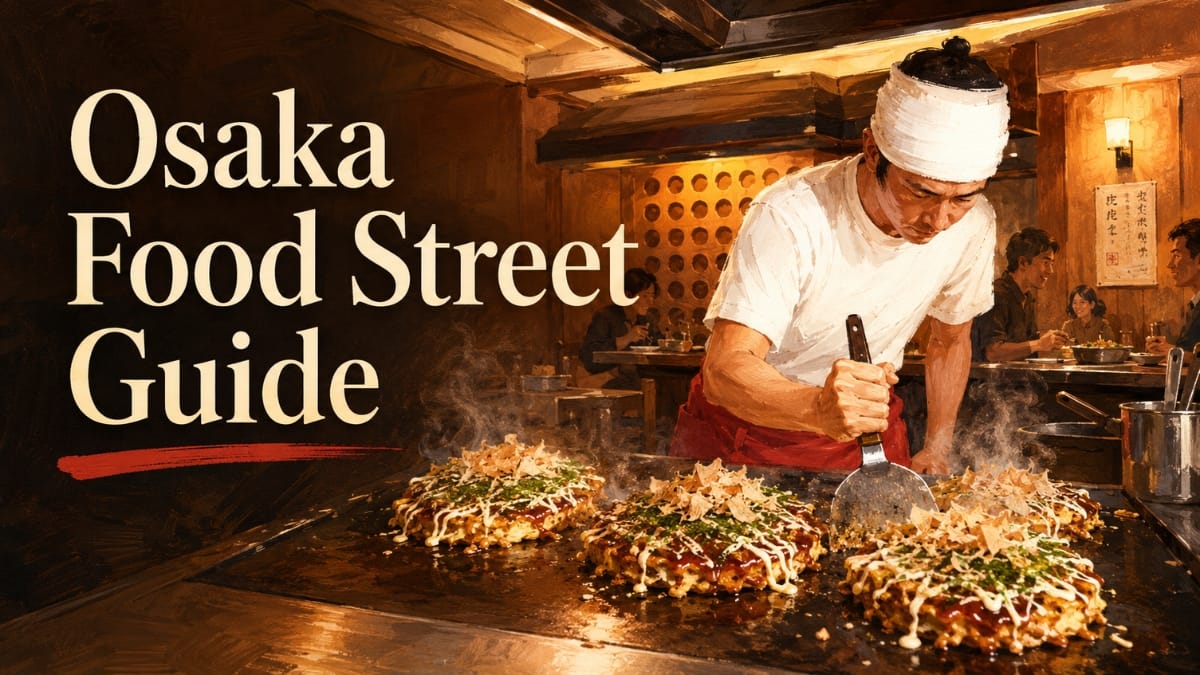
Osaka’s best-known street and casual foods are easy to spot, but not every area specializes in the same things. Takoyaki is the most iconic choice, and you’ll see it almost everywhere in major tourist districts. The texture varies more than first-timers expect. Some shops serve it very soft and almost custardy in the center, while others make it firmer. If your first tray feels too runny, that may be the style rather than a mistake.
Okonomiyaki is another classic, though it often works better in a sit-down setting than as handheld street food. In busy food districts, this can actually be an advantage. If you’ve been walking all day, a proper seat and a hot plate dinner may beat another round of standing snacks.
Kushikatsu is strongly associated with Shinsekai, where skewered meat, seafood, and vegetables are fried and served with sauce. It’s straightforward, filling, and beginner-friendly. The famous etiquette point is simple: no double-dipping in the shared sauce container, though many places now use individual serving methods anyway.
You’ll also find yakiniku, grilled crab, ramen, gyoza, and small izakaya dishes throughout Osaka’s food-heavy neighborhoods. The key is not to over-focus on the most famous items. Some of the most satisfying meals in Osaka come from walking one or two lanes away from the most photographed stretch and choosing the place that looks busy with local groups.
Desserts and sweet snacks deserve some room too. In central areas, you’ll find soft serve, melon pan, fruit cups, taiyaki, and seasonal sweets. These are useful if you want to pace your eating. Osaka rewards grazing, but not every stop needs to be heavy.
How to choose between Dotonbori, Shinsekai, and Kuromon
If you only have one evening, Dotonbori is the easiest recommendation. It gives first-time visitors the strongest sense of being in central Osaka, and there is almost no effort required. You show up, walk, look, and eat. For many travelers, that convenience is worth the crowds.
If you care more about local atmosphere than famous landmarks, Shinsekai often feels more distinctive. It is less polished, more nostalgic, and usually better for a casual, fried-food kind of night. It also works well if you plan to combine it with nearby sights in the Tennoji area.
If your schedule points toward a late morning or lunch stop, Kuromon Market makes more sense. It is especially useful on arrival day or on a day when you want to snack between other activities in Namba. Just don’t expect it to feel like a hidden local market untouched by tourism. It’s popular for a reason, and prices often reflect that.
For travelers who want a calmer version of central Osaka, the answer is often neither of those three. It may be the backstreets around Namba, where you can still eat classic Osaka dishes without the same sensory overload.
Timing matters more than most guides admit
Food streets in Osaka can feel completely different depending on the hour. A market that seems manageable at 11:00 a.m. may be shoulder-to-shoulder by 1:00 p.m. A neon-heavy area that feels exciting at 6:00 p.m. can become exhausting by 8:00 p.m. if you are jet-lagged.
If you dislike crowds, go earlier than your instincts tell you. An early dinner in Japan often means less waiting, easier ordering, and a better chance of getting into smaller places. This is especially helpful in Dotonbori and around Namba.
Late night has its own appeal, particularly in Umeda and Namba, where restaurants and bars stay active. But not every traveler enjoys Osaka best at its busiest. There is no prize for forcing a peak-hour food crawl if you’d rather eat comfortably and keep your energy for the next day.
Practical tips for using this Osaka food street guide well
Cashless payment is common in many places, but not universal, especially in smaller older shops. Keep some cash with you. Menus with pictures are also common in major visitor areas, which lowers the barrier a lot for first-time travelers.
Lines can mean quality, but they can also mean social media popularity and efficient turnover. If a place has a huge line and you are hungry now, it is often smarter to pick a nearby shop with a shorter wait. In Osaka’s major food districts, “very good” is easy to find.
One useful rhythm is to mix one famous stop with one quieter meal. For example, you might snack in Dotonbori, then sit down in a side street restaurant nearby. That gives you the atmosphere without making your entire evening feel like crowd management.
It also helps to match the area to your day. If you’ve spent hours shopping in Umeda, eat there. If you’re already around Namba, don’t cross the city chasing a single takoyaki stand unless that is genuinely part of the fun for you. Osaka is full of good food. Reducing transit friction usually improves the experience.
The best Osaka food street guide is the one that keeps you flexible
Many first-time visitors worry about choosing the single best food street in Osaka. In practice, the better question is which area fits your energy that day. Dotonbori is excellent for atmosphere, Shinsekai for personality, Kuromon for daytime sampling, and Namba’s side streets for a more balanced night out. Umeda is the practical choice when convenience matters most.
If you leave room to adjust based on crowds, weather, and how hungry you actually are, you’ll eat better. Osaka is generous that way. Even a short walk in the right neighborhood can turn into the meal you remember most.