
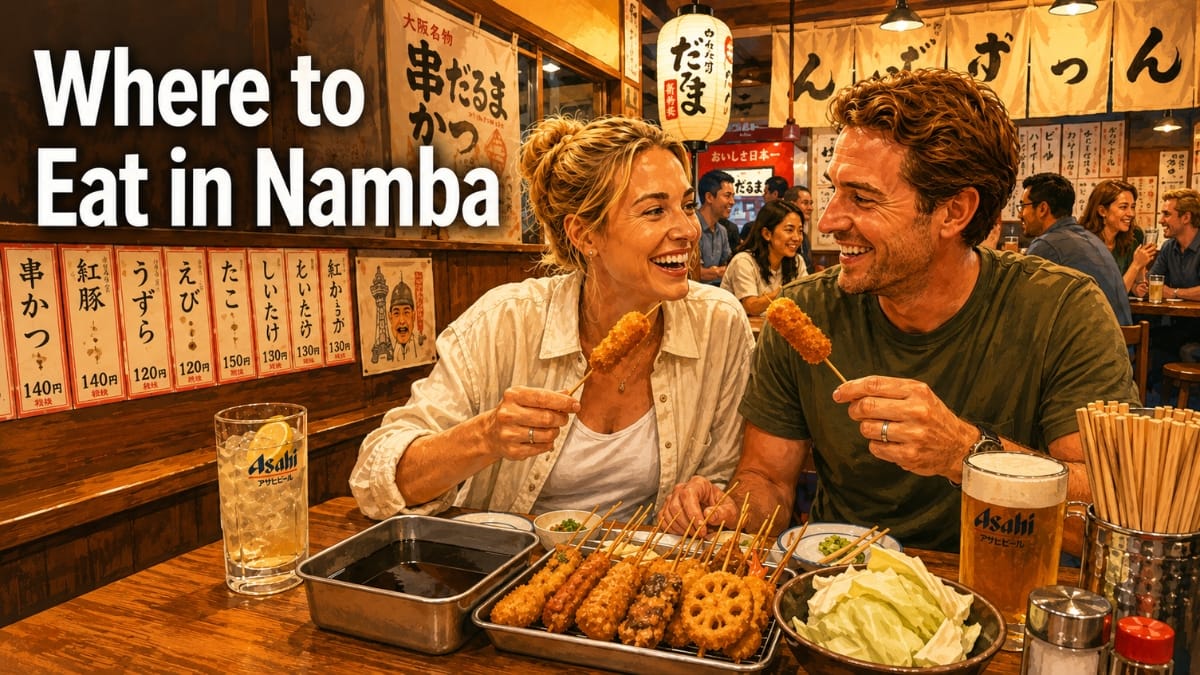
If you are trying to decide where to eat Namba, the main challenge is not finding food. It is choosing between several busy areas that look similar on a map but feel very different once you arrive. A good meal in Namba usually comes down to picking the right zone first, then choosing a restaurant that fits your budget, timing, and comfort level.
Namba is one of Osaka’s easiest areas for first-time visitors to eat well. It has major train connections, long shopping arcades, famous neon streets, basement food halls, and plenty of casual restaurants with picture menus. It is also crowded, noisy in some parts, and easy to misjudge if you want a quiet meal or have children with you.
Where to eat in Namba by area
The best place to eat in Namba depends on what kind of meal you want. The neighborhood is not one single dining district. It is a group of connected areas around Nankai Namba Station, Osaka Metro Namba Station, JR Namba, and the Dotonbori canal area.
Dotonbori for classic Osaka street energy
If you want the famous Osaka food atmosphere, start in Dotonbori. This is the area most visitors picture first – bright signs, dense foot traffic, and many places serving takoyaki, okonomiyaki, ramen, kushikatsu, crab, sushi, and dessert.
Dotonbori works well for travelers who want a lively meal and do not mind queues or crowds. It is especially convenient in the evening, when many restaurants are open and the area feels most active. The trade-off is that it can be hard to tell which places are designed mainly for fast tourist turnover and which are worth waiting for. If a restaurant has a line, check whether the menu is posted outside and whether prices are easy to confirm before joining.
For families, couples, or anyone sensitive to noise, Dotonbori can feel tiring at peak dinner time. If that sounds like a bad fit, stay nearby but move one or two streets away from the canal.
Sennichimae for a broader range of casual meals
Just east and south of Dotonbori, Sennichimae is often a better answer to where to eat Namba if you want variety without the same level of visual overload. You can still find Osaka staples here, but also yakiniku, izakaya, curry, chain restaurants, and budget-friendly set meals.
This area is useful when your group cannot agree on one type of food. It also tends to be easier for solo travelers, because many smaller restaurants have simple counter seating. If you are staying around Namba and want dinner without turning it into a full sightseeing stop, Sennichimae is often the most practical choice.
Namba Walk for weather-proof convenience
Namba Walk is the underground shopping and dining area connected to the station complex. It is one of the easiest places to eat if it is raining, very hot, or you are in transit and do not want to navigate crowded surface streets.
You will find cafes, Japanese chains, dessert shops, and casual sit-down restaurants. This is not the place to go for canal views or nightlife atmosphere, but it is very useful for lunch, early dinner, or a quick meal before a train. Travelers arriving tired from Kansai Airport often do well here because the environment is more organized and less chaotic than Dotonbori.
A common mistake is assuming underground dining is always cheaper. Sometimes it is, but not always. What you are really paying for is convenience and location.
Namba Parks and the station side for calmer meals
Around Namba Parks and near Nankai Namba Station, you can usually find a calmer dining experience. This part of Namba is a good choice if you want department store restaurants, mall dining floors, cafes, or places with more seating space.
This area works well for lunch breaks, families with strollers, and travelers who want a cleaner, quieter environment. It is also helpful if you need reliable payment options such as cards or e-money, since larger commercial buildings tend to be easier for international visitors.
The trade-off is that the food can feel less distinctly “Osaka street food” and more like shopping-center dining. That is not a bad thing. For many travelers, a calm and easy meal is the better choice.
What to eat in Namba
Namba is strong for Osaka favorites, but it is not limited to them. If you only have one or two meals here, start with foods that suit the area.
Okonomiyaki and takoyaki make sense if you want classic Osaka dishes. Takoyaki is easy for a snack, but it is not always enough for a full meal unless you add other items. Okonomiyaki is more filling and better if you want to sit down.
Kushikatsu is another common choice, especially if you want a casual dinner with drinks. Ramen is everywhere and works well for solo diners or late meals. Yakiniku is a good option for groups, though prices vary a lot depending on the meat quality and whether you choose an all-you-can-eat format.
Sushi is available throughout Namba, but quality and value are not uniform. Conveyor-belt and chain sushi can be a practical option for first-time visitors who want clear pricing and easier ordering. If you want higher-end sushi, it is usually worth checking reservation rules in advance.
If your group includes picky eaters, children, or travelers adjusting to Japan on day one, do not force a dramatic local-food moment. Namba has plenty of straightforward options including curry rice, tonkatsu, pasta, bakery cafes, and international food.
How to choose the right restaurant fast
The easiest way to choose in Namba is to decide four things before you start walking: your budget, your wait tolerance, your seating needs, and whether you want a quick meal or a slower dinner.
If you want to spend less and eat quickly, look for lunch sets, counter-style ramen shops, curry shops, or chain restaurants in underground and side-street areas. If you want a more relaxed meal, head toward commercial buildings, upper floors, or side streets away from the canal.
Menus displayed outside are common and useful. Many places show plastic food models or photos, which helps if you do not read Japanese. If no prices are posted and the place looks formal, it may not be the best choice for a low-stress walk-in meal.
A line does not always mean the best food. In Namba, it can simply mean the restaurant is famous online, has limited seating, or is located in the path of heavy tourist traffic. If you are hungry now, it is often smarter to walk five minutes and find a similar place with no wait.
Practical tips for eating in Namba
Lunch is usually easier than dinner. Many restaurants offer set meals in the daytime, and crowds are more manageable if you eat a little early, around 11:00 a.m. to 11:30 a.m. Dinner gets much busier from around 6:00 p.m., especially on Fridays, Saturdays, and holiday periods.
Cashless payment is common, but not guaranteed everywhere. Larger restaurants, mall dining floors, and chains are more likely to accept international cards and IC cards. Smaller independent shops may still prefer cash. Keeping some yen with you is a good idea.
Reservations depend on the restaurant type. Casual places usually work for walk-ins. Popular yakiniku, sushi, and some specialty restaurants may require or strongly benefit from reservations, especially in the evening.
English support is mixed. In the most visited parts of Namba, many restaurants have English menus, picture menus, or ordering tablets with language options. Staff may not speak much English, but ordering is often still manageable. Pointing politely at a menu item is normal.
If you have dietary restrictions, Namba can be more difficult than it first appears. Menus are not always detailed about broth, seasoning, or cooking oil. Travelers with strict vegetarian, vegan, halal, or allergy needs should choose carefully and allow extra time.
Common mistakes to avoid when deciding where to eat Namba
One common mistake is eating only in the busiest stretch of Dotonbori because it is the most visible option. That area is convenient, but not always the best fit for budget, comfort, or food quality.
Another mistake is waiting too long to eat. Namba is easy when you plan ahead and much harder when you are tired, hungry, and trying to choose in the middle of a crowd. If you know you will be in the area at dinner time, decide your preferred food type before late afternoon.
Some travelers also underestimate walking time inside the station area. Namba Station is not simple. Different rail lines connect through large underground passages, and a restaurant that looks close on a map may still take time to reach. If you are catching a train, choose somewhere truly close to your line, not just somewhere in greater Namba.
If you want the easiest answer, eat near Namba Walk or Namba Parks. If you want the classic Osaka atmosphere, head to Dotonbori and nearby streets. If you want flexibility and better odds of finding a good casual dinner without too much stress, Sennichimae is often the best middle ground.
The right meal in Namba is usually the one that matches your energy level, not the one with the biggest sign outside.