
If Osaka Station feels overwhelming at first glance, that reaction is completely normal. This Osaka Station area guide is built for first-time visitors who want to use Umeda as a practical base without spending half the day figuring out what is where. The area is one of Osaka’s busiest transit and shopping zones, but once you understand how it is laid out, it becomes one of the easiest places in the city to use well.
How to understand the Osaka Station area
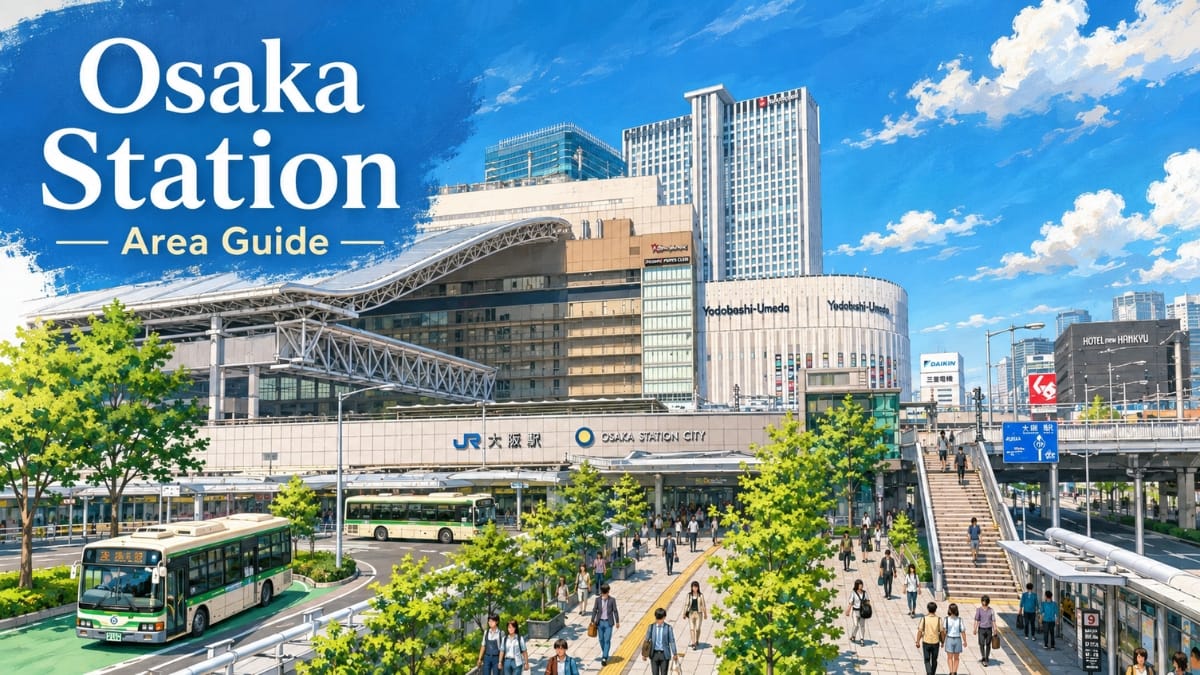
The first thing to know is that “Osaka Station area” usually means the wider Umeda district, not just one building. Osaka Station itself is the main JR station, but around it you also have Umeda Station names used by different railway companies, large department stores, underground malls, hotels, office towers, and restaurant floors stacked above street level.
That is why the area can feel confusing even when you are technically in the right place. You may arrive at one station and still need to walk 10 to 15 minutes indoors to reach your hotel, another train line, or a restaurant. For many travelers, the challenge is not distance. It is orientation.
A simple way to think about it is this: JR Osaka Station is the center, the big shopping complexes attach to it or surround it, and the underground passages connect much more than you expect. If the weather is bad, that underground network is helpful. If you get disoriented easily, it can also make every corridor feel similar.
Why stay here on your first Osaka trip
For a first visit, the Osaka Station area is one of the safest choices in the city. You are well connected to Shin-Osaka, Kyoto, Kobe, Nara connections, and major Osaka neighborhoods. If your trip includes day trips or you are arriving with luggage and want fewer transfer headaches, this area works very well.
It is also convenient in a very specific way. You can get breakfast, coffee, shopping, casual dinners, late desserts, and hotel access without needing to travel across town. That matters more than many travelers expect, especially after a long flight or a full sightseeing day.
The trade-off is atmosphere. Umeda is useful, polished, and busy, but it does not feel as intimate or street-level as areas like Nakazakicho, Tenma, or parts of Namba. If your priority is nightlife character or a more obviously local neighborhood feel right outside your hotel, Osaka Station may feel a little corporate. If your priority is convenience and low-stress movement, it is hard to beat.
Osaka Station area guide to the main zones
The easiest way to use this district is to break it into zones.
The station core is where you will find JR Osaka Station and the largest connected shopping buildings. This is the best place for straightforward access to trains, dining floors, and familiar landmarks. It is ideal if you want to keep transfers simple.
West and south of the station, you will find major commercial buildings, department stores, and underground walkways that connect deeply into Umeda. This part is efficient but can feel maze-like. It is best if you do not mind indoor navigation and want lots of options close together.
North of the station, the mood becomes a little more spacious and modern. Depending on exactly where you go, you may find newer development, broader walkways, and a slightly calmer feel than the most crowded shopping corridors. It can be a good balance if you want convenience without being in the thickest foot traffic at all times.
A bit farther out, side streets and smaller pockets around Umeda start to feel more livable and less purely commercial. These edges are worth noticing if you want cafes, quieter meals, or a short break from department store energy.
Where to eat without overplanning
One of the best things about staying near Osaka Station is that you do not need a detailed food itinerary to eat well. The area is packed with restaurant floors, basement food halls, casual chains, coffee shops, izakaya-style spots, and dessert options. If you are tired, jet-lagged, or traveling with someone who wants choices, this is a huge advantage.
For first-time visitors, the easiest wins are inside department stores and large station-connected complexes. You can usually find dependable Japanese set meals, sushi, tempura, udon, ramen, tonkatsu, and cafes in one building. These places may not feel hidden or particularly local, but they are efficient and often very good.
If you want something that feels less generic, step one layer away from the main passages. Restaurants on upper floors, in narrower side streets, or in older surrounding buildings often feel more distinct. The key is timing. Lunch and dinner rushes in Umeda can get crowded quickly, so a slightly early meal makes the experience much smoother.
For snacks and low-effort meals, basement depachika food halls are especially useful. They are good for picking up beautifully prepared takeaway food, sweets, or something easy to bring back to your hotel. This works well on rainy days or when your energy is low.
Shopping, breaks, and what to do between trains
Even if shopping is not your main reason for visiting Osaka, the station area is practical for filling small gaps in your day. You can browse Japanese cosmetics, stationery, fashion, character goods, homeware, and food gifts without making a special trip elsewhere.
What matters more for many travelers is that the area also gives you places to pause. That might be a cafe with seating, a hotel lounge, a department store rest floor, or simply a quieter upper level away from the station flow. Around Osaka Station, rest is a planning tool, not a luxury. If you try to power through Umeda without breaks, the crowds and signage overload can wear you down fast.
If you have one or two hours before check-in or before an evening plan, this area is useful because you can stay productive without committing to a major sightseeing stop. Eat, shop lightly, regroup, and then move on.
Getting around from Osaka Station with less stress
For many visitors, the biggest value of an Osaka Station area guide is not where to shop. It is how to move confidently.
If you are using JR lines often, staying near Osaka Station makes the city feel simpler. You can reach other major hubs efficiently, and you have direct usefulness for day trips. If your itinerary leans heavily on subway travel within Osaka, Umeda still works well, but your walks between lines may be longer than expected.
Build in extra transfer time here, especially on your first day. Ten minutes can disappear quickly when you are finding the right exit, moving through underground corridors, or navigating around crowds with luggage. That does not mean the area is difficult. It means it rewards patience.
A good habit is to focus on exits and landmarks, not just station names. Knowing the name of a building near your destination is often more helpful than assuming every part of “Umeda” is close together. Screenshot directions before you leave your hotel in case your signal drops underground.
If you are arriving from Kansai International Airport, the station area is a strong base because onward movement is straightforward once you are checked in. If you are departing early by shinkansen from Shin-Osaka, staying here can also reduce friction. You are close, but still in a more interesting area than staying only for train convenience.
Who should stay here, and who might prefer somewhere else
The Osaka Station area is best for travelers who want convenience first, especially on a first trip. It suits couples, solo travelers, and anyone planning day trips. It is also a smart choice if you value easy shopping, lots of dining options, and a polished hotel-heavy district.
It may be less ideal if you want late-night street energy right outside your door, lower hotel prices, or a neighborhood that feels immediately more atmospheric. Namba tends to suit travelers who want a louder, more entertainment-focused Osaka. Smaller areas suit travelers who enjoy slower wandering and local texture over transport efficiency.
That said, many first-time visitors do best by choosing ease over romance for their base. You can always visit more character-filled neighborhoods during the day. Coming back at night to a well-connected area with reliable food options is often the smarter move.
A simple way to use the area well
Treat Osaka Station as a base, not a destination you need to conquer all at once. Learn your nearest exit, pick one or two reliable food buildings, and give yourself permission to move slowly on day one. Once the layout starts to click, the area becomes less of a maze and more of a tool.
If you want Osaka with less friction, Umeda is one of the most forgiving places to start. A busy station area does not have to feel stressful when you stop trying to understand all of it at once and simply let it become your anchor point in the city.