
You do not need to go far in Osaka to get away from Osaka’s busiest version of itself. A short train ride, a turn off a major shopping street, or a walk beyond a famous station can lead to hidden local spots in Osaka that feel slower, more personal, and much easier to remember than another crowded photo stop.
For first-time visitors, the challenge is not finding things to do. It is filtering out the places that feel interchangeable. Osaka rewards people who look one layer deeper. The city has big-name districts for a reason, but some of its most satisfying moments happen in neighborhoods where locals are heading to pray, shop, snack, or simply pass the afternoon.
Why hidden local spots in Osaka are worth planning for
If your itinerary is built only around Dotonbori, Osaka Castle, and Umeda’s major shopping complexes, you will still have a good trip. But you may leave with a version of Osaka that feels louder and more commercial than the city really is.
Smaller local spots change the pace. They give you room to notice details – old shopping arcades, neighborhood shrines, family-run cafes, side-street bakeries, and station areas that are functional rather than flashy. That matters on a first trip, especially if you want authentic experiences without adding stress.
The trade-off is simple. Some hidden spots are less visually dramatic than Osaka’s headline attractions, and a few take a bit more planning. But they often feel more relaxed, less crowded, and easier to enjoy at your own speed.
10 hidden local spots in Osaka worth adding to your map
Sumiyoshi Taisha and its surrounding streets
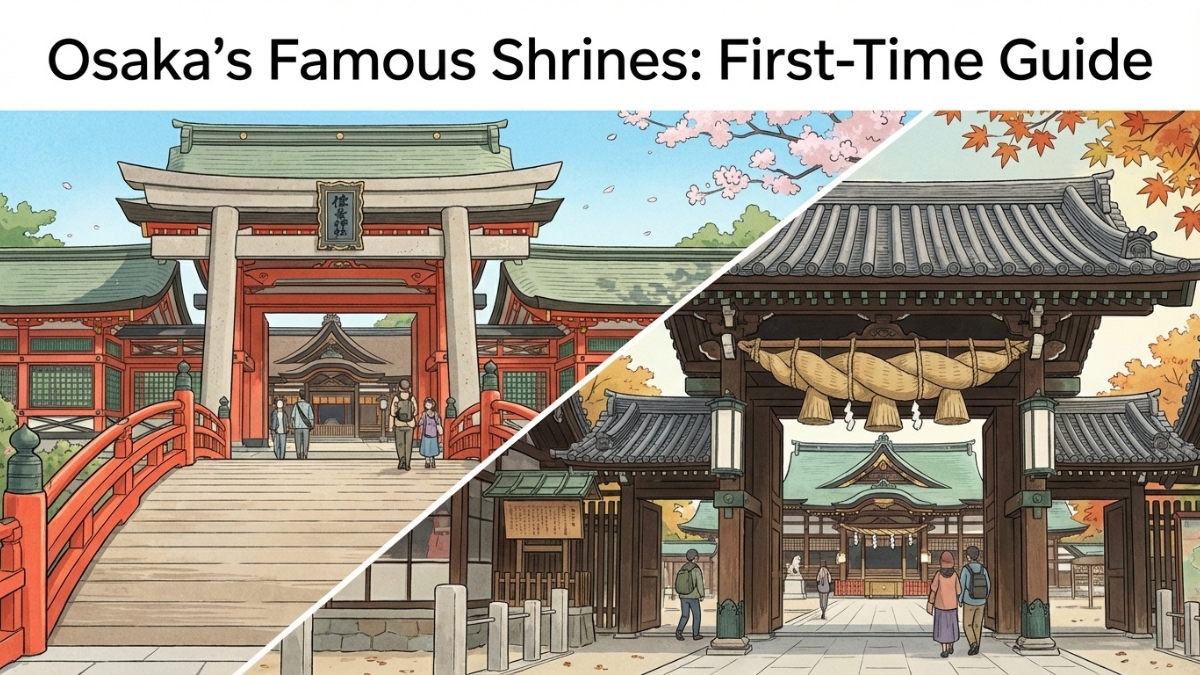
Sumiyoshi Taisha is one of Osaka’s most important shrines, but it still feels surprisingly calm compared with the city’s busiest tourist areas. The shrine grounds are spacious, the famous arched bridge gives the approach a memorable shape, and the atmosphere is more rooted in local daily life than sightseeing spectacle.
What makes this area especially useful for travelers is the neighborhood around it. Walk beyond the main grounds and you will find quiet residential streets, small shops, and a pace that feels very different from Namba. It works well in the morning, when the air is cooler and the shrine feels even more peaceful.
Hozenji Yokocho, if you come early or late
This small stone-paved lane near Dotonbori is not exactly unknown, but timing changes everything. At peak hours it can feel like a quick stop on a tourist route. Visit early in the day or later in the evening, and it becomes one of those rare central Osaka spaces that still feels intimate.
The moss-covered Fudo statue, lantern-lit alley, and compact restaurant fronts create a more old-fashioned mood than the surrounding entertainment district. If you want atmosphere without traveling far from central Osaka, this is one of the easiest wins.
Karahori Shotengai
Karahori Shotengai is the kind of place many first-time visitors miss because it does not market itself loudly. That is part of the appeal. This retro shopping street has small eateries, old storefronts, and pockets of everyday Osaka that feel lived-in rather than staged.
It is especially good for travelers who enjoy walking without a fixed agenda. You may not come for one famous landmark. You come for the texture of the area – local food counters, narrow passages, older buildings, and the sense that people are here for practical reasons, not just sightseeing.
Nakazakicho’s backstreets
Nakazakicho is often mentioned as a cafe area, but many visitors still only skim the surface. Step off the main paths and the neighborhood becomes one of Osaka’s best places for a slower afternoon. Old wooden houses have been reused as cafes, small galleries, and independent shops, and the lanes are compact enough to explore without much planning.
This area suits travelers who want a break from major commercial districts but still need something easy to access from Umeda. It is not packed with must-see monuments, and that is exactly why it works. You go there to browse, sit down, and let the neighborhood do the work.
Ishikiri Sando shopping street
If you want a local outing that feels distinct from central Osaka, Ishikiri is a strong choice. The approach to Ishikiri Tsurugiya Shrine is lined with a shopping street known for traditional sweets, small food shops, herbal stores, and an older neighborhood feel that many visitors never see.
There is a spiritual side to the area, and you will notice people visiting with real purpose. At the same time, it is approachable for travelers who are simply curious. The trip takes more effort than staying in the city center, but that extra distance is part of why the atmosphere feels less filtered.
Shinsekai’s side lanes beyond the main signs
Shinsekai is famous, but most people cluster around the obvious landmarks and bright signage. Walk a little farther into the side streets and the district becomes more interesting. You still get the retro Osaka energy, but with less of the staged feeling that comes from standing in the busiest section.
This is a good example of how hidden local spots in Osaka are sometimes about angle rather than secrecy. The area itself is not hidden. The quieter kissaten, older storefronts, and less-photographed lanes are. If you already plan to see Tsutenkaku, give yourself time to wander beyond the main strip.
Nakanoshima Park on a weekday morning
Nakanoshima is not obscure, but it is often overlooked by travelers focused on food districts and shopping hubs. On a weekday morning, the riverside paths, civic architecture, and open space offer a completely different side of Osaka.
This is a useful stop if your trip needs breathing room. It is easy to pair with Umeda or Yodoyabashi, and it does not require complicated logistics. During rose season the park gets more attention, but even outside that window it is one of the simplest places to reset.
Tsuruhashi’s local market streets
Tsuruhashi is best known for Korean food, but many visitors only pass through for one meal. Spend more time in the market streets and the area feels denser, more local, and more layered than a quick lunch stop suggests. You will find small grocers, casual eateries, grilling aromas, and a level of energy that feels functional rather than curated.
It is not polished, and that is part of its appeal. If you prefer tidy shopping zones, this area may feel intense. But if you want a district with strong identity and real everyday movement, Tsuruhashi delivers.
Abeno’s quieter edges behind the big complexes
Many travelers know Abeno for its department stores and major tower views, then leave. That misses the neighborhood’s quieter edges. Move beyond the largest buildings and you can find local dining streets, small temples, and residential pockets that feel surprisingly grounded for such a central area.
This is a good reminder that hidden places do not always mean remote places. Sometimes they sit directly behind major attractions. If you are already visiting Tennoji or Abeno Harukas, adding an extra hour on foot can change your impression of the entire area.
Kitahama’s cafe and river corners
Kitahama has a business-district reputation, which keeps some travelers away. That is exactly why it can feel like such a good find. Between the office buildings are riverside views, refined cafes, and quieter streets that work well for breakfast, coffee, or a slower late afternoon.
It suits visitors who want a more polished calm rather than a retro neighborhood atmosphere. Not every hidden spot needs to feel old-fashioned. Sometimes the appeal is simply space, order, and a local rhythm outside the main tourist loop.
How to visit local spots without making your day harder
The easiest mistake is trying to stack too many neighborhood stops across the city in one day. Osaka’s rail network is efficient, but your energy is still limited. It is usually better to pair one quieter area with one major district nearby. Nakazakicho works well with Umeda. Sumiyoshi Taisha fits naturally with southern Osaka plans. Ishikiri deserves a half day rather than a rushed detour.
Timing matters too. Shopping streets tend to feel more active from late morning through afternoon, while shrines and parks are often best earlier. Some older cafes and neighborhood shops keep shorter hours than chain stores in tourist centers. If a place matters to you, treat it as a destination rather than something you will just check on the way.
Cash is still useful in these areas, even though Osaka is increasingly card-friendly. You do not need to overprepare, but small purchases at traditional shops or local eateries are often smoother with yen on hand.
What first-time visitors should prioritize
If you only have room for three or four of these places, choose based on the kind of Osaka you want to feel. For calm and tradition, Sumiyoshi Taisha and Ishikiri stand out. For neighborhood wandering, Karahori Shotengai and Nakazakicho are easy choices. For food-driven atmosphere, Tsuruhashi gives you something more specific and less generic than a standard downtown meal district.
There is no single correct version of local Osaka. Some travelers want shrines and quiet streets. Others want old arcades, market energy, or retro side lanes near famous districts. The best plan is usually the one that gives you contrast – one big landmark, one local neighborhood, and enough unstructured time to notice what happens between them.
If your trip starts to feel too crowded, too rushed, or too similar from one stop to the next, that is usually your cue to step slightly off the main route. Osaka is very good at rewarding that choice.