
If your Osaka itinerary needs a quieter counterpoint to neon streets, food halls, and busy stations, the best shrines to visit in Osaka can give your trip some much-needed balance. A good shrine stop is not just a photo break. It can anchor a neighborhood, reveal a different side of the city, and give you a slower hour between train rides and restaurant queues.
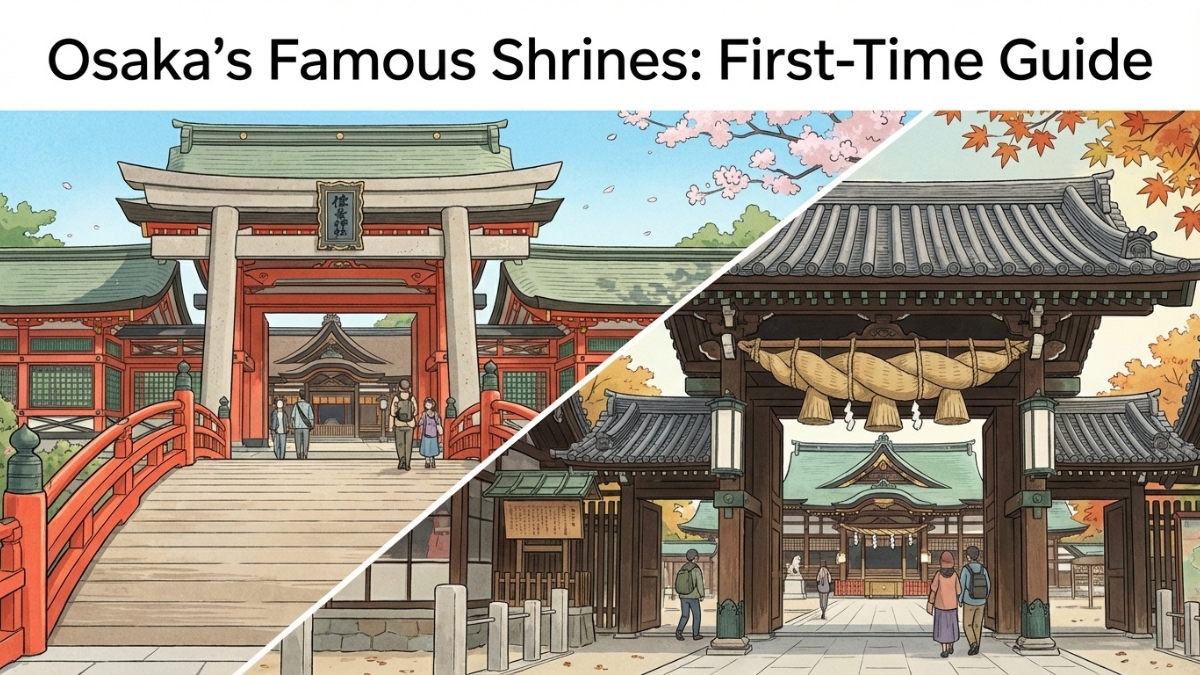
For first-time visitors, the tricky part is not finding a shrine. Osaka has many. The real question is which ones are worth your time based on where you are staying, how far you want to travel, and what kind of atmosphere you want. Some are famous and easy to pair with major sightseeing areas. Others feel more local and are better if you want a calmer, less obvious stop.
How to choose the best shrines to visit in Osaka
The right shrine depends on your route. If you are based in Namba or near Osaka Station, it usually makes sense to prioritize shrines that fit naturally into neighborhoods you are already exploring. If you are willing to go farther, Osaka opens up in a very different way, especially in the south and east of the city.
It also helps to know what you want from the visit. Some travelers want a grand, historically important shrine. Others want lanterns, wooded grounds, or a place that feels distinctly local rather than heavily touristed. Neither approach is better. It just changes which shrine will feel most rewarding.
1. Sumiyoshi Taisha
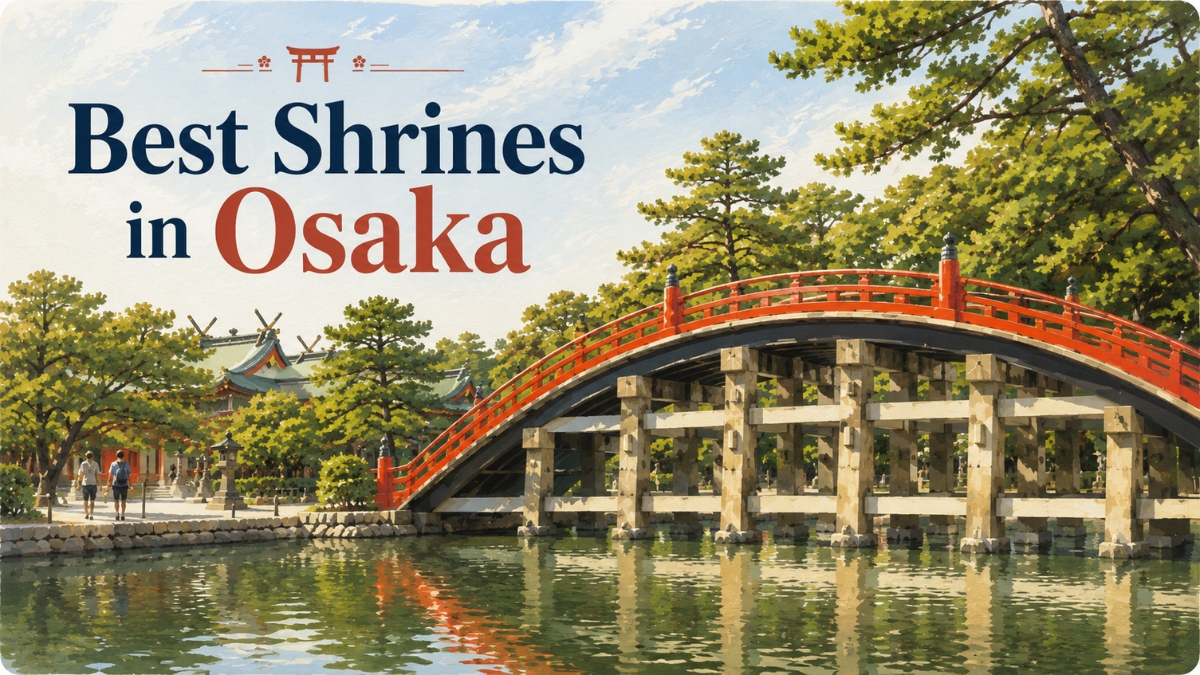
If you only visit one shrine in Osaka, Sumiyoshi Taisha is the strongest choice for most travelers. It is one of Japan’s oldest shrines and feels substantial without being difficult to reach. The grounds are spacious, the architecture is distinctive, and the famous arched Sorihashi Bridge gives the visit a strong sense of place.
This is a particularly good option if you want a shrine experience that feels important, photogenic, and rooted in local history. It is farther south than central Osaka attractions, so it works best if you are comfortable adding a dedicated stop to your day. That trade-off is usually worth it. Among Osaka shrines, this one has the clearest sense of scale and identity.
2. Namba Yasaka Shrine
Namba Yasaka Shrine is one of the easiest shrines to add to a first Osaka trip because it sits close to the Namba area and has a very memorable feature – the giant lion head stage. If you have seen photos of a dramatic lion face with its mouth open wide, this is the place.
The location is a major advantage. You can pair it with shopping, food, and sightseeing around Namba without much extra planning. The grounds themselves are not as extensive as Sumiyoshi Taisha, so this is usually a shorter visit. Still, for convenience and visual impact, it earns its place on the list.
3. Osaka Tenmangu
Osaka Tenmangu is a strong pick if you want a shrine with real city context rather than a fully removed, tranquil setting. It is best known for Tenjin Matsuri, one of Japan’s major festivals, but even outside festival season it has a grounded, everyday importance that many visitors appreciate.
This shrine works especially well if you are exploring the Tenma area or want to combine a cultural stop with a more local food neighborhood. It does not have the same immediate wow factor as Namba Yasaka or the historic atmosphere of Sumiyoshi Taisha, but it rewards travelers who enjoy seeing how shrines function within normal city life.
4. Ikukunitama Shrine
Ikukunitama Shrine sits in central Osaka near areas many visitors already pass through, including the broader Namba and Uehommachi side of the city. That makes it an easy addition if you want a shrine visit without committing half a day.
What makes it appealing is its practical fit. The grounds are pleasant, it has historical significance, and it often feels less hectic than the surrounding districts. If your schedule is tight, this is one of the better shrines for getting a meaningful visit without a long detour.
5. Hattori Tenjingu
Hattori Tenjingu is less famous internationally, but it is a very good choice for travelers who want to step outside the standard central Osaka list. It is known for blessings related to feet and mobility, which gives it a distinctive identity among local shrines.
Because it is not usually at the top of generic tourist guides, the atmosphere can feel more neighborhood-based and less performative. This is a good fit if you enjoy seeing places that residents clearly use and value. It is not the first shrine to prioritize if your time is extremely limited, but it can be a rewarding stop for repeat wanderers or curious first-time visitors staying beyond the obvious districts.
6. Abe Oji Shrine
Abe Oji Shrine is often overlooked, which is exactly why some travelers end up liking it. Located in the Abeno area, it can pair well with southern Osaka sightseeing. The grounds are more modest than the city’s major shrine complexes, but there is a calm, local feel that comes through clearly.
This is the kind of shrine that works best when you are already nearby. It is not a must-see across the whole city, and that is worth stating plainly. But if you are exploring Abeno and want a quieter cultural stop, it can be a better use of time than crossing the city for a more famous name.
7. Imamiya Ebisu Shrine
Imamiya Ebisu Shrine is best known for its connection to business prosperity and the lively Toka Ebisu festival. Even outside festival dates, it is an interesting stop because it reflects a different side of Osaka’s character – practical, commercial, and tied to everyday hopes for success.
Its location near southern central Osaka makes it feasible to combine with Shinsekai or the areas around Ebisucho. The grounds are not especially large, so this is more of a focused stop than a long, wandering visit. If you are interested in how religious sites connect to Osaka’s merchant culture, this one stands out.
8. Ishikiri Tsurugiya Shrine
If you are willing to go beyond the most central areas, Ishikiri Tsurugiya Shrine offers a more local and memorable experience. It sits on the eastern side of the Osaka area and is known for its shopping street approach, where old-school storefronts and a slightly nostalgic mood make the journey part of the appeal.
This is one of the better options for travelers who want a shrine trip that feels like a neighborhood discovery rather than a checklist stop. It does require more intention than popping into Namba Yasaka Shrine between lunch and shopping. But if you like slower, more textured outings, this one delivers a lot.
9. Tsuyunoten Shrine
Tsuyunoten Shrine, also called Ohatsu Tenjin, is a surprisingly accessible stop in the Umeda area. That alone makes it useful for many first-time visitors. You can be in one of Osaka’s busiest commercial districts and still step into a compact shrine space with its own atmosphere.
Because it is so central, this shrine is ideal for travelers who want something easy near Osaka Station or Umeda without changing their whole day plan. It is not the city’s grandest shrine, and the urban setting means you will not get the same spacious feel as Sumiyoshi Taisha. But for convenience, it is excellent.
10. Sanko Shrine
Sanko Shrine is a good option for travelers interested in Osaka history, especially stories connected to the Sanada clan and the wider Osaka Castle area. It is smaller and less famous than some others on this list, but it offers a more specific historical angle.
This shrine makes the most sense if you are already visiting eastern central Osaka and want to add a stop that feels a little different from the most photographed places. It is not essential for every first-time visitor. For travelers who enjoy layered local history, though, it can be a smart addition.
Which Osaka shrine is best for first-time visitors?
For most first-time travelers, Sumiyoshi Taisha is the best all-around shrine in Osaka if you want one standout visit. It feels significant, visually distinct, and culturally substantial. If convenience matters more than scale, Namba Yasaka Shrine is the easiest high-impact option. If you are staying near Umeda, Tsuyunoten Shrine is the simplest shrine to fit into a busy schedule.
That is why there is no single perfect answer. The best shrine is often the one that fits naturally into your route and energy level. A famous shrine across the city can be worth it, but not if it turns a relaxed day into a rushed one.
Practical tips before you go
Try to visit earlier in the day if you want a calmer atmosphere and better photos. Shrine grounds are often most pleasant in the morning, especially before nearby shopping and sightseeing areas get crowded. Bring a little extra time as well. Even smaller shrines can be more enjoyable when you are not treating them as a five-minute stop.
Basic etiquette is simple. Be respectful, keep noise low, and avoid blocking worship areas for photos. If you are not sure what to do at the purification fountain or prayer area, it is fine to observe quietly rather than imitate something you do not understand.
If you are building your trip around neighborhoods, Osaka Map’s approach works especially well here: match shrine visits to the part of the city you are already exploring. That usually leads to a smoother day and a better feel for Osaka itself.
The best shrine visit in Osaka is rarely about checking off the most famous name. It is about finding the place that gives you a pause, a sense of the neighborhood, and a moment of calm you will actually remember later.