
A pass that includes transportation and attraction entry sounds simple. In practice, it only works if your day is built around the places it covers. This Osaka Amazing Pass review explains who should buy it, who should skip it, and how to avoid spending a rushed day chasing savings.
Is the Osaka Amazing Pass worth it?
For many first-time visitors, the Osaka Amazing Pass is worth considering for one busy sightseeing day. It combines unlimited travel on its included transit network with admission to a selected group of Osaka attractions. The value comes from using both parts: several paid attractions plus multiple subway rides.
It is not automatically the cheapest choice for every traveler. If you prefer a slow day around one neighborhood, plan to visit mostly free sights, or have children who do not qualify for the same ticket benefits, regular transit fares and individual entry tickets may cost less.
The pass is strongest for travelers staying in central Osaka who want to combine the Osaka Bay area, Namba, Umeda, Osaka Castle, or landmarks around the city center. It is less useful for a day trip to Kyoto, Nara, Kobe, or Universal Studios Japan. Those destinations are outside the basic purpose of this pass and need separate planning.
What the pass actually covers
The Osaka Amazing Pass has two parts: transportation and attraction admission. Both are useful, but each has limits that matter when you plan your route.
Included transportation
The transit element generally covers Osaka Metro and Osaka City Bus services, with some ticket versions or validity periods having different rules. It does not mean that every train in Osaka is free. JR lines, the Nankai Railway to Kansai International Airport, and many private railways may require a separate fare.
This catches out many visitors because rail lines often connect inside the same large station. At Namba, for example, Osaka Metro, Nankai, Kintetsu, Hanshin, and JR are different operators. Check the operator before assuming the pass applies.
An IC card such as ICOCA remains useful even if you buy the pass. Use it for excluded railways, convenience stores, lockers, and any trip outside the covered network. Do not expect the Amazing Pass to replace an IC card for your whole stay.
Included attractions
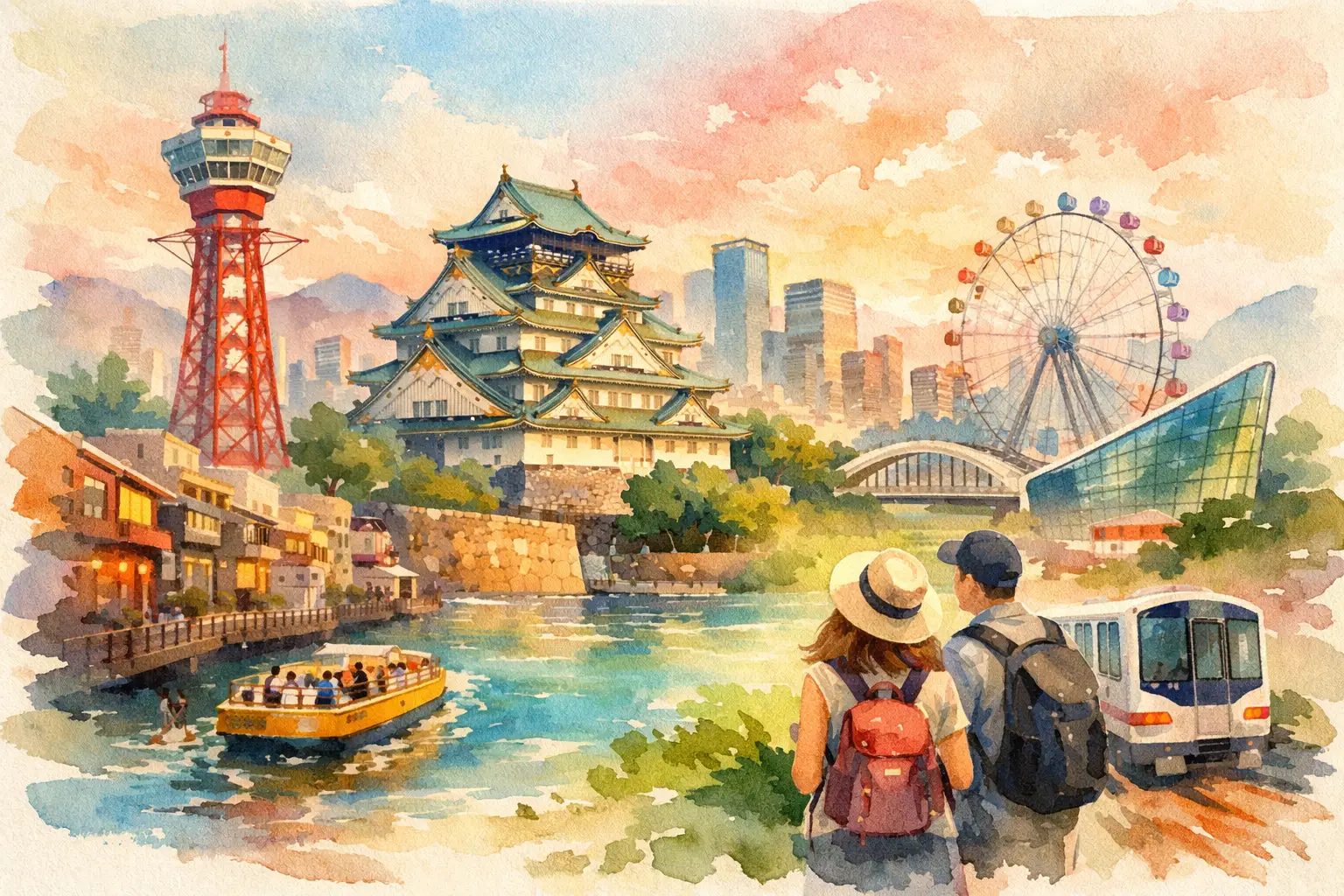
The attraction list usually includes a mix of observation decks, museums, river cruises, historic sites, and smaller experiences. Popular examples have included the Umeda Sky Building, Tsutenkaku Tower, the Osaka Castle museum area, selected cruises, and several museums or cultural facilities.
The exact list, entry conditions, and operating days can change. Some attractions have seasonal hours, maintenance closures, timed entry, or restrictions during busy periods. A pass does not guarantee that you can walk in immediately. Before buying, check the current list for the specific dates of your visit and look closely at any reservation instructions.
Most facilities allow one entry per pass holder. You cannot usually use the same admission benefit twice, even if you leave and return later.
A realistic Osaka Amazing Pass day
The pass works best when your route moves in one direction rather than zigzagging across Osaka. A practical first-time itinerary might begin at Osaka Castle in the morning, continue to the Umeda area for an observation deck or museum, then move south through Namba for a cruise or a visit to Tsutenkaku in Shinsekai.
That is a full day, not a casual stroll. Expect walking, station transfers, queues, and meal breaks. Four attractions may look manageable on a map but become difficult if two of them are major viewpoints with elevator lines.
A better approach is to choose two high-value attractions you genuinely want to visit, then add one or two smaller nearby stops. If an included boat cruise is a priority, build the day around its departure time first. Cruises have fixed schedules, and missing one can disrupt everything that follows.
Start early, especially on weekends, Japanese public holidays, and during cherry blossom or autumn foliage periods. Central Osaka attractions are busiest from late morning through mid-afternoon. Arriving at the first opening time gives you more flexibility if one stop takes longer than expected.
How to decide if it saves money
Do a quick calculation before purchase. Add the current individual admission prices for the attractions you would definitely visit. Then estimate your subway and bus fares for the same day. Compare that total with the current pass price.
Use only firm plans in this calculation. Do not count an attraction simply because it is included. If you are unlikely to visit it after lunch, it has no real value.
For example, a traveler who plans to use the subway several times, visit a paid observation deck, take an included cruise, and enter one museum is likely to get good value. Someone who wants to see Dotonbori, Kuromon Market, Shinsaibashi, America-mura, and Hozenji Yokocho may not. Those areas are enjoyable but mostly free, close together, and easy to explore on foot.
The pass can also be worthwhile when it removes small payment decisions. That convenience has value on a short trip. Still, do not turn your vacation into a race to justify the ticket. The pass should support your plan, not control it.
One-day or two-day pass?
A one-day pass is usually the easier choice for short-stay visitors. It creates one focused sightseeing day and lets you spend the rest of the trip exploring food streets, neighborhoods, shrines, shopping areas, or day trips without trying to maximize a ticket.
A two-day option can make sense if you have a longer attraction list and want a less rushed pace. It is most useful when both days include several covered attractions and enough rides on the included transport network. It is a weaker choice if the second day is mainly shopping in Namba, visiting cafés, or traveling beyond central Osaka.
Check whether the pass is valid by calendar day rather than for 24 hours from first use. This is a common mistake. Activating a one-day ticket late in the afternoon can waste much of its value.
Who should skip the pass?
Skip it if your Osaka schedule is centered on Universal Studios Japan, a Kyoto or Nara day trip, or the aquarium alone. Those plans do not naturally combine with enough included attractions and covered local transportation.
Families should also compare carefully. Children may have separate admission prices at individual attractions, while pass conditions can differ by age and product. A family does not always save simply because the adults do.
Travelers with limited mobility, young children, or anyone who dislikes packed schedules may prefer individual tickets. Major stations such as Umeda and Namba involve long walks and multiple levels. The pass is still possible to use, but a slower route with fewer stops is more comfortable.
Buying and using the pass without stress
Buy the current version only after you have chosen your Osaka sightseeing day. The pass is commonly sold in digital form, so make sure your phone is charged and has mobile data or saved screenshots where needed. Read the activation instructions before you are standing at a subway gate.
Keep the pass details easy to access. Some attractions may require you to show a screen or ticket code separately from transit use. Staff at larger attractions often have basic English support, but showing the pass screen and the attraction name is usually the clearest way to ask for help.
Do not use the pass at an unattended gate if you are unsure whether the line is covered. Find a station staff member or use your IC card instead. Paying one ordinary fare is better than losing time or entering the wrong rail system.
Common Osaka Amazing Pass mistakes to avoid
The biggest mistake is treating it as an all-Osaka transport pass. It is a sightseeing pass with transport included, not a free pass for every train, airport transfer, or regional trip.
Another mistake is planning too many distant stops. Osaka is compact compared with Tokyo, but transfers still take time. Umeda, Osaka Castle, Tempozan, Shinsekai, and Namba cannot all be treated as quick stops on a crowded weekend.
Finally, check attraction opening days before setting your itinerary. Museums may close on specific weekdays, and cruises or outdoor facilities can change operations because of weather. Have one nearby backup attraction in mind, but do not build a plan that depends on squeezing in six entries.
The Osaka Amazing Pass is best used as permission to have one well-planned, active day in the city. Choose the places you would pay to enter anyway, leave room for lunch and wrong turns, and let your other Osaka days move at a more natural pace.