
Osaka parks are useful when the city’s stations, shopping streets, and food districts start to feel intense. They are not all the same: some are easy central stops between sightseeing, while others need half a day and a train plan. Choosing the right one can give you a quiet reset without sending you far from the rest of your itinerary.
Which Osaka parks fit your trip?
For a first visit, Osaka Castle Park is the easiest choice if you are already planning to see Osaka Castle. Nakanoshima Park works best for a short, central walk near Umeda, Yodoyabashi, or Kitahama. Tennoji Park is practical for travelers staying around Namba or visiting Shinsekai, while Expo ’70 Commemorative Park is better for travelers who want a large outdoor destination rather than a quick break.
If flowers, open lawns, and less central surroundings matter more than landmark sightseeing, Tsurumi Ryokuchi Park and Nagai Park are strong alternatives. Both are accessible by subway or JR, but they reward travelers who can give them more time.
Japan’s parks are generally calm and well cared for, but they are shared public spaces rather than tourist attractions with constant services. Bring water in warm weather, use the restrooms when you see them, and check the weather before traveling. Summer heat and humidity can make a long park walk much harder than it looks on a map.
Osaka Castle Park for first-time visitors
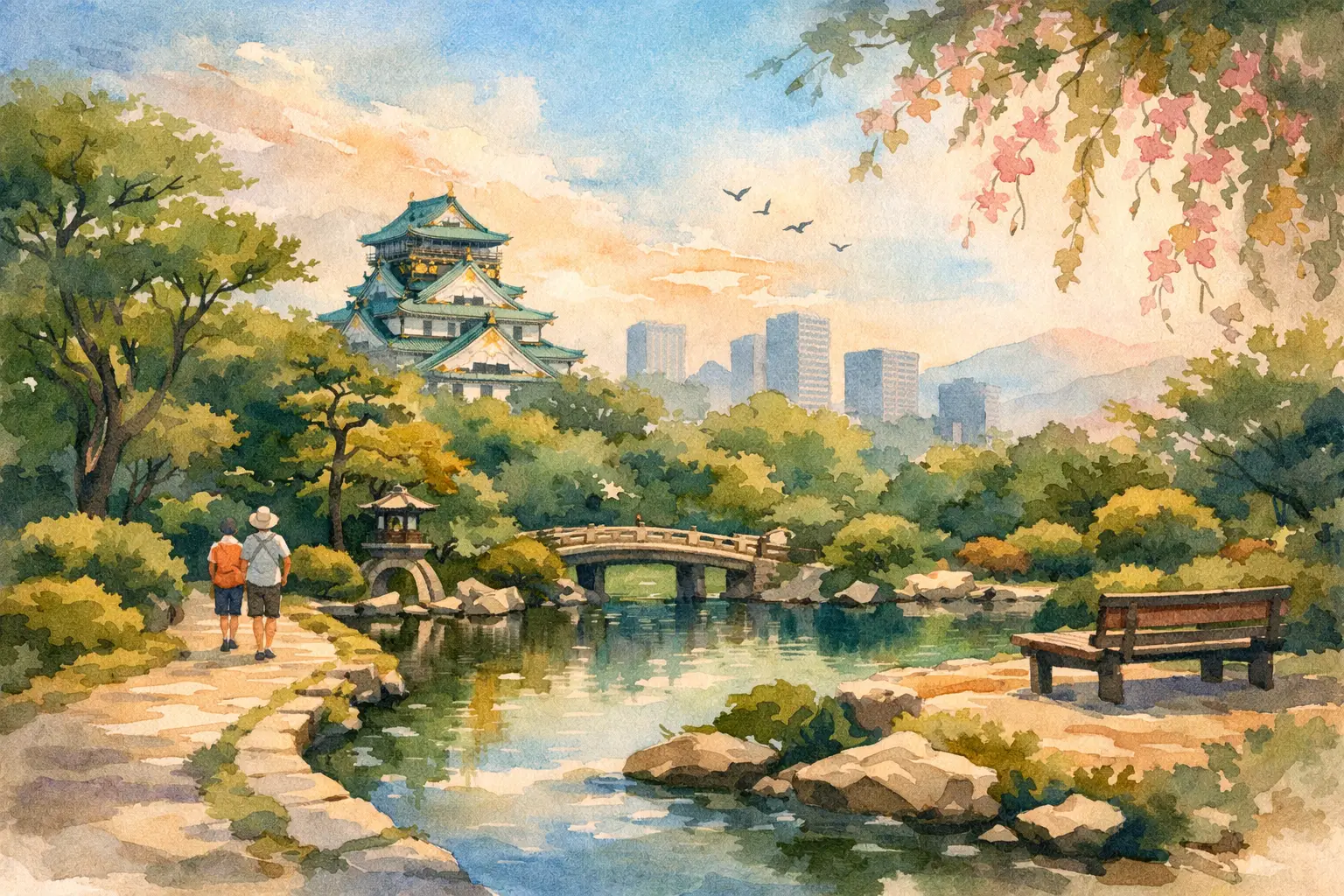
Osaka Castle Park is the most convenient major green space for travelers who want a classic Osaka landmark, wide paths, moats, and city views in one place. The park grounds surround the castle complex and are large enough to feel open, even when the main approach is busy.
Several stations serve the area, including Osakajokoen Station on the JR Osaka Loop Line, Tanimachi 4-chome Station on the Osaka Metro Tanimachi and Chuo lines, and Morinomiya Station. There is no single best entrance for every plan. Use Osakajokoen Station if you are coming from Osaka Station or Tennoji on the Loop Line. Tanimachi 4-chome is often more useful if you are combining the park with central Osaka or want a less crowded approach.
Allow at least two hours if you want to walk the grounds and visit the castle tower. Allow longer during cherry blossom season, when paths around Nishinomaru Garden and the castle area can be crowded. The main park grounds are free to enter, while the castle tower and some gardens or facilities charge separate admission.
The common mistake is treating the park as a five-minute photo stop. Stations are not directly beside the castle tower, and the grounds involve more walking than many visitors expect. Wear shoes suitable for paved paths and slopes. If your energy is low, choose one route through the park rather than trying to circle the entire complex.
Nakanoshima Park for a central riverside walk
Nakanoshima Park sits on the narrow island between the Dojima and Tosabori rivers. It is one of the most useful Osaka parks when you are staying near Umeda or moving between business-district sights, museums, cafés, and restaurants. It feels more like an urban promenade than a large natural park.
Yodoyabashi Station, Kitahama Station, and Naniwabashi Station are all within easy walking distance. From Umeda, Yodoyabashi is a simple choice by subway or on foot, depending on where you are staying. The park is also easy to combine with a walk along the river toward central Osaka.
Plan for 30 to 60 minutes, or longer if you stop for coffee or visit a nearby museum. The rose garden is a main reason to come in spring and fall, although bloom timing changes with the weather each year. Outside flower seasons, the riverside setting and historic buildings nearby still make it a pleasant pause between indoor activities.
This is not the best park for a large family picnic or a long nature walk. Its strength is convenience. Go in the morning for quieter paths, or in late afternoon when the surrounding office area begins to slow down. Weekday lunchtime can be noticeably busier.
Tennoji Park for a flexible stop near Namba
Tennoji Park is a practical choice south of central Osaka, close to Tennoji Station, Abeno, and Shinsekai. The open lawn area known as Tenshiba is especially easy to use if you need a place to sit, let children move around, or take a break before continuing to the zoo, museum, or Abeno Harukas area.
Tennoji Station is one of Osaka’s major transport hubs, served by JR, Osaka Metro, and Kintetsu nearby. Station exits can feel busy, but the park area is not difficult to reach once you follow signs toward the zoo and Tenshiba. An IC card is the simplest way to handle the train or subway trip.
Give this park 45 minutes to an hour for a relaxed break. Add more time only if you are visiting one of the paid attractions nearby. The lawn area itself is free, but the zoo, museum, and other facilities have their own tickets, hours, and closing days.
Tennoji Park is better for convenience than silence. It can be lively on weekends, especially around the lawn and food outlets. For travelers with children, that is often a benefit. For a quieter walk, head to the more landscaped sections rather than staying near the busiest open area.
Expo ’70 Commemorative Park for a half-day outdoors
Expo ’70 Commemorative Park, often called Banpaku Park, is one of the best Osaka parks for travelers who want broad lawns, wooded paths, seasonal flowers, and room to walk without the density of central Osaka. It is in Suita, north of the city center, and the famous Tower of the Sun stands near the entrance.
Take the Osaka Monorail to Banpaku-kinen-koen Station. Reaching it usually involves a transfer, often from the Osaka Metro Midosuji Line at Senri-Chuo or from other rail connections depending on your starting point. The route is manageable, but it is not as simple as taking one train from Namba or Umeda. Check your route before leaving, especially if you are traveling with a stroller or luggage.
Set aside at least three to five hours. The park is large, and it is easy to underestimate walking distances between gates, gardens, museums, and the Tower of the Sun. There is a general park admission fee, and selected areas or attractions may require a separate ticket. Entry to the Tower of the Sun is not something to assume you can arrange at the gate, so check current reservation rules before building your day around it.
Spring cherry blossoms and fall foliage bring larger crowds. On ordinary weekdays, the scale of the park makes it feel far less crowded than central sightseeing areas. It is a good choice for families, repeat visitors, and anyone who has already seen Osaka Castle.
Tsurumi Ryokuchi and Nagai Park for more local space
Tsurumi Ryokuchi Park is in eastern Osaka and is known for broad grounds, flower displays, ponds, and the Sakuya Konohana Kan greenhouse. Tsurumi-ryokuchi Station on the Osaka Metro Nagahori Tsurumi-ryokuchi Line is the useful access point. The greenhouse has separate admission, while the wider park is suitable for a free, unhurried walk.
Nagai Park is in southern Osaka, near Nagai Station on the Osaka Metro Midosuji Line and JR Hanwa Line. It has open space, sports facilities, and the Osaka Museum of Natural History and botanical garden nearby. The botanical garden is separately ticketed, and its evening light installations, when operating, require their own admission arrangements.
Neither park is essential for a very short first trip. Choose Tsurumi Ryokuchi if you are interested in flowers or the greenhouse. Choose Nagai Park if you want to combine a park walk with the botanical garden, a museum, or an evening program. Both are more comfortable when you have a flexible schedule and do not need to rush back for a timed attraction.
Practical etiquette and timing for Osaka parks
Park rules vary by area, but basic courtesy goes a long way. Keep your picnic compact, take all trash with you when bins are limited, and do not walk into planted beds for photos. During cherry blossom season, popular viewing areas can have rules about reserving space, cooking equipment, alcohol, or amplified music. Read posted signs rather than assuming every lawn can be used the same way.
Morning is usually best for photographs, cooler weather, and quieter paths. Late afternoon is useful for central parks when you only need a reset before dinner. In summer, avoid the hottest part of the day and carry water. In winter, parks can be pleasant but less colorful, so combine them with a nearby museum, café, shrine, or shopping area.
For most visitors, the right park is the one that fits naturally between places you already plan to see. Use Osaka Castle Park for landmark sightseeing, Nakanoshima for a central riverside pause, Tennoji for an easy family break, and Expo ’70 Park when you have time to slow your schedule down. That small change of pace can make a busy Osaka day much easier to enjoy.