
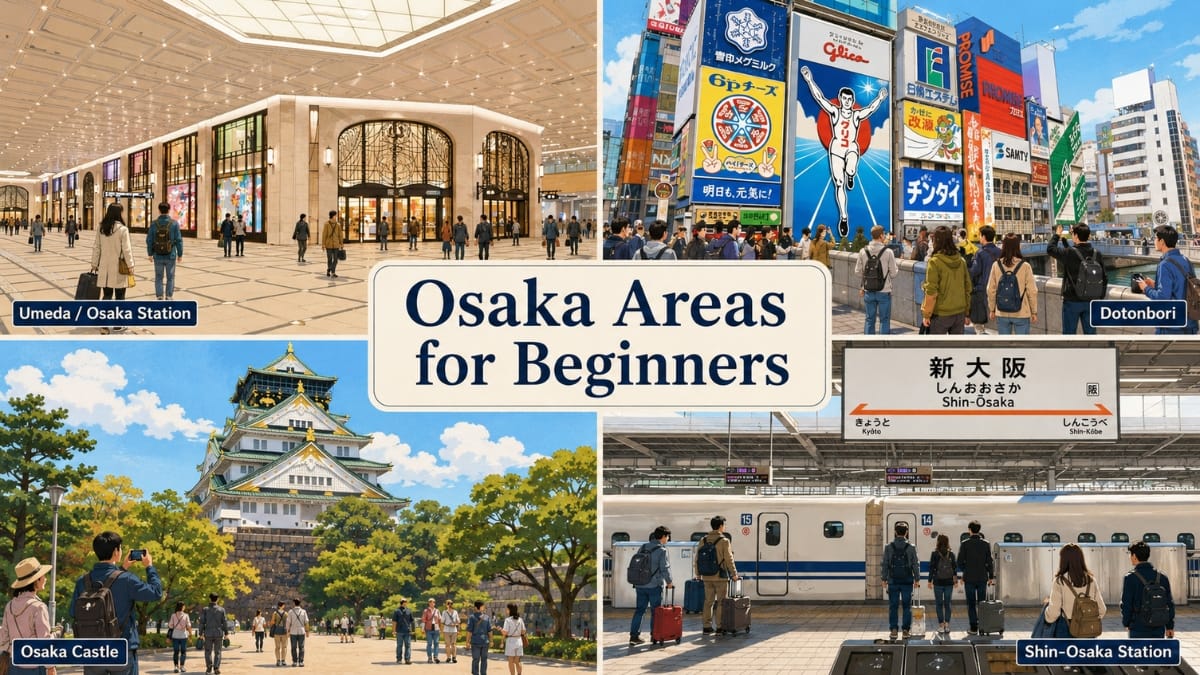
Osaka is easier to plan once you stop treating it as one large sightseeing area. This Osaka neighborhood guide for beginners explains the parts of the city most useful to first-time visitors: where to stay, where to eat, how the stations connect, and which areas suit a quieter or more active trip.
The first decision is not which attraction to visit. It is which station area will make the rest of your trip simple. Osaka has several major rail operators, and a hotel that looks close on a map can still involve a confusing transfer. Choose a neighborhood based on your daily plans, then use an IC card for local trains and subways whenever possible.
Start with the two main sides of central Osaka
For most visitors, central Osaka is easiest to understand as two major zones. Umeda is in the north, centered on Osaka Station and Umeda Station. Namba is in the south, centered on Namba Station and nearby Nippombashi. Both have restaurants, shopping, hotels, and excellent rail access. The better choice depends on how you want your evenings to feel and where you plan to travel next.
Umeda is the more practical base for day trips toward Kyoto, Kobe, Himeji, and northern Osaka. Namba is better if you want to walk to Dotonbori, Kuromon Market, Den Den Town, or the nightlife areas around Shinsaibashi. Neither is objectively better. The main mistake is booking near a station with a similar name but assuming it is inside the same building or on the same line.
Umeda and Osaka Station: best for rail access
Umeda is Osaka’s large commercial center. Osaka Station serves JR trains, while Umeda Station is used by Osaka Metro and private railways. The names are close because the stations form one connected district, but the underground passages, department stores, and multiple exits can feel overwhelming at first.
Stay here if you want a polished central area, wide hotel choice, and direct or simple travel to Osaka Castle, Universal Studios Japan, Kyoto, Kobe, and Shin-Osaka. It is also useful for travelers arriving on or departing by Shinkansen, since Shin-Osaka is a short JR ride away.
Give yourself extra time at Osaka Station. It is not a station where you should plan a two-minute transfer. Follow the line name and platform number rather than trying to navigate only by the neighborhood name. Station signs are generally clear in English, but the scale of the complex is the challenge.
Umeda has plenty of dining, especially in department store food floors, station buildings, and basement restaurant areas. These are convenient for a first dinner after arrival. For a less crowded meal, go before noon for lunch or before 6:00 p.m. for dinner. Many popular restaurants have queues after work and on weekends.
Who Umeda suits
Umeda works well for first-time visitors who value convenience over late-night street atmosphere. Families, travelers with early train departures, and anyone taking several regional day trips will usually find it easy. The trade-off is that it can feel more businesslike than Namba, especially after the shops close.
Namba, Dotonbori, and Shinsaibashi: best for lively evenings
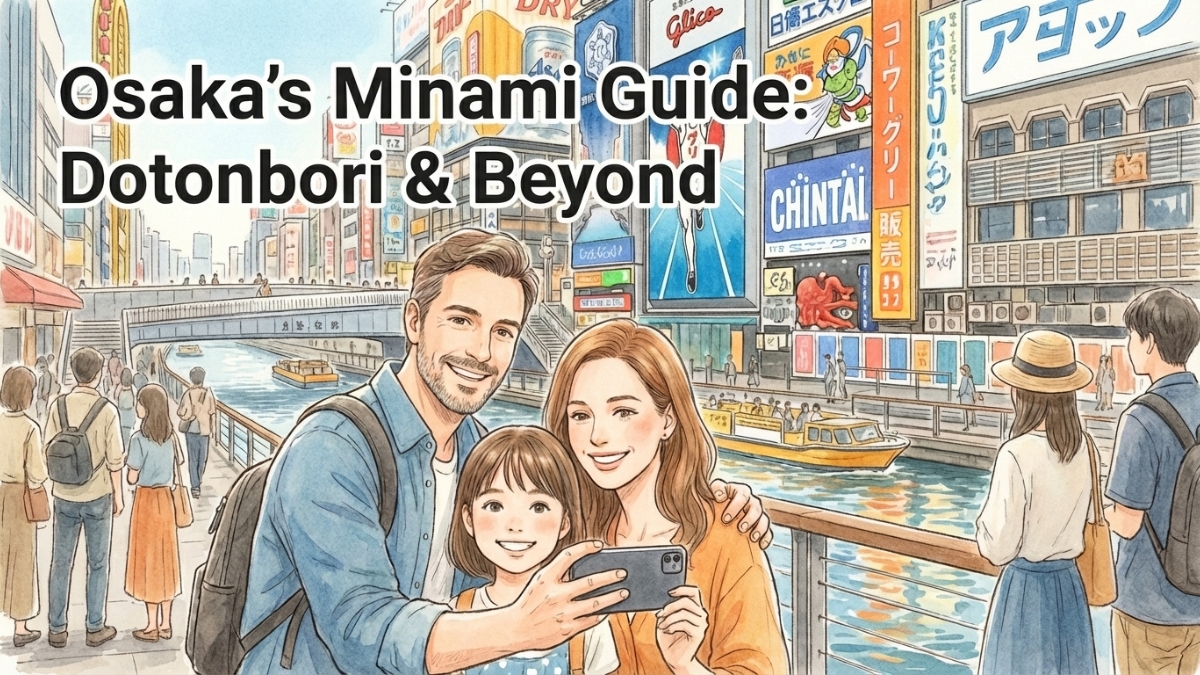
Namba is one of the easiest places to feel Osaka’s energy. The neighborhood covers several stations and walking areas, so it helps to separate them. Namba Station is the transport hub. Dotonbori is the canal-side entertainment area north of it. Shinsaibashi is a major shopping district farther north. Kuromon Market is east of Namba, and Nippombashi is farther southeast.
This is a strong base if food, street scenes, shopping, and walkable evenings are high on your list. You can reach many central sights without needing a train, and the area has direct access to Kansai Airport on the Nankai Railway from Nankai Namba Station.
Expect crowds around Dotonbori from late afternoon through the evening, particularly on Fridays, weekends, and holiday periods. It is worth seeing after dark, but do not make it your only food plan. Restaurants on the busiest streets can have long lines and higher tourist demand. Walk a few blocks away from the canal for more choice and a calmer meal.
Namba is also a good place to understand an Osaka habit: neighborhoods overlap. A hotel advertised as “Dotonbori” may be closer to Nagahoribashi, Nippombashi, or Shinsaibashi than to Namba Station. Check the nearest station and the exact walking route before booking, especially if you have large luggage.
A note on Namba’s stations
Several rail companies use the Namba name. Osaka Metro Namba, JR Namba, Nankai Namba, and Osaka Namba Station are connected within the broader district, but they are not identical platforms. Transfers can require a substantial walk. If you are traveling to the airport, confirm whether your train leaves from Nankai Namba, not simply “Namba.”
Shinsaibashi and Horie: central, stylish, and more flexible
Shinsaibashi sits between Umeda and Namba in practical terms, though it is much closer to Namba on foot. It is useful for visitors who want central access without staying directly beside Dotonbori. The covered Shinsaibashi-suji shopping arcade is busy, while the surrounding side streets offer cafes, boutiques, and restaurants.
West of Shinsaibashi, Horie has a slower pace and more low-rise streets. It can suit couples or repeat visitors who want cafes and independent shops while remaining close to Namba. However, it is not the best choice if your main goal is quick access to JR Osaka Station or repeated long-distance train travel.
Use Shinsaibashi Station for the Osaka Metro Midosuji Line, one of the most useful north-south subway lines in the city. It links the Namba area with Umeda directly. For many beginners, a hotel within a short walk of a Midosuji Line station is more useful than one that is merely near a famous landmark.
Tennoji: good value and easy southern access
Tennoji is south of Namba and centered on Tennoji Station and Osaka-Abenobashi Station. It has major department stores, parks, a zoo, and convenient train connections. It is often a practical hotel area for travelers who want more space or lower prices than the busiest parts of Namba.
From Tennoji, you can reach Namba quickly on the Midosuji Line. It is also convenient for the JR line to Kansai Airport and for trips toward Nara, depending on the route you choose. The neighborhood has a more local, mixed-use feel than Umeda or Dotonbori, with busy shopping streets beside quieter residential blocks.
Tennoji makes sense for families and travelers who prefer a calmer place to return to at night. The trade-off is that you may take one extra subway ride for many central Osaka plans. That is usually manageable, but it can matter after a long day with young children or heavy shopping bags.
Osaka Castle and the eastern center: better for sightseeing than nightlife
The Osaka Castle area is attractive for visitors who want green space, museums, and morning walks. It is not usually the most convenient first-time base because the park is large and dining choices become limited once you leave the station areas.
If you stay nearby, check whether your hotel is closest to Osakajokoen, Morinomiya, Tanimachi 4-chome, or Temmabashi. Each serves a different line and can place you on a different side of the castle grounds. The castle is not a quick walk across from every station around it.
This area works best if Osaka Castle is a priority, you prefer quieter evenings, or you already understand which train line you will use most. For a first short visit of two or three nights, Umeda, Namba, Shinsaibashi, or Tennoji is usually simpler.
Shin-Osaka: useful for one night, not for most stays
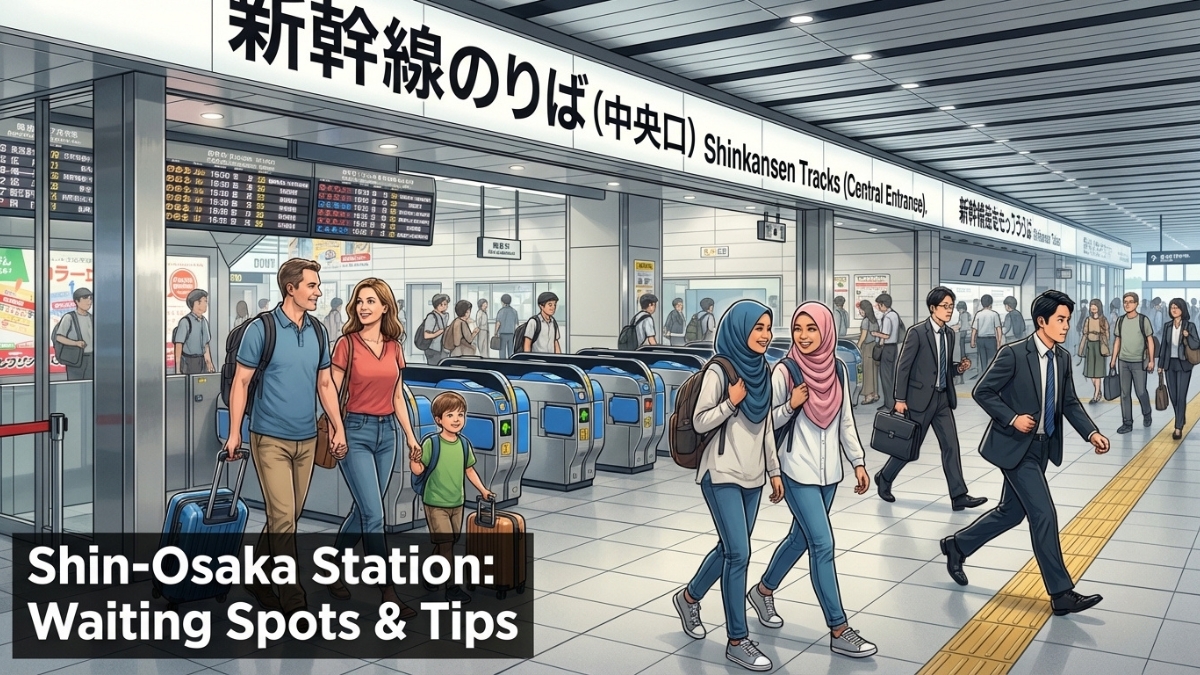
Shin-Osaka is the Shinkansen station, not the city center. It is a sensible place to sleep before an early bullet train or after a late arrival, especially if you are continuing to another city the next morning. Hotels are practical, and the station has food and convenience stores.
For a full Osaka stay, Shin-Osaka is less appealing. You will need to ride into Umeda, Namba, or other sightseeing districts almost every day. It saves time on one train journey but can add time to the rest of your trip.
How to choose your Osaka base
Use your itinerary, not hotel photos, to make the final choice. Pick Umeda if you want regional rail connections and an organized commercial center. Pick Namba if evenings around Dotonbori, food streets, and airport access matter most. Pick Shinsaibashi or Horie if you want a central but slightly less intense location. Pick Tennoji for good access with a calmer, often better-value stay.
Before reserving, check three details: the nearest station, the rail line at that station, and the real walking time from the hotel entrance. A property described as five minutes from a station may be five minutes from an exit that is inconvenient for your line. If luggage is part of the plan, choose a route with fewer transfers rather than the route that appears shortest on a map.
A beginner-friendly rhythm for moving around Osaka
Plan one neighborhood or one side of the city at a time. Pair Umeda with Osaka Station and nearby restaurants. Pair Namba with Dotonbori, Shinsaibashi, Kuromon Market, or Nippombashi. Pair Osaka Castle with the eastern center. This reduces unnecessary backtracking and makes train travel less stressful.
Morning is the best time for markets, shrines, and popular indoor attractions. Use the middle of the day for museums, cafes, or department store food floors. Save Dotonbori and other bright central streets for evening, but keep your dinner expectations flexible if you do not want to wait in line.
Osaka rewards simple planning. Choose a base near the right station, learn the name of the train line you need, and leave room to explore on foot once you arrive. That is usually enough structure to make the city feel manageable from your first day.