
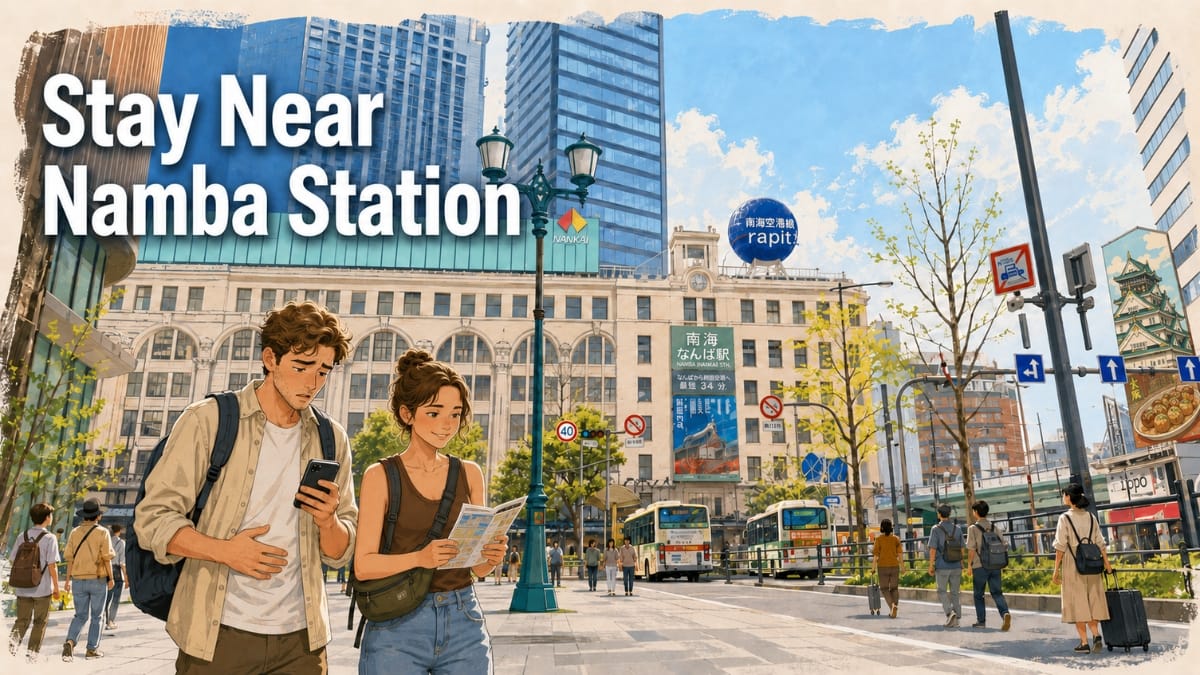
Namba is convenient because it puts food, shopping, nightlife, and several rail lines within easy reach. But choosing where to stay near Namba Station is less simple than it first appears. The station area is large, busy, and divided into neighborhoods that feel very different after dark. A hotel that looks close on a map may also be a 15-minute walk through crowds, shopping arcades, or confusing underground passages.
For a first Osaka visit, the best choice usually depends on how you plan to use your evenings, how much quiet you need, and which railway line you will use most often. Staying near Namba works especially well for travelers who want central Osaka access without staying in the Umeda area.
First, understand what “Namba Station” means
Namba is not one single station building. It is a connected transport area used by several railways, including Nankai Railway, Osaka Metro, Kintetsu, Hanshin, and JR Namba, which is farther west than many visitors expect.
This matters when booking. A property described as “near Namba Station” may be closest to Nankai Namba Station, Osaka Metro Namba Station, or JR Namba Station. Check the hotel’s stated walking time and look at its position on a map before paying. Do not assume all Namba stations are beside each other.
Nankai Namba Station is particularly useful if you are arriving from or departing for Kansai International Airport. Osaka Metro Namba Station is the most flexible choice for moving around central Osaka. Kintetsu and Hanshin Osaka-Namba Station are useful for trips toward Nara, Kobe, and beyond.
Best area for first-time visitors: south of Dotonbori
The blocks between Dotonbori, Nankai Namba Station, and Kuromon Market are the most straightforward base for many first-time visitors. You can walk to the canal area, restaurants, drugstores, convenience stores, and major shopping streets without needing a train at night.
This is the best fit if you want to return to your hotel after dinner on foot, have limited time in Osaka, or prefer a lively area where basic travel needs are close by. The walk to Nankai Namba Station is also convenient for airport transfers.
The trade-off is noise and foot traffic. Streets immediately beside Dotonbori, Ebisu-bashi, and the busiest parts of Sennichimae can remain active late into the night. A room facing a main road, restaurant street, or elevated rail line may be noticeably louder than one a block or two away.
When comparing hotels here, prioritize a location on a side street rather than directly above a nightlife area. Ask for a higher floor or a room away from the street if quiet sleep matters to you. This is especially useful on Friday and Saturday nights.
Good for
Couples, short-stay visitors, food-focused travelers, and anyone using the Nankai airport train. It is also practical for travelers who do not want to navigate unfamiliar trains after an evening out.
Less suitable for
Light sleepers, families with very young children who need an early bedtime, and travelers who want a calm neighborhood feel.
Best balance of convenience and quieter nights: east Namba and Nipponbashi
Stay east or southeast of Namba, toward Nipponbashi, if you want to remain walkable to central Namba but step away from the busiest canal-side streets. This area has a more mixed character: local restaurants, small hotels, apartment-style accommodations, Kuromon Market, and access to the Nipponbashi station area.
It is often a sensible compromise. You can walk to Dotonbori in about 10 to 20 minutes depending on the exact address, but the immediate surroundings may feel less intense late at night. It also works well for travelers heading to Nara, since Kintetsu Nipponbashi Station is close.
The main caution is that “Nipponbashi” covers a broad area. Properties farther south, toward Ebisucho, can be good value but are no longer truly close to Namba Station. Check the walk with luggage, not just the straight-line distance. A 12-minute walk may feel longer in summer heat, rain, or crowded streets.
This part of the city is also close to Den Den Town, Osaka’s electronics, anime, gaming, and hobby district. That is useful if it interests you, but it should not be the only reason to choose the area. The key advantage is practical access with somewhat less nighttime noise.
Best for shopping and a more polished central location: Shinsaibashi
Shinsaibashi lies north of Dotonbori and is an excellent option if you want central access but prefer shopping streets, department stores, and cafes over the most concentrated nightlife zone. From southern Shinsaibashi, Namba is generally within a 10- to 15-minute walk.
This location is useful for travelers who expect to use both Namba and Shinsaibashi stations. Osaka Metro access is easy, and you can walk south to Dotonbori or north toward Nagahoribashi and central shopping areas.
Hotels here can cost more than similar rooms farther east or south. The streets around Shinsaibashi-suji can also become crowded during the day, particularly on weekends and holiday periods. Still, the atmosphere usually becomes more manageable once you move one or two blocks away from the main arcade.
Choose Shinsaibashi if you want a central, walkable base and do not need to be beside Nankai Namba Station. It is a strong choice for repeat visitors as well as first-time travelers who value a slightly less hectic setting.
Best for larger rooms and easier road access: JR Namba and Sakuragawa side
The west side of Namba, around JR Namba, OCAT, and toward Sakuragawa, is worth considering when room size, value, or airport bus access matters more than being in the middle of Dotonbori. This area has wider roads and a more businesslike feel than the lanes east of the station.
JR Namba is connected to the broader Namba area, but it is not the station most visitors mean when they say Namba. From here, Dotonbori can take roughly 10 to 20 minutes on foot, depending on your hotel. The walk is easy enough for many adults, but it may feel inconvenient if you expect to go back and forth several times a day.
This is a practical area for families, travelers with large luggage, and visitors who prefer less crowded sidewalks. It can also suit people arriving or leaving by airport limousine bus, depending on current service and their accommodation location.
Do not book here solely because a listing says “Namba.” Confirm whether you will be near JR Namba or closer to the main Metro and Nankai stations. The difference affects daily train travel.
Where to stay near Namba Station with children
Families often benefit from choosing the quieter edge of the district rather than the center of Dotonbori. East Namba, Nipponbashi, JR Namba, and the southern side of Shinsaibashi are usually more practical than streets directly around the canal.
Before booking, check room size carefully. Japanese hotel rooms can be compact, and a listing for three or four guests may use sofa beds or extra beds that leave little space for open suitcases. Apartment-style accommodations may offer more room, but confirm check-in procedures, elevator access, laundry facilities, and whether luggage storage is available.
For food, Namba is easy with children because convenience stores, casual restaurants, bakeries, and supermarkets are widely available. The difficulty is crowding, especially around Dotonbori in the evening. Plan dinner earlier if you want an easier experience.
Booking checks that prevent common Namba mistakes
Before you reserve, read the address rather than relying on the neighborhood label. Then check which station entrance is closest and whether the route involves stairs, long underground passages, or major crossings. This takes only a few minutes and can save a lot of stress on arrival.
Pay attention to these practical details:
- The nearest railway operator and station name, not simply “Namba.”
- The walking time with luggage from the station you will actually use.
- Room direction, soundproofing comments, and whether the property faces a busy street.
- Check-in hours, especially for small hotels and apartment-style stays.
- Laundry, luggage storage, and elevator availability if you are staying more than a few nights.
Payment is usually straightforward. Major cards are widely accepted at hotels, although some smaller properties may require payment in advance or have limited front-desk hours. Carrying a small amount of cash is still useful for nearby small shops and local restaurants.
A simple choice for most trips
Choose south of Dotonbori or near Nankai Namba if your priority is being close to food, nightlife, and the airport train. Choose east Namba or Nipponbashi for a better balance of walkability and quieter streets. Choose Shinsaibashi if shopping and central Metro access matter most, or JR Namba if you value more space and a less crowded immediate area.
Namba rewards travelers who choose their exact block carefully. A hotel a few streets from the main crowds can give you the same convenient Osaka base, while making the end of each busy day much easier.