
A good Osaka weekend for two is not about fitting in every famous sight. It is about choosing neighborhoods that connect easily, leaving room for long meals, and avoiding the worst station and dinner crowds. This couple weekend Osaka itinerary example uses two days to combine Osaka Castle, Umeda, Sumiyoshi, Namba, and Dotonbori without spending the whole trip on trains.
It works best if you stay near Namba or Osaka Station. Namba is more convenient for late dinners and the second day of this plan. Umeda is better if you arrive through Osaka Station or want a quieter, more businesslike hotel area. Both are well connected by Osaka Metro and JR lines.
Before You Start: Keep the Weekend Flexible
Use an IC card, such as ICOCA, for local trains and subways. It saves time at ticket machines, especially when you are changing lines. Most central Osaka stations have English signs, but exits can be far apart. Allow an extra 10 minutes when meeting at a large station or heading to a restaurant reservation.
For meals, plan one restaurant you would be disappointed to miss and reserve it in advance if reservations are accepted. Saturday evening tables in Umeda, Shinsaibashi, and Dotonbori can fill early. For your other meals, choose places as you walk. This gives the itinerary some breathing room.
Wear comfortable shoes. The routes below are simple, but Osaka days often involve more walking than the map suggests, particularly around Osaka Castle Park, Umeda’s underground passages, and the Shinsaibashi shopping streets.
Day 1: Osaka Castle, Nakanoshima, and Umeda at Night
Morning: Osaka Castle Park
Start around 9:00 a.m. at Osaka Castle Park, before weekend tour groups and school groups become more noticeable. The park is large, so decide whether you want to enter the castle tower or mainly walk the grounds together. The grounds, moats, stone walls, and open views are the better choice if you prefer a relaxed morning. The tower has a paid museum admission and can involve lines on busy weekends.
For the most straightforward access, use Tanimachi 4-chome Station on the Osaka Metro Tanimachi or Chuo Line, then walk toward the Otemon Gate area. Osakajokoen Station on the JR Loop Line is another useful option, especially from Osaka Station, but it brings you to a different side of the park.
Allow two to three hours if entering the tower, or about 90 minutes for a slower walk outdoors. In spring, cherry blossom season brings very heavy crowds. In summer, start earlier and carry water. The park has limited shade in some open sections.
Lunch and Afternoon: Nakanoshima or a Slow Return North
After the castle, avoid forcing a major attraction into the middle of the day. Take the subway west toward Nakanoshima, an island district between two rivers with wide sidewalks, office buildings, museums, and calmer views than Dotonbori. It is a useful place for lunch, coffee, or a short riverside walk.
If the weather is poor, skip Nakanoshima and go directly to Umeda. Umeda has extensive underground shopping and dining areas connected to Osaka Station. It is practical, but the scale can feel confusing on a first visit. Choose one destination before you enter the station complex, rather than trying to browse every floor and passage.
A cafe break is worthwhile here. It gives you time to rest before the evening and helps prevent the common mistake of arriving at dinner tired and hungry at the busiest time.
Evening: Umeda Views and Dinner
Spend the evening in Umeda. If you want a skyline view, go before sunset rather than after dark. You will have daylight views, sunset color if the weather is clear, and city lights later without needing to rush. Check current entry rules and final admission times on the day, as these can change by season or special event.
For dinner, book in Umeda or choose an early table around 5:30 p.m. to 6:00 p.m. The area has everything from casual counter restaurants to quieter Japanese dining rooms. A reservation is especially useful if you want a table rather than bar seating. After dinner, return to Namba by Osaka Metro Midosuji Line if you are staying there. The direct ride is easy, though trains can be busy after work and on Saturday night.
Day 2: Sumiyoshi, Namba, and Dotonbori
Morning: A Quieter Start at Sumiyoshi Taisha
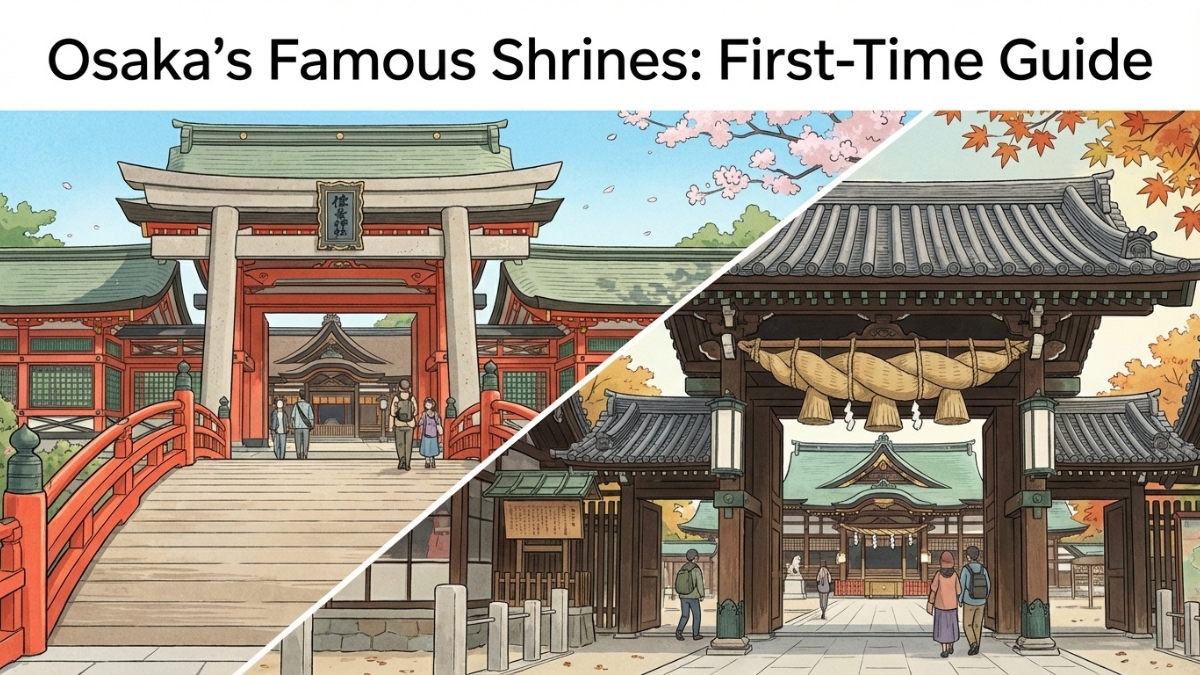
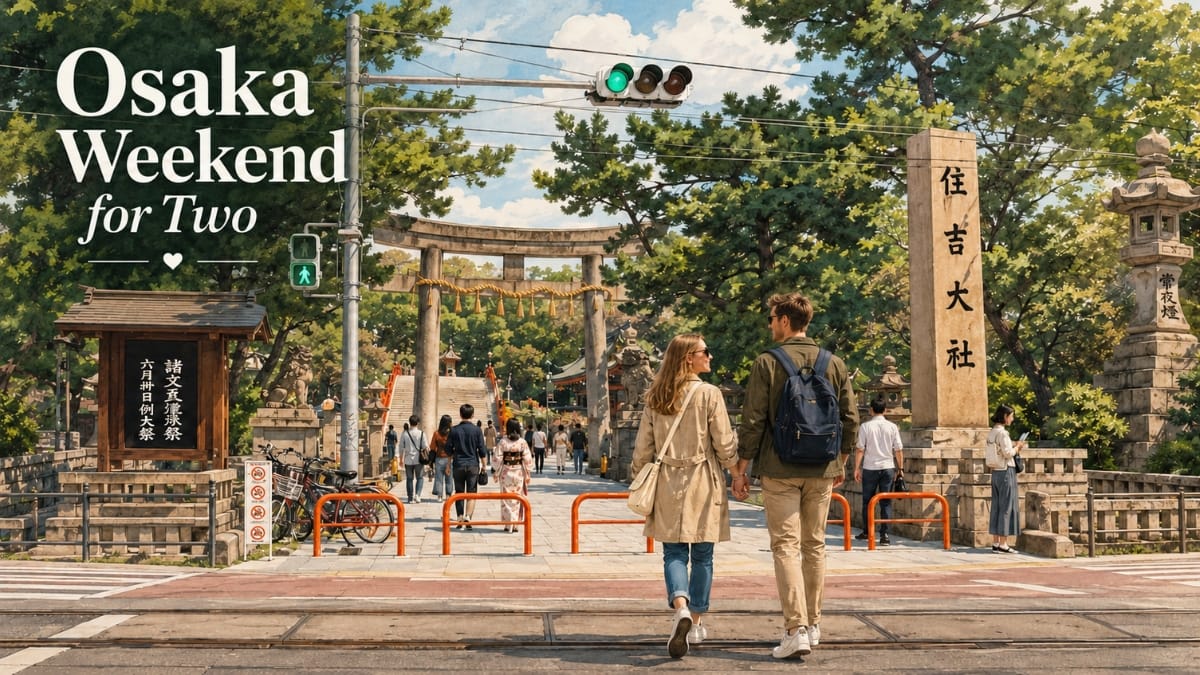
Begin day two at Sumiyoshi Taisha, one of Osaka’s most recognizable shrine areas and a welcome contrast to the crowded center. Go in the morning, when the grounds are calmer and the light is better for photographs. The shrine’s distinctive arched bridge is steep, so use the handrail and take your time, especially after rain.
From Namba, the simplest route is usually a Nankai local train from Nankai Namba Station to Sumiyoshi Taisha Station, followed by a short walk. Do not board an express train if it does not stop there. Check the departure board carefully, because several train types use the same station.
Allow around 60 to 90 minutes. This is not a place to treat as a checklist stop. Walk through the grounds quietly, follow posted etiquette near prayer areas, and avoid blocking the bridge for photos. There is no need to buy every charm or souvenir. If you choose one, keep in mind that shrine items are religious objects, not just decorations.
Midday: Kuromon or a Sit-Down Lunch Near Namba
Return toward Namba for lunch. Kuromon Ichiba Market is convenient if you want to share several small dishes, but it can be crowded and expensive for the amount of food you receive. It suits couples who want a quick, casual food stop, not those looking for a quiet meal or a long conversation.
For a calmer option, eat at a small restaurant a few streets away from the market or around Namba Parks. Sit-down restaurants often offer better value at lunch, and you will have a proper place to rest before the busiest part of the day.
Many small restaurants accept cards, but do not assume every one does. Carry some cash for older shops, market stalls, and small purchases. In Japan, cash remains useful even in central Osaka.
Afternoon and Evening: Shinsaibashi, Hozenji, and Dotonbori
Walk north from Namba through the Shinsaibashi area. This is Osaka’s main central shopping zone, with covered arcades that are useful in rain or strong summer sun. You do not need to shop for hours. The route works well simply as a direct walk toward Dotonbori, with time to stop for coffee or browse department stores.
Before Dotonbori becomes crowded, turn briefly into Hozenji Yokocho. Its narrow lanes and the small temple area are quieter than the canal-side streets. Be respectful around Hozenji Temple, where visitors come to pray. This is a better short stop than trying to photograph every sign along the main river.
Reach Dotonbori around dusk. The signs and canal look their best after dark, but the area can become packed from roughly 6:00 p.m. onward, particularly on weekends. Walk along one side of the canal, then cross a bridge and view it from the other side rather than repeatedly backtracking through the central crowd.
For dinner, move one or two blocks away from the brightest part of Dotonbori. You will usually find less noise, shorter lines, and a more relaxed table. Takoyaki is easy to share as a snack, but it is not a complete dinner for most travelers. Pair it with a sit-down meal, or save it for later.
Adjusting This 2-Day Osaka Couple Itinerary
This itinerary is intentionally city-focused. If you have only one full weekend in Osaka, do not add Universal Studios Japan, a Kyoto day trip, or a long trip to the far south of the city unless one of those is your main priority. Each can replace a full day, and adding it on top usually turns a relaxed plan into a rushed one.
If rain is expected, keep Osaka Castle Park and Sumiyoshi Taisha for the driest part of the forecast. Spend more time in Umeda’s indoor areas, Namba Parks, department stores, cafes, or museums instead. If you visit during peak summer heat, reverse the pace: start outdoor stops early, rest indoors from early afternoon, and return to Dotonbori after sunset.
Small Mistakes That Can Make the Weekend Harder
Do not confuse Osaka-Namba Station, Namba Station, JR Namba Station, and Nankai Namba Station. They are connected by streets or underground routes, but they are not one single platform area. Check the railway company shown in your route before leaving the hotel.
Do not plan dinner at 7:00 p.m. without a reservation and expect a quick table in the central districts. Either reserve, eat early, or be willing to walk away from the first busy restaurant. Also, avoid eating while walking in crowded shopping streets. Step aside near the shop where you bought the food, or use a designated standing area.
The best version of this weekend leaves space for one unplanned stop: a cafe near your hotel, a quiet side street in Nakanoshima, or a restaurant that looks right when you pass it. In Osaka, that small amount of flexibility often makes the trip feel easier and more personal.