
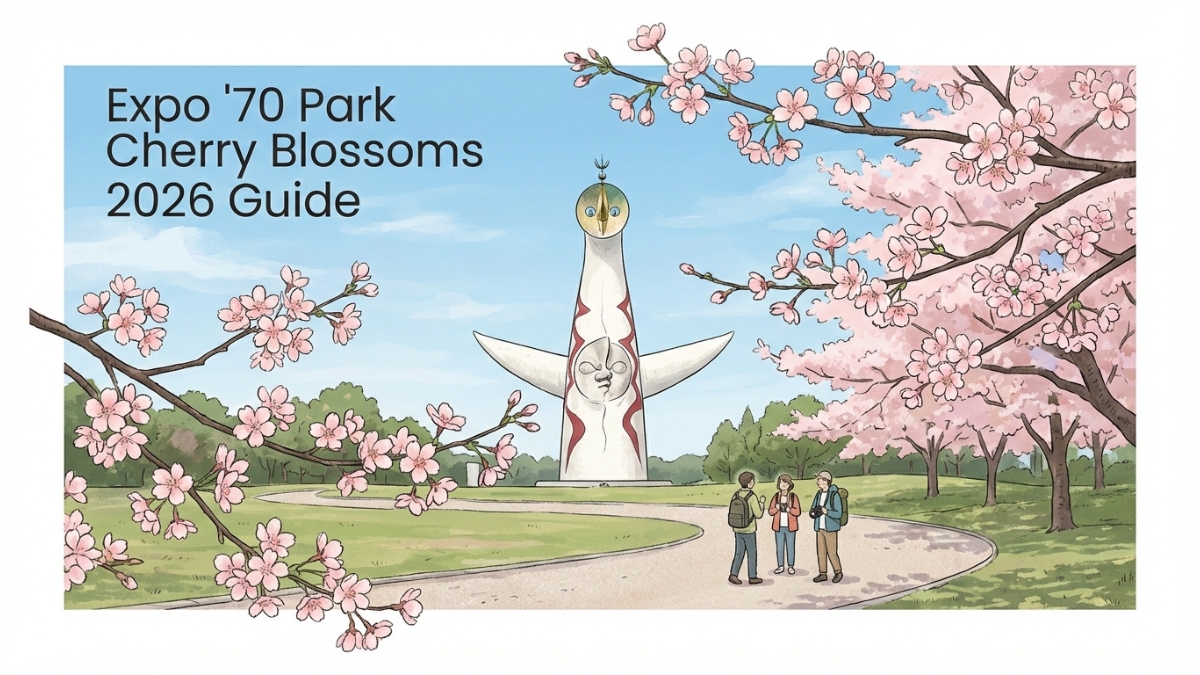
If you are looking for cherry blossoms in Osaka in 2026, Expo ’70 Commemorative Park is one of the most practical places to visit. It is large, easy to reach by public transport, and well set up for day trips. In 2026, the park’s SAKURA EXPO 2026 runs from March 20 to April 5, and the park says you can see about 5,500 cherry trees across 12 varieties.
For first-time visitors, this is a good cherry blossom spot because it is easier to understand than many smaller local parks. The key things to know are simple: the park is in Suita, not central Osaka; the easiest access is by Osaka Monorail; public transport is strongly recommended during sakura season; and the park’s night illumination dates are announced separately based on bloom conditions.
Useful links: Official park website | SAKURA EXPO 2026 | Access | Maps | Official Instagram | Official X | Official Facebook | Google Maps
What it is
Expo ’70 Commemorative Park is a large public park built on the former site of the 1970 World Expo. It includes the Natural and Cultural Gardens and the Japanese Garden, with the Tower of the Sun as its most famous landmark. The park is one of Osaka’s best-known spring flower destinations and is especially popular during cherry blossom season.
For 2026, the official sakura event is SAKURA EXPO 2026, held from March 20 to April 5. During this period, the park is open from 9:30 a.m. to 6:00 p.m., with last entry at 5:30 p.m. The event is centered mainly around Higashiojiand other parts of the park.
The park also plans a special Higashioji cherry blossom illumination, but the official page says the exact dates depend on the actual bloom and will be announced later. When the light-up is running, the illuminated area stays open until 9:00 p.m., with last entry at 8:30 p.m.
Why it matters
This park is a strong choice for first-time visitors because it combines several things in one place: wide walking paths, iconic photos with the Tower of the Sun, festival food, and enough space to avoid the tight crowds found at some smaller sakura spots. The atmosphere changes through the day. In the afternoon it feels open and relaxed. In the evening, if the light-up is running, the cherry trees along Higashioji feel quieter and more dramatic.
It is also helpful for travelers who are not yet comfortable with Japan’s local transport and event rules. The park has official English pages, clear map resources, and a standard paid-entry system for the gardens. That makes it easier to plan than a more complicated reservation-only blossom event.
How to do it
Location
Expo ’70 Commemorative Park is in Suita, north of central Osaka. It is not in downtown Osaka, so treat it as a half-day or full-day outing rather than a quick stop between city attractions.
How to get there
The easiest route for most travelers is Osaka Monorail to Bampaku-kinen-koen Station. From the station, you can walk to the park entrances in a few minutes. The route is simple and well used during sakura season.
If you are staying in Umeda or central Osaka, a common route is to go to Senri-Chuo first and then transfer to the monorail. This is not a difficult transfer by Osaka standards, but sakura weekends can be busy, so allow extra time. IC cards such as ICOCA, Suica, and PASMO are the easiest way to travel because you do not need to buy a paper ticket each time. IC card use is standard on Osaka Monorail and in Osaka transport more broadly. This last point is general travel advice based on standard Osaka transport practice.
Best time to visit
The park’s official event dates are fixed, but bloom timing still depends on weather. Based on the official 2026 sakura event and the park’s variety mix, the safest target window is late March to early April, with many visitors aiming for the first week of April. However, because the park has multiple varieties, some blossoms continue later than the main Somei Yoshino peak. The official event materials note that different kinds bloom from mid-March into mid-April.
The best way to avoid disappointment is to check the park’s official sakura updates and social media shortly before you go. That matters more than any early forecast.
Opening hours
During SAKURA EXPO 2026, the park is open from 9:30 a.m. to 6:00 p.m., last entry 5:30 p.m. If the night illumination is active on your visit date, the illuminated area is open until 9:00 p.m., last entry 8:30 p.m.
Important: not all gates stay open during evening operations. After 5:30 p.m., only the Central Gate, East Gate, and Japanese Garden Front Gate remain open for entry on illumination days.
Admission and payment
To enter the Natural and Cultural Gardens and Japanese Garden, you need a paid admission ticket. Official 2026 pricing is:
- Until March 31, 2026: adults ¥260, elementary and junior high school students ¥80
- From April 1, 2026: adults ¥450, children free
You can buy tickets at the gate. Some travelers may also be able to use IC-based entry lanes depending on the gate setup, but because the official English pages do not clearly promise this for every entrance, it is safer not to rely on it.
Food stalls
During the 2026 sakura event, the official page confirms a Sakura Food Court from March 26 to April 5, with around 20 to 40 food vendors. This is the most reliable official food-stall information for 2026.
The food area is part of the event grounds, and the park’s pages indicate it is centered around festival spaces rather than being spread evenly everywhere. Expect standard festival food, seasonal sweets, and food trucks rather than a single permanent market. Specific menus can change by year, so do not plan around one exact dish unless it is confirmed on the official event page or social media.
Many vendors in Japan now accept cashless payment, but festival stalls are not always consistent. Bring cash, especially ¥1,000 notes and coins, even if some vendors accept cards or QR payment. That is practical travel advice rather than a claim from a specific official source.
Where to see the best cherry blossoms
1. Higashioji
This is the main sakura route highlighted on the official 2026 event page. It is the key area for the special illumination and the most straightforward choice if you want a classic Expo Park cherry blossom walk.
2. Tower of the Sun area
This is the most recognizable photo spot in the park. If you want an easy first visit, combine the cherry blossoms with views of the Tower of the Sun. It is the image most visitors associate with the park.
3. Japanese Garden
If you want a quieter atmosphere, the Japanese Garden is a better choice than the main festival route. The park’s English site lists it as one of the main zones, and evening gate rules show that it remains operational during illuminated evenings via the Japanese Garden Front Gate.
Parking
There are five on-site parking areas around the park. Official parking pages list the current fee structure. For ordinary cars, the official rates are:
Weekdays
- up to 2 hours: ¥410
- over 2 hours to 3 hours: ¥620
- over 3 hours to 4 hours: ¥830
- over 4 hours to 24 hours: ¥1,100
Saturdays, Sundays, and holidays
- up to 2 hours: ¥620
- over 2 hours to 3 hours: ¥930
- over 3 hours to 4 hours: ¥1,240
- over 4 hours to 24 hours: ¥1,600
The official event page warns that roads around the park become very congested during the sakura event and asks visitors to use public transportation. That is the safest advice for first-time visitors.
Also note one important point: the official parking page says Expo Park parking does not receive EXPOCITY parking discounts, and EXPOCITY has its own parking rules.
Common mistakes
Going without checking the latest bloom and light-up status
The festival dates are fixed, but the illumination dates are not. The park decides them based on actual bloom conditions. Check the official event page and social media before leaving.
Treating the park like a small city park
This is a very large site with several zones. If you arrive without choosing a main area, you may spend too much time walking and too little time actually enjoying the blossoms. Use the official map before you go.
Driving on a sakura weekend without a backup plan
Parking exists, but the official event page clearly warns about heavy road congestion. For most first-time visitors, the monorail is the easier option.
Arriving late at the wrong gate for night viewing
On evening opening days, only selected gates remain open after 5:30 p.m. Going to the wrong entrance can cost you time and energy.
Expecting full English support at every step
The park has useful official English pages, which helps a lot. But festival stalls, temporary signs, and some event details may still be Japanese-first. Save the official links on your phone before you go.
Local tips
Go on a weekday if you can. Weekend crowds are heavier, and the park’s road congestion warnings become more relevant then. This is especially important if you want photos near the Tower of the Sun or want to eat from the food court without a long wait.
Bring layers. Even if Osaka feels mild in the afternoon, open park areas can feel cooler in the evening, especially if you stay for the illumination.
If you want the simplest plan, do this:
arrive by monorail in the late morning, see the Tower of the Sun area first, walk the main sakura route in the afternoon, buy food before the busiest dinner window, and only stay for the light-up if the official page confirms it for that day. That order works well for most first-time visitors because it follows the park layout and avoids the most common timing mistakes.
If you are visiting with children or in a group, this park is a practical choice because it has wide paths, multiple zones, and better facilities than many smaller blossom spots. The atmosphere is busy near the main event area, but the size of the park makes it easier to step away from the crowd when needed.
Final takeaway
If you want an Osaka cherry blossom spot that is easy to understand and easy to plan, Expo ’70 Commemorative Park is one of the best options for 2026. The key points are simple: go during March 20 to April 5, check official bloom and illumination updates before you leave, use the Osaka Monorail if possible, and do not underestimate traffic if you plan to drive.
With those basics in place, this is a sakura trip you can do with confidence.